
Posts

Come hear Robert K. Musil speak about Rachel Carson’s legacy, 8 May

Tuesday, 8 May, 7.30 – 9.00 pm
Green Spring Gardens, 4603 Green Spring Road, Alexandria VA

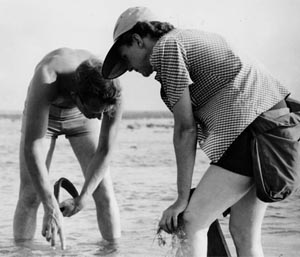
Dr. Robert K. Musil discusses his book Rachel Carson and Her Sisters: Extraordinary Women Who Have Shaped America’s Environment and his explorations of nature throughout the nation’s capital, which resulted in his latest book, Washington in Spring: A Nature Journal for a Changing Climate.

Musil followed in the footsteps of nature writers and explorers from Captain John Smith through John Burroughs, Elliott Coues, Louis Halle and Rachel Carson — carefully noting the gradual shift in phenology and species with the progression of global warming in greater Washington. Musil will also sign copies of his books available for sale immediately after his talk.

Dr. Musil is President and CEO of the Rachel Carson Council, Inc. and former Executive Director and CEO, Physicians for Social Responsibility, 1985 Nobel Peace Prize organization.

Brought to you by the Virginia Native Plant Society, Potowmack Chapter.  Learn more.

Review of Crash Course, by Hank Green and John Green

Reviewed by Marilyn Kupetz

Let’s suppose that you are a master naturalist charged with setting up classes in ecology, biology, evolution, and genetics. A clever person, you are opting for flipped classes so that participants can do the fact-based parts of the learning beforehand, while you use class time for hands-on collaboration.

Where do you go for high-quality content?

Crash Course at your service.

The Green brothers, both polymaths, have built a repository of user-friendly lessons on YouTube. Their hilarious 10- to 15-minute bursts are scientifically sound, relevant to what naturalists do, and lots easier to absorb than a long book or classroom lecture.

The Ecology playlist, for example, features Hank’s 12 lessons on the history of life, population ecology, human population growth, predators, succession, ecosystem ecology, hydrologic and carbon cycles, nitrogen and phosphorous cycles, pollution, conservation and restoration—solid stuff, but designed for easy digestion.

Biology offers 40 lessons. Among them, “That’s Why Carbon is a Tramp,” “Animal Development: We’re Just Tubes,” and “Fungi: Death Becomes Them” remind you that humor is an awesome learning lubricant when what needs to go down are bits of covalent bonds and mycorrhizae.

Are these snacks the same as a full-length college course? Of course not, but for concepts, conversation, and test prep, they are delicious and filling.

Want to review a resource? We’d love to hear from you. Instructions for submission await your click and commitment.