DWR Living with Coyotes

The Department of Wildlife Resources in cooperation with VMN, is offering to train Master Naturalists via a statewide program on “Living with Coyotes”.

Recordings: As with all of our VMN CE Webinar Series, this session was  recorded and posted on the CE Webinar Series page of our website. Viewing the recorded session counts as VMN CE, not as the required train-the-trainer session for VMN volunteers who want to do public presentations and outreach about coyotes using the DWR materials. Those volunteers must attend the live webinar, and in-person training at Maymont.

Description
:
Trained participants will work with the Furbearer Biologist from the DWR to develop educational programming about coyotes and how to sustainably co-exist with them. Trained volunteers will decide when and where to present the material to reach the desired audience. Possible opportunities include talks for homeowners’ associations, realtors, community groups such as Ruritans, garden clubs, libraries, and government groups such as boards of supervisors.  Volunteers can also present information in a tabling/booth format at local events and festivals.

To Volunteer:
Attend the required live training with Leah Card from DWR and provide her with your name and contact information in order to be on the list of trained volunteers prepared to give Living with Eastern Coyote presentations. There will be three live trainings offered in 2026. Additional trainings will be scheduled in subsequent years according to need and presenter availability.

Reporting Service:
When reporting FMN hours to this activity, please report to E301: DWR Living with Coyotes so that we can track this service separately from other VMN education and outreach. In the Description field, include details about who you presented to and please mention the word “coyote”. In the Direct Contacts section, include the number of people with whom you directly spoke. If the service was not a presentation and instead was something like writing an article for a newsletter on the topic, you may put the circulation number for the newsletter as Indirect Contacts. In the Impacts field, include any observational or written evaluation information.

Links and Materials:
* DWR will provide educational materials to the volunteers who are trained after the live trainings

* Questions? Contact Leah Card, DWR Furbearer Biologist and lead for this activity, Leah.card@dwr.virginia.gov, 804-801-4108 or Krista Weatherford, Maymont Foundation and local lead for this activity in the Richmond area at kweatherford@maymont.org, 804-358-7166 ext 325

Featured image courtesy of Virginia Department of Wildlife Resources

Grasses for the Masses

Photo: Courtesy of the Virginia Department of Conservation and Recreation – Grasses
When:

Jan. 24, 2026. 3:00 p.m. – 4:00 p.m.

Additional dates:

Grasses For The Masses – Jan. 25, 2026. 3:00 p.m. – 4:00 p.m.
Grasses For The Masses – Feb. 7, 2026. 3:00 p.m. – 4:00 p.m.
Grasses For The Masses – Feb. 8, 2026. 3:00 p.m. – 4:00 p.m.

Where:

Mason Neck State Park
, 7301 High Point Rd., Lorton, VA 22079. Visitor Center


Other Details:

Standard parking or admission fee applies: No.
Extra fee: $25 cash only.
Registration required: Yes.
Children welcome: Yes.
Phone: 703-339-2385
Email Address: MasonNeck@dcr.virginia.gov


You can help restore the health of the Chesapeake Bay and Virginia’s rivers by participating in Mason Neck’s Grasses for the Masses program.

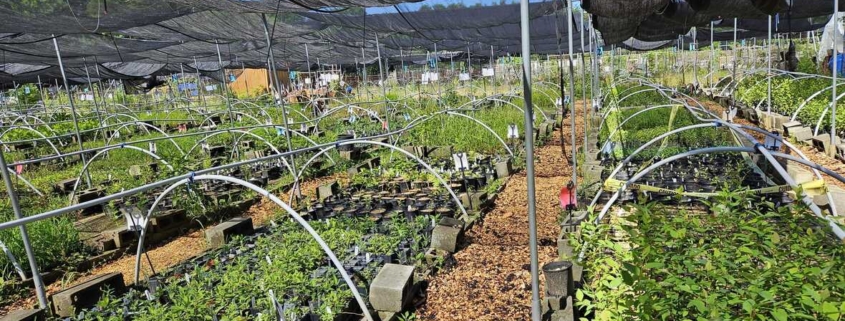
Volunteers in the program grow wild celery, an important underwater grass, in their homes and then plant their grasses at the park to help bolster underwater grass populations.

Combined with efforts to reduce pollution in the Bay, the grasses restoration program helps to improve the Bay’s filtering system and overall health.

To participate in the program all you need to do is to attend an orientation at the park and pick up your supplies. There is a $25 cost for the Grasses Kit, which can be paid in cash on the orientation day. All supplies must be returned to the park on Planting Day.

There is a maximum of 10 people per orientation. Registration is required. Please call the Visitor center to register, or email Ranger Meg  at meg.doppee@dcr.virginia.gov

Please call the Visitor Center at 703-339-2385 or email MasonNeck@dcr.virginia.gov if you have any questions or would like to participate but cannot make an orientation time.


For FMN members:

Check BI Calendar for dates. However, please call the Park to register.

FMN hours may be recorded using – ‘C015: Grasses for the Masses – DCR’

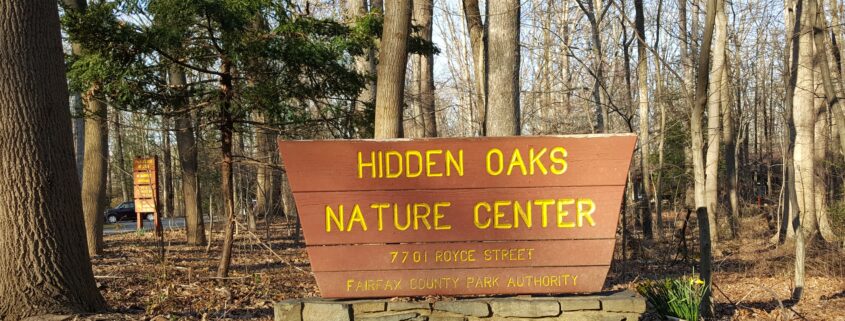
Spring Bird Counts Opportunity at Hidden Oaks Nature Center, Saturdays in February – May

Photo: Luke High 2022 Northern Mockingbird, Virginia

Saturdays, February 14th through May 9th, 2026

Times: February 14th through March 7th will be conducted from 8:00-9:15AM, March 14th through May 9th will be conducted from 9:00-10:15AM

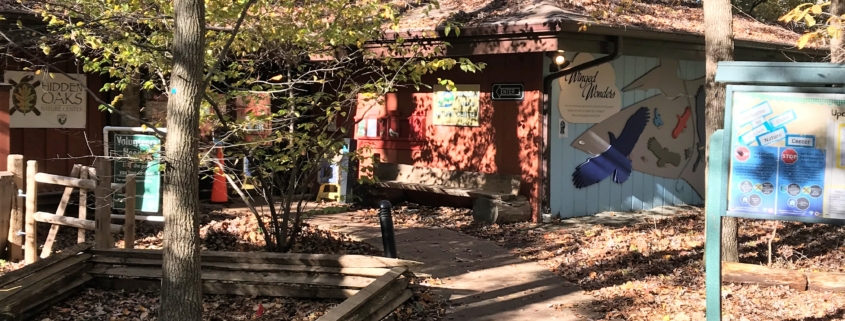
Hidden Oaks Nature Center in Annandale


Hidden Oaks Nature Center in Annandale is looking for FMN volunteers to lead and participate in their Spring migratory bird counts. The Spring counts will be taking place weekly every Saturday morning at Hidden Oaks Nature Center from February 14th through May 9th. Due to daylight savings, all counts from February 14th through March 7th will be conducted from 8:00-9:15AM and all counts from March 14th through May 9th will be conducted an hour ‘later’ from 9:00-10:15AM. The goal is to get a sense of what migratory birds stop by Hidden Oaks in Spring and to help the Nature Center shape their interpretive plan. No prior birding experience is required to participate, but some knowledge of identification is recommended. In addition to finding participants eager to learn, Hidden Oaks would like to find some more experienced individuals to lead some of the surveys. Further details can be found in the description of the sign-up genius link below. The more eyes we have looking for birds, the better!

Hidden Oaks Nature Center: HONC Spring Migratory Bird Count 2026

Anyone who is interested in leading counts should contact Eren Edwards at (erenedwardsete@gmail.com) directly, so that she may speak with them and do a short in-person training so that they know what to expect.

FOR FMN’s:

Service hours can be recorded using:
C106: FCPA Citizen Science Programs — Fairfax County Park Authority (FCPA)


Dates will be listed on the BI calendar, but please use SignUpGenius to register.

Become a FrogWatch Monitor in 2026, A Citizen Science Opportunity


FrogWatch is a great citizen science program opportunity for Fairfax Master naturalists. The FrogWatch volunteers currently work with Huntley Meadows (and historically with Fairfax Co. Parks) to have participants track frog populations throughout the calling season.

FrogWatch USA 2026
Southern Maryland (and surrounding DMV) Chapter

FrogWatch is a citizen science program that tracks frog populations throughout the United States. Learn more about the FrogWatch chapter here. Participants will choose a monitoring site that is easily accessible and close to where they live or work to listen to frogs that are calling throughout the warmer months. There are four indoor trainings to help orient people with the frogs that are in Southern Maryland/DMV area and their calls. Content is the same, so chose one training that fits your schedule. You can either attend in person or through TEAMS; a video link will be provided in a reminder email a week before the training.

If you have any questions, please contact Matt Neff or Kim Curren.
To register please click here: https://forms.gle/1nn1dW4Sa3X3rsGb7


2026 Trainings:

When Where Partnering Organization
Sat., Feb. 7th from 11 – 12:30pm Virtual – Teams Calvert Marine Museum
Weds., Feb. 11th from 7 – 8:30pm Virtual – Zoom Natural History Society of MD
Sun., Feb. 15th from 2 – 2:30pm Kings Landing Park Calvert Co. Parks and Rec.
Weds., Feb. 18th from 6:30 – 8pm Flag Ponds Park Calvert Co. Parks and Rec.

If you have any questions, Matt Neff be happy to answer them!

Matt Neff | Curator of Estuarine Biology
Calvert Marine Museum
14200 Solomons Island Road S
P.O. Box 97
Solomons, MD 20688
410-326-2042, ext. 8074

Wolf Trap National Park Service Opportunity – 2026

Logo: Friends of Wolf Trap


Wolf Trap National Park has six (6) open volunteer Service positions to be Nature Event Planners for calendar 2026.

The National Park Service at Wolf Trap National Park (not to be confused with the Wolf Trap Foundation – the non-profit that runs the entertainment side of the Park) hosts ten (10) nature events each calendar year. The events are typically 90 mins long and occur on the first Sunday of each month and are typically led by a volunteer nature subject matter expert. Prior events have featured nature hikes; subject matter experts focused on birds, flowers, reptiles, insects, and mushrooms; children’s events around art in nature, bats, fireflies and more.

The Friends of Wolf Trap (FOWT) coordinate these events for the Park and will lend support and training for the volunteers.
With support from FOWT, duties would involve:

1) Selecting the topic (it could be simply a hike or a focus on a natural resource, such as reptiles, mushrooms, trees, etc.);
2) Securing a subject-matter expert (e.g., an FMN or a representative of an organization with applicable expertise);
3) Preparing and posting the Eventbrite description;
4) Sharing the Eventbrite link with Wolf Trap National Park and other “partner” organizations to drive interest and attract registrants;
5) Monitoring Eventbrite registration activity up to the date of the event;
6) Securing volunteer support in proportion to the number of registrants expected to attend. Generally, about half of Eventbrite registrants actually attend – the weather being a determining factor. Volunteer support is usually found among the FOWT members and the FMN community for handling sign-in, directing parking, answering miscellaneous questions, providing general natural resource knowledge, interacting with the participants, and ensuring safety.
7) Identifying and securing any logistical support needed by the presenter (e.g., a microphone, table and chair, covered shelter, etc., most of which are available through the Park)
8) Seeking FOWT approval for modest expenditures, if needed. (E.g., a speaking fee for an expert or a contribution to a featured organization).
Wolf Trap National Park and FOWT will provide support, suggestions and oversight, as desired, to those who volunteer for this Service assignment. A schedule that allocates monthly assignments among those who volunteer, will be developed to help ensure a manageable, meaningful experience for each volunteer. Two (2) volunteers will be assigned to each event. Volunteers will be assigned to three (3) events per year.

Volunteers will log 5-10 FMN service hours per person for each of the events they manage. The FMN Service Code is S168 – National Park Service Stewardship Projects.
This project can be done largely from home. Presence on the day of the event is helpful but not required. A year’s commitment is requested.
Please Contact Kathy Stewart: 703-403-4923; bugssite@aol.com with questions or to apply to volunteer for this Service project.


AERO Opportunities: Want to Get More Involved with Wildlife? Learn About Getting Licensed in 2026

Photo: Provided by A.E.R.O Animal Education and Rescue Organization


AERO Opportunities: Want to Get More Involved with Wildlife? Learn About Getting Licensed in 2026

Community Outreach – S213: DWR Stewardship Projects — Department of Wildlife Resources (VDWR)

 AERO education events are eligible for Continuing Education hours as well.

Hello A.E.R.O. Volunteers & Friends,
If you’ve been thinking, “I’d love to help more” or “I wish I could work more directly with wildlife,” this is your chance. The 2026 licensing cycle with the Virginia Department of Wildlife Resources (DWR) is coming up soon, and it is time to reach out specifically to those of you who do not currently hold a wildlife rehabilitation license but might be interested in taking that next step.

Why Get Licensed?

Having a DWR wildlife permit allows you to:

  •   Help with hands-on wildlife care
  •   Transport/rescue injured or orphaned animals more independently
  •   Assist rehabbers in their homes or facilities
  •   Participate in hands-on trainings and free A.E.R.O. classes in 2026 at a deeper level

For many volunteer roles with A.E.R.O. – especially transport, caregiving, and in-depth training opportunities – it is strongly preferred that you hold at least a Category IV (Care Provider / Wildlife Hospital Aide) license.


Interested in Apprenticing or Getting a New License?

If you are interested in:

  •   Getting more involved
  •   Becoming permitted to work with wildlife, or
  •   Starting as an apprentice under a sponsor

  Please reply to this email and let me know. 

I’ll help you figure out which path and category makes the most sense for you.

To become an apprentice, you will need: 

  •   A formal agreement with a sponsor (Olivia)
  •   A room dedicated exclusively to wildlife care
  •   A setup that meets the state’s facility requirements (I can send you the DWR checklist)
  •   Completion of 6 hours of Continuing Education (CE)

Don’t worry if that sounds like a lot — A.E.R.O. Volunteers will walk you through each step, connect you to trainings, and help you meet the requirements.

License Categories (Quick Overview)

Here are the main volunteer-related categories:

  •   Category I – Apprentice: For beginners under sponsorship
  •   Category II – Rehabilitator: For experienced rehabbers handling most species
  •   Category IV – Care Provider / Wildlife Hospital Aide: For assisting at permitted facilities
  •   Category V – Student / Intern: For short-term training or school-related experience

If you’re not sure where you fit, just reach out — A.E.R.O. Volunteers can talk through your interests, time, and space at home.

Ready to Take the Next Step?

If you’re curious, even if you’re not 100% sure yet, please email me back and say you’re interested in learning more.
We’re happy to support you in moving from “helper” to permitted wildlife caregiver or apprentice in 2026. Our animals – and our rehab team – always need more good people.

Thank you for all you already do for A.E.R.O. and Virginia’s wildlife.

 — Olivia

EMAIL: olivia@aeroanimalrescue.org

President, A.E.R.O

Animal Education and Rescue Organization

Spotted Lanternfly – The Fight Continues

It is increasingly hard nowadays to avoid running into a Spotted Lanternfly (SLF). They are in our parks, backyards, and favorite public spaces.

However, efforts to stomp, squash, and smash the spread of this nuisance invader has a stalwart champion in FMN Susan Laume. Via a pilot program under Fairfax County’s Urban and Community Forestry Division (UCFD) and with support from FCPA’s Natural Resources IMA group, she and the Laurel Hill Park Volunteer Team (FMNS Kathy Stewart, Aurora Boughi, and others) have been vacuuming SLFs at Laurel Hill Park.

Yes vacuuming – an innovative, environmentally safe, and non-toxic tool in the toolbox to help control the invasion. Given the good initial results and positive feedback, UCFD is planning to add vacuums to the county library’s equipment rental program.

In addition to Susan’s habitat management work, she also contributes articles to the Connection Newspaper. Please read more about the SLF and the county’s management program in her Connection article from this summer. Scroll down to page 10 looking for, what else, “Stomp, Squish, Slap, Smash”.

Service hours removing invasive insects may be recorded under one of two FMN codes. S109 for service in County parks; S256 for non-park sites.
S109: FCPA Habitat and Insect Management – – Fairfax County Park Authority.
S256: Fairfax County Habitat and Insect Management — Fairfax County

Acknowledgements:

Cover photo credit: Stephen Ausmus, USDA

Who Wants to Talk Trees, Birds, Bugs & Beyond?

Photo by 2y.kang on Unsplash

The our Speaker’s Bureau list has been yielding presenters for Arbor Row, but lately the offering has dried up —and we don’t want this wonderful nature-immersion program for seniors to stall.

They would love hearing about birds, trees, butterflies, gardens—pretty much anything with wings, petals, fur, or chlorophyll.

Do you have a favorite bird?

A funny backyard wildlife story?

A go-to native plant you can’t stop recommending.

A secret superpower for spotting foxes, frogs, or fungi.

If you said yes to any of the above… congratulations, you’re speaker material! No podiums, no pressure—just a friendly chat with a group of seniors who genuinely enjoy learning something new each month.

Presentations can be short, friendly, and conversational—perfect for an audience that loves learning and connecting.

Not sure what to talk about? We’ve built a menu of fun topics—birds, trees, pollinators, nature journaling, seasonal changes, backyard habitats, and more. Pick one you love and make it your own.

Offer a new one not included here:

Birds & Wildlife
● Backyard birds of Fairfax County
● Bird songs 101: recognizing calls in your neighborhood – introduce Merlin App
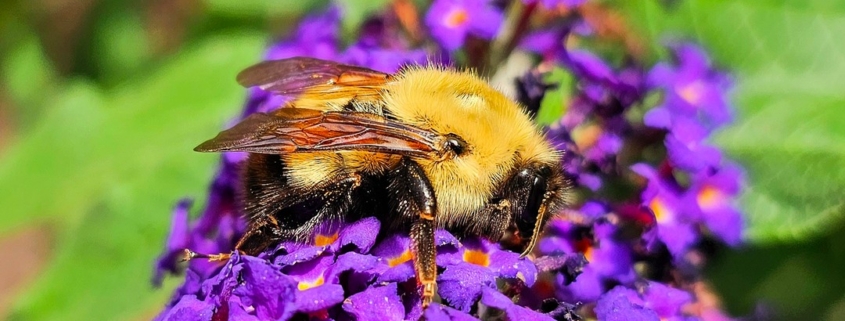
● Pollinators and why they matter (bees, butterflies, and moths)
● Urban wildlife: foxes, deer, squirrels, and other neighbors – cool/fun facts
● How to create wildlife-friendly habitats at home (just an idea as they will not be able to do so)

Trees & Forests
● Native trees of Northern Virginia
● How to identify common trees by leaves, bark, and shape – possible around their site. Do not know whether they have trees planted
● The importance of old trees and forest edges
● Invasive vines & plants: how they affect our local trees –
● Seasonal changes in our forests
● The story of Fairfax Tree Rescuers PRISM

Gardening & Native Plants
● Easy native plants for small yards and patios
● Shade vs. sun gardens: choosing the right plants
● Container gardening with natives

Environmental Stewardship
● How climate change is affecting our local ecosystems
● Everyday actions seniors can take to support nature
● How to recognize and report invasive species
● Citizen science opportunities for all ages

Nature Appreciation & Well-Being
● Nature journaling for relaxation and memory
● The healing power of spending time outdoors
● Mindful walks: slowing down to truly see nature
● Photography in your backyard or local parks.

If you’ve ever thought, “I could talk about that,” this is your moment. Let’s not let the program fizzle—let’s make it flourish!

Your voice, your stories, and your curiosity can brighten someone’s day.

If you’re interested (or even just curious), let the members of the outreach committee know:
Marilyn Parks MARILYNANNEPARKS@gmail.com, Kelly Gilbert kellyjo.gilbert@gmail.com, and/or Jo Doumbia 120411tigre@gmail.com
Arbor Row is waiting—and they can’t wait to learn from you!

SHARE YOUR PASSION FOR THE NATURAL WORLD – National Museum of Natural History Volunteer Program

Photo: FMN Jerry Nissley, Smithsonian Institution’s National Museum of Natural History
The Smithsonian Institution’s National Museum of Natural History is putting out a general call for volunteers and is developing a training program to help increase the number of people in the different disciplinary halls.
Typically 100 hours are requested per year and this is easy to complete with the flexible schedule available.

Do you have a passion for understanding the natural world and our place in it? Spark conversations about science and natural history with the world by joining the volunteer team at the Smithsonian’s National Museum of Natural History!

The National Museum of Natural History Volunteer Program is recruiting new volunteers to engage visitors in four amazing opportunities:

  • Bison: Standing Strong
  • Cellphone: Unseen Connections
  • David H. Koch Hall of Human Origins
  • Sant Ocean Hall

See Brochure for more details!

https://vol.si.edu/pages/opportunities

Accepting applications until December 31st

For more info contact:

NMNHVolunteer@si.edu

Connecting People with Nature: FMN Outreach in Action

Article and Photo by FMN Marilyn Parks

Connecting People with Nature: FMN Outreach in Action

Our programs could reach thousands of people and have deep impact on the community.  The Outreach Committee supports volunteer activities hosted by our partner organizations, represents the chapter at public events, and creates hands-on opportunities for county residents to experience environmental science up close.

In 2025, the Committee focused on promoting awareness of Fairfax Master Naturalists and advancing our mission to preserve, protect and promote the natural habitat of Virginia.

Senior Engagement

We established a partnership with Arbor Row Senior Center in Tysons and scheduled a series of nature presentations geared to the 50+ community in the county.  FMN Speakers Bureau volunteers presented engaging presentations designed toward immersing seniors in nature.  Jo Doumbia presented an overview on hummingbirds; Pete Mecca spoke about living with black bears.  We had an engaging discussion on turtles with Dr. Jan Wolf.  Professor Mike Walker gave an overview of the naturalist, Aldo Leopold, with his in unique impersonation. Nature immersion events are currently being planned for next year.   In January we will host a discussion on how and where to hike in Fairfax County.  February will focus on birds you are likely to see in February and cover the basics on how to use Merlin.  What nature subject are you passionate about?  Would you like to share that passion by educating seniors?  Begin by updating your profile in BI and join the Speakers Bureau.

Library Engagement

Fairfax County libraries host events on a range of topics of interest to the Fairfax community.  These events occur in the library branches and at venues such as schools, parks, theater spaces and senior centers.  Events are always free to the public, and the library outreach has recently expanded to citizen science and nature.  In October, emmy award winning photographer and director, Kathryn Pasternak visited Tysons-Pimmit and offered tips on improving your own photography skills.  As an FMN, Kathryn explored ways residents can contribute to the local scientific community through the app, iNaturalist.

Culmore Teens Programs

FMN Jo Doumbia, along with 10 other FMN members, supported the Culmore Teen Center and Second Story summer activities, by introducing socio-economically challenged teens to nature through lectures, nature hikes, fishing and kayaking at several FCPA parks.


Promoting our Basic Training

To expand our advertising outreach, we assisted the Training Committee by distributing awareness of the registration process of our Basic Training Course.   We placed informative pamphlets at the local Fairfax County libraries. We also sent the registration details to the communication officers of all county District Supervisors asking they post our announcement in their newsletters.

Tabling Events

Tabling events involve participation in high traffic public areas to promote awareness of our cause and to engage with the public.  This year, our tabling events got a fresh new look.  We purchased a new exhibit tent sporting our new label and updated tablecloths to match.  FMN members have been responsive to the chapter’s call for staffing these events, providing a clear call to action that is much appreciated.  Tabling events have included:  Mason Neck Eagle Festival, Sully Historic’s Earth Day Festival, Reston’s Walker Nature Center Spring Festival, and many more.  Recognizing the value we bring, FMN is fortunate to be invited back to continue supporting our partner programs.

We are thrilled to invite you to join our committee as we work to strengthen our connection with the local community.  Your fresh ideas and unique perspective will be invaluable as we plan and execute new community programs.  How do you think we can best serve our community?  Please share any ideas you may have for new programs or ways to improve our current efforts.  We are especially interested in ideas that address specific community needs.  Contact Jo Doumbia 120411tigre@gmail, Kelly Gilbert kellyjo.gilbert@gmail.com or Marilyn Parks marilynanneparks@gmail.com