Posts

Job opportunity: Community education pilot called Watch the Green Grow

The Fairfax County Park Authority is seeking an individual to manage a new community education and social marketing pilot project called Watch the Green Grow. The successful candidate will work across agency divisions to implement and evaluate the pilot project at stream valley parks across Fairfax County.

Salary: $20.00-$25.00 Hourly non-merit, benefits eligible (medical coverage is available with a portion of the premium covered by the county)

Location: Herrity Building (12055 Government Center Parkway) and various field locations

Schedule: This position is scheduled to work 20 to 30 hours per week with a minimum of 1039 hours per year but not to exceed 1,560 hours per calendar year. There is no guarantee of a minimum number of scheduled hours (daily, weekly, monthly) Weekend and evening work hours should be expected.  Position funding only lasts 1 year July 1, 2019- June 30, 2020.

Job Description

  • Design & deliver messages to various audiences that target park neighbors with wildlife friendly messages including encroachment prevention.
  • Design and develop associated media, resources and trainings to drive implementation of the Watch the Green Grow program.
  • Build collaborations with current and new partners
  • Manage project budget and supplies.
  • Recruit, supervise and train volunteers and rover staff as needed
  • Market and conduct outreach programs to multiple audiences including Meaningful Watershed Education Experiences for schools and presentations to neighborhood associations.
  • Manage crowdsourcing app reports and promote reporting among participants and community partners.
  • Evaluate success of efforts and provide written report at end of pilot study

Qualifications

BA/BS in resource management, education, communication/ marketing or related field or equivalent education and experience combination.

  • Demonstrated success in program development or design.
  • Familiarity with ArcGIS mapping a plus.
  • Strong relationship management and communication skills. Ability to relate to field staff and community program partners, and to develop trusting relationships quickly.
  • Strong management skills and the ability to motivate, excite, and educate both internal and external resources. Ability to inspire others.
  • A strong work ethic coupled with an enthusiastic and passionate approach to one’s work. The successful candidate will be a highly energetic, hands-on individual who can meet deadlines and produce products.
  • Willing to travel in-county, and work with a team and network of field staff, volunteers and community partners.

How to apply: email cover letter and resume to Tammy.schwab@fairfaxcounty.gov
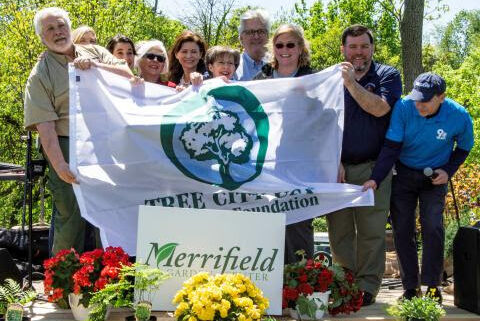
Fairfax County recognized as Tree City USA by Arbor Day Foundation

SpringFEST Fairfax served as the backdrop for a ceremony recognizing Fairfax County as a Tree City USA. The county earned the Arbor Day Foundation designation for the 36th consecutive year. Each year since its inception in 1976, thousands of urban foresters across the country submit applications to be considered to receive this esteemed recognition. The accomplishment was celebrated during a ceremony at SpringFEST Fairfax, on Saturday, April 27, 2019, at Sully Historic Site in Chantilly.

SpringFEST Fairfax is presented by the Fairfax County Park Authority and Clean Fairfax, with support from the Fairfax County Park Foundation. The annual festival is Fairfax County’s official Earth Day and Arbor Day celebration.

Pictured (left to right): Jim McGlone, Urban Forest Conservationist, Virginia Department of Forestry; Roberta Longworth, Executive Director, Fairfax County Park Foundation; Senator Jennifer Boysko, Virginia District 33; Maggie Godbold, Sully representative, Park Authority Board; Delegate Karrie Delaney, Virginia District 67; Kathy Smith, Providence representative, Fairfax County Board of Supervisors; Kirk Kincannon, Executive Director, Park Authority; Cathy Ledec, Chair, Fairfax Tree Commission; Brian Keightley, Urban Forest Management Division Director, Department of Public Works and Environmental Services; and Topper Shutt, WUSA-9 Chief Meteorologist.

Feather drawing class, April 11th

Hidden Oaks Nature Center
7701 Royce St., Annandale, VA
Thursday, 11 April 2019
7-9 pm

Join naturalist and artist Avery Gunther to learn how to draw feathers with colored pencil on toned paper.  Learn about types of feathers and feather identification.  Watch a demonstration about how to draw feathers, then draw your own feathers in this interactive class.  Drawing is a great way to sharpen your observation skills.  Paper is provided for a small fee.  A suggested list of supplies will be provided when you sign up.  Register on ParkTakes, https://fairfax.usedirect.com/FairfaxFCPAWeb/ACTIVITIES/Search.aspx.

Picking up paw paws and putting them in…delicious desserts

Bill Hafker

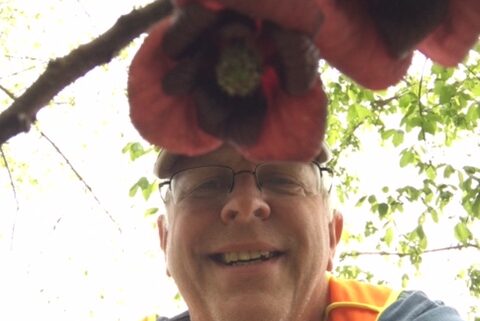
They’ve been called the American Custard Apple and the West Virginia banana, but Paw Paws  (Asimina trilob) are native to much of the eastern United States, typically growing in groups along streams and rivers. They have a large simple leaf and produce the largest fruit indigenous to the U.S. They also feature an unusual deep purple flower that gives off a fetid odor to attract beetles and carrion flies for pollination (the trees predate bees and butterflies as pollinators).

Paw paw trees. Photo: Bill Hafker

Fortunately, the fruit itself is very tasty to humans, too, and is the star ingredient in a dessert bread and pudding. Its flavor is often described as a cross between a banana and a mango. What follows is some useful lore for collecting paw paws and preparing these local treats.

When, where, and how to collect paw paws

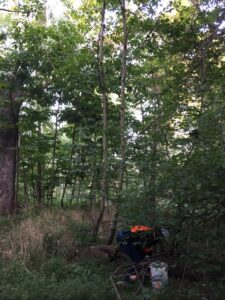
In northern Virginia, paw paws ripen during late August and September. Because they spoil as quickly as they ripen, you will want to investigate their ripeness at the site from which you intend to collect them. Be sure that you have permission to collect them on the sites where you find them. Rules vary in the national, state, and county parks.

Collecting paw paws. Photo: Bill Hafker

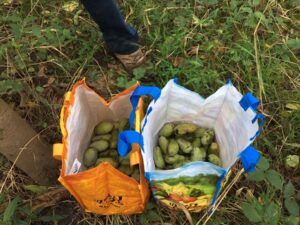
Ripe paw paws will typically fall from the tree, and are best collected from the ground. Gently shaking a tree will also cause ripe fruit to fall to the ground. If you opt for fallen produce, check to make sure it is neither rotten nor full of scavenging ants. 

You can also buy them online at Integration Acres or Earthy Delights, and in some stores or farmers markets.

Cleaning paw paws and preparing the pulp 

Many recipes call for paw paw pulp in 1-cup units, so it is convenient to freeze it in one cup quantities that you can thaw and use as you wish. One cup of paw paw pulp equals approximately 3 medium mashed overripe bananas. 

To get started, remove the skin in any way that you find convenient (e.g., peel them with a knife or vegetable peeler, cut them open with a knife and scoop them with a spoon). Pulp adheres to the seeds, which are large enough to suck on, though you’ll want to avoid swallowing them. 

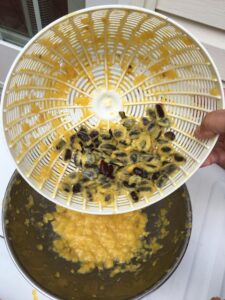
Using a spinner to process pulp off the seeds. Photo: Bill Hafker

It is time-consuming to prepare the pulp in bulk by trying to clean one paw paw at a time. I’ve found that the best way to process the pulp is to peel several fruits at one time and place them in the internal spinning part of a salad spinner that has been taken out of the rest of the spinner. Aggressively rubbing the fruit against the ribs of the spinner presses the pulp through the openings and into a bowl. You’ll want to make sure that you press the seeds firmly against the ribs to scrape off all of the pulp. When only relatively clean seeds remain, discard them and repeat the process with pulp-laden ones. 

Ready to bake?

Paw Paw Bread

You can replace bananas with paw paw pulp in your favorite banana bread recipe. Our family recipe calls for 1 cup of mashed paw paws, 1 cup of sugar, 1 egg, 1 ½ cups flour, ¼ cup melted butter, 1 tsp baking soda, and 1 tsp salt. You’ll want to mix all the ingredients until the batter is smooth, without over stirring. Pour the batter into a Teflon or buttered loaf pan. Bake 1 hour in a preheated oven at 325 degrees.

Paw Paw Pudding

This recipe from the New York Times is in the style of a bread pudding or English pudding (not Jello pudding).

Enjoy!

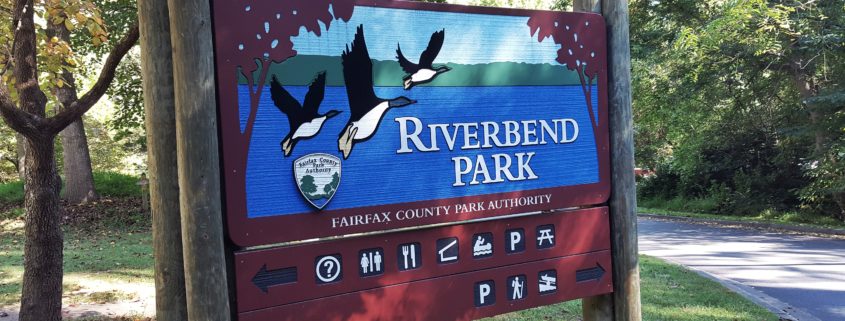
Spring Volunteer Opportunities at Riverbend Park in Great Falls, VA

Bluebell Festival: Saturday, 6 April 2019
Please sign up to volunteer by 31 March 2019.

The bluebells are starting to bloom at Riverbend Park! This means spring is around the corner …and so is the Bluebell Festival! The Bluebell Festival is one of Riverbend’s biggest events of the year and a perfect opportunity to celebrate Riverbend and promote its preservation goals. Wonderful volunteers are needed to ensure the event is a success!
REGISTER HERE: https://volunteer.fairfaxcounty.gov/recruiter/index.php?recruiterID=1380&class=OppDetails&oppGuid={E596D26B-0BF0-4D61-801B-61CFFE753CBB}&t=Bluebell-Festival-Volunteer
CONTACT: valeria.espinoza@fairfaxcounty.gov
SHIFTS: 9AM-12PM, 11:30AM-2:30PM, or 9AM-2:30PM

April Volunteer Orientation: Restoration, Programs, and Park Support
Saturday, 13 April 2019
11am – 1:30 pm

Are you interested in becoming a Riverbend Park volunteer? Do you want to learn more about habitat restoration, nature/outdoor educational programs, or how to support the park? Join us on April 13th at our upcoming Volunteer Orientation event from 11AM-1:30PM. Volunteers will learn about Riverbend’s volunteer program, available opportunities, and upcoming events and then participate in a hands-on restoration project or interactive training to get started!
REGISTER HERE: https://volunteer.fairfaxcounty.gov/recruiter/index.php?recruiterID=1380&class=OppDetails&oppGuid={A5D09A6F-5888-469B-91ED-54CDC30C8DAA}&t=April-Volunteer-Orientation-Restoration-Programs-and-Park-Support
CONTACT: valeria.espinoza@fairfaxcounty.gov
Note: this is the last orientation event until the fall! If you are interested, but cannot attend let Valeria know.

Become a School Programs Lead Volunteer!
Apply by 7 April 2019

Riverbend Park is in search of motivated naturalists interested in helping to educate local students about nature, culture, and history through our field trip programs! School programs run on weekday mornings during Spring and Fall. Topics include soils, Native American history, ecology/wildlife, watershed science, geology, and more!

APPLY HERE: https://volunteer.fairfaxcounty.gov/recruiter/index.php?recruiterID=1380&class=OppDetails&oppGuid={2F32EB07-0B40-4180-AB3D-6E5D200BF187}&t=School-Programs-Lead-Volunteer-Riverbend-Park
CONTACT: valeria.espinoza@fairfaxcounty.gov

Become a Programs Assistant Volunteer!
Orientation on 13 April 2019

We have Program Assistant opportunities for outdoor rec programs, nature programs, scout programs, and summer programs. These will be included at the Volunteer Orientation on April, 13th! Whether you have a passion for hiking, birding, fishing, canoeing, kayaking, trees, wildlife, campfires, rocks, etc… we’ve got an opportunity for you!
TO SIGN UP CONTACT: valeria.espinoza@fairfaxcounty.gov

For more opportunities: https://volunteer.fairfaxcounty.gov/recruiter/index.php?recruiterID=1380&class=OppSearchResults&orgid=71673

Fairfax Master Naturalists: record your hours as E110: FCPA Nature Programs.

Help clean up Fairfax County Parks April 5th-20th

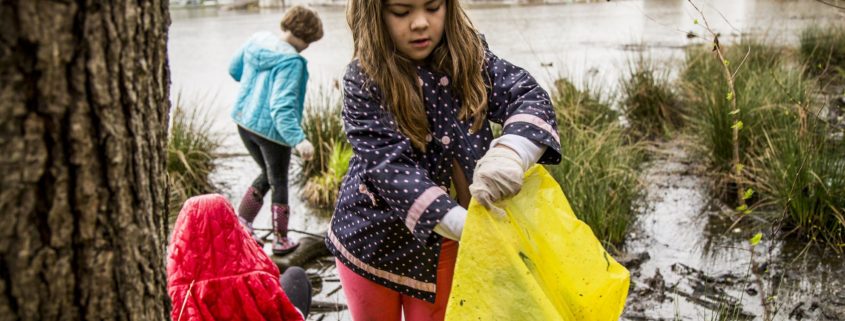
Join The Nature Conservancy and Fairfax County Park Authority to clean up your watershed! This spring cleaning will remove tires, plastic bottles, cans and other debris from local waterways, preventing trash from reaching the nation’s largest estuary, the Chesapeake Bay.

1,000 volunteers are needed to help cover 21 parks! This event is ideal for families, service groups, Scouts and individuals.

Dates and locations are subject to change. Registration for the 4th annual cleanup event will open on March 1, 2019.

5 APRIL 2019

Providence RECenter, Falls Church—25 volunteers needed

6 APRIL  2019

Cub Run RECenter, Chantilly—105 volunteers needed
Ellanor C. Lawrence Park, Chantilly—35 volunteers needed
George Washington RECenter grounds, Alexandria—45 volunteers needed
Hidden Oaks Nature Center at Roundtree Park, Falls Church—55 volunteers needed
Hidden Pond Nature Center, Springfield—55 volunteers needed
Huntley Meadows Park, Alexandria—50 volunteers needed
Lake Accotink Park, Springfield—105 volunteers needed
Lake Fairfax Park, Reston—30 volunteers needed
Lemon Road Park, Falls Church—45 volunteers needed
Middleridge Park, Fairfax—45 volunteers needed
Ossian Hall Park, Annandale—45 volunteers needed
Pine Ridge Park, Annandale—45 volunteers needed
Royal Lake Park, Fairfax—45 volunteers needed
Sully Historic Site, Chantilly—30 volunteers needed
Woodglen Lake Park, Fairfax—45 volunteers needed

13 APRIL  2019

Riverbend Park, Great Falls—45 volunteers needed
Scott’s Run Nature Preserve, McLean—30 volunteers needed

20 APRIL 2019

Arrowbrook Park, Herndon—45 volunteers needed
Dulles Rock Hill Park, Chantilly—45 volunteers needed
Merrybrook Run Stream Valley Park, Fairfax—45 volunteers needed

Guiding plant community change: Management of invasive plants in urban woodlands

You’re invited to the Annual Invasive Management Appreciation Event

Cabells Mill, 5235 Walney Road, Chantilly, VA 20151

Saturday, February 16, 9 am-11.30 am

Talk by Lea Johnson (see flyer for bio)

RSVP to Erin.Stockschlaeder@fairfaxcounty.gov or call 703-324-8681

Flyer

Programs at Green Spring Gardens, Feb. 14th and 16th

The Balanced Garden: How to meld beautiful and sustainable native plants with favorites from around the world
Saturday, Feb 16, 2019 8:30 a.m. – 12:30 p.m.
Green Spring Gardens 4603 Green Spring Road Alexandria VA
Registration: (703) 642-5173 or online at www.fairfaxcounty.gov/parks/parktakes Code: 986.B59A

Butterflies and Blossoms, or Larval Host Plants and the Lepidoptera that Eat Them
Thursday, February 14, 7:30 pm – 9:00 pm
Green Spring Gardens, 4603 Green Spring Road, Alexandria VA

No reservations are necessary for this talk.
Virginia Native Plant Society programs are free and open to the public.

Margaret Chatham will discuss butterflies, caterpillars, and larval host plants.

Beautiful butterflies and lovely blossoms are all the result of trying to make a living. The plants need someone to pollinate them, but at the same time need to limit the number of caterpillars and other insects that can eat them. The butterflies and caterpillars need to avoid being eaten long enough to lay eggs for the next generation. Learn which natives to plant to nurture more than just monarchs.

2010 was a good year for butterfly photographs in our area. Margaret Chatham took a lot of pictures that year. Then she wanted to know who they were and what they ate. No year since has offered her quite as many butterflies, but every season brings something new, so now she wants to share them.

Margaret is a devoted Fraser Preserve Volunteer Visitation Committee Member who removes invasive barberry shrubs in winter and wavyleaf grass in summer and knows the preserve intimately. She is also editor of the VNPS Potowmack News newsletter, a volunteer at the VNPS propagation beds at Green Spring Gardens in Alexandria, and an Arlington Regional Master Naturalist.

Volunteer at Riverbend Park: Wildlife Conservation & Animal Care

Volunteer Orientation

Saturday, Feb 2

9:30 AM-12:00 PM

8700 Potomac Hills St Great Falls, VA

Want to become a Riverbend Park Volunteer? Attend our next monthly Volunteer Orientation and learn about our upcoming opportunities, projects, and events and get started on your training with a hands-on project!

Please register

Upcoming Opportunities

  • Wildflower Survey (Feb-May)  NEW – Identify & document native and non-native wildflowers
  • Spring Salamander Survey (Feb-May)ID, measure, and document salamanders
  • Turtle Survey (Feb-May)  NEW – ID native turtles and help us track & document their presence at Riverbend
  • Wildlife Camera Monitor NEW – Help us set up & track wildlife cams throughout the park and review footage for some action
  • Exhibit Animal Care – Help provide care for our exhibit animals (min 4hrs/month for 6 months)
  • Survey Data Entry (winter-spring) NEW – Enter data on our salamander survey onto a spreadsheet
  • Spring/Summer Programs – Join our interpretive team and provide assistance at our camps & programs
  • Wagon Driver (spring-summer) – help us provide wagon rides at our programs and events
  • Astronomy Festivals (Feb. 16 and March 9)
  • Macroinvertebrate Stream Survey at Scott’s Run Orientation March 2
  • Dragonfly Survey (March-Oct) Training in March
  • Bluebell Festival, April 6


Ongoing Opportunities

  • Watershed Clean ups
  • Habitat restoration
  • Trail maintenance and restoration
  • Gardening/plants
  • Park Support


Contact

Valeria Espinoza, Volunteer Coordinator valeria.espinoza@fairfaxcounty.gov

Rita Peralta, Natural Resources Manager rita.peralta@fairfaxcounty.gov

Volunteer Opportunities

Look what you’ve done!

by Michael Reinemer

As I sign off as president, passing the baton to Joe Gorney, I want to thank each Virginia Master Naturalist in the chapter for what you do. The numbers of volunteer hours are astounding.

It’s hard to overstate how desperately your hours and your expertise are needed. Fairfax County and the whole region suffer from habitat loss, climate change, pollution, fragmentation, overuse – among many other assaults.

Meanwhile, we humans are increasingly disconnected from nature, suffering from the “landscape amnesia” Pete Mecca describes to FMN classes. Or shifting baseline syndrome: It’s impossible to notice the many gradual declines in the natural world – unless you understand the natural world, and you care about it and you actively monitor it. Which is one of the things you do as master naturalists. The statewide mason bee monitoring project is a great example.

You may have read “The Insect Apocalypse Is Here,” the cover story by Brooke Jarvis in the New York Times Magazine, Nov. 27, 2018.  The now global, scientific alarm about loss of insect diversity and abundance was triggered in part by small bug club in Germany. That club of 63 amateur naturalists, which included a few with science backgrounds, documented an astounding 80 percent drop in insect numbers in their research plot over a 30-year period. They had been consistently monitoring and recording changes in insect numbers or biomass in addition to species.

What’s the big deal? As E.O. Wilson put it, “If all mankind were to disappear, the world would regenerate back to the rich state of equilibrium that existed ten thousand years ago. If insects were to vanish, the environment would collapse into chaos.”  While the “10,000 years” part is probably optimistic, the role of decomposers, pollinators, and other insects is indisputable.

In her NYT piece, Jarvis talks about the long amateur naturalist tradition in Europe and how that has figured into faster, more aggressive response to the insect apocalypse there, compared to the U.S. 

So as part of the growing master naturalist movement in the U.S., you are a vital resource in this era of shrinking budgets for conservation and a time of overt hostility toward science in some quarters of the federal government. Your work as monitors, mentors, and stewards is invaluable.

While all the 2018 numbers aren’t in yet, look what you’ve done:

680 hours staffing information desks at nature centers

445 hours working on nature programs for the county

435 hours removing invasive plants

375 hours as Audubon at Home ambassadors, assessing wildlife habitat

360 hours for the Cornell Lab of Ornithology feederwatch program

350 hours managing habitat and land for Fairfax County Park Authority

343 hours for school programs for Fairfax County Park Authority

330 hours for citizen science programs for the park authority

267 hours monitoring trails for Virginia Bluebird Society

260 hours working with the Plant NoVA Natives campaign

That’s just a small snapshot of your amazing numbers and work. Congratulations, and thank you. 

And a hearty thanks to the many volunteer leaders who serve as officers, committee chairs, and committee members who manage the training and all the mechanics that make the Fairfax Master Naturalists the force for nature that it is.