8th Annual Prince William Native Plant Symposium 2026, February 14th

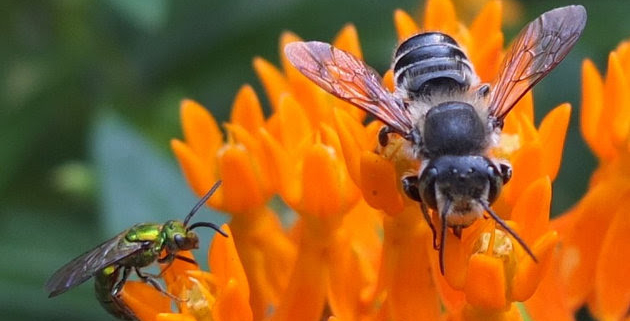
Photo courtesy of Plant NOVA Natives

Saturday, Feb 14, 2026
9:00am – 4:00pm EST

Cost/Tickets:

This is a hybrid event. Participants can either choose to join in-person or virtually:
General Admission Tickets:

  • Early Bird In-Person : $40 – available until Jan. 9 at 11:59pm
  • In-Person: $45 – available Jan. 9 at 11:59 pm – Feb. 10 at 11:59pm
  • At the Door: $55– lunch not guaranteed
  • Student (in person): $10 – available until Feb. 10 at 11:59pm
  • Virtual Tickets: $25 – available until Feb. 13 at 11:59pm
    Note that these prices do not include the EventBrite fee
    *Students, you will need to present your student ID at check-in. Otherwise, you will have to pay the ‘At the Door’ price.

Verizon Auditorium at George Mason University,
George Mason Circle, Manassas, VA, 20109

Click here for sign up and more information.

About

Whether you are new to native plants and what they can do for your property or you are looking for alternative landscaping ideas, this event is for you! Native plants can:

  • Create a beautiful yard
  • Save time so you can enjoy other activities
  • Create habitat for birds & pollinators
  • Save money on fertilizer & pesticides
  • Improve water quality
  • Curb Erosion

Keynote Speaker:

Bill Cullina, The F. Otto Haas Executive Director & Morris Arboretum & Gardens of the University of Pennsylvania

Sugar, Sex, and Poison: Shocking Plant Secrets Caught on Camera

Are we humans masters of our world, or are plants really the ones in charge? What they lack in locomotion, they compensate for in structure and chemistry. Celebrated author and botanist Bill Cullina, Executive Director, Morris Arboretum and Gardens, will explain why plant life is at the center of a carefully balanced natural economy that is critical to the functioning of our ecosystems. Through photosynthesis, plants produce the energy that powers the food chain. And although eaten by others, they are far from helpless prey, having evolved a dizzying arsenal of relationships to create ecologically sound landscapes.


Schedule (EST):

9:00am-9:45am – Registration (Doors will open at 9AM!)

9:45am-10:00am – Welcome

10:00am-11:00am – Keynote: Bill Cullina

11:00-11:30: Networking

11:30am-12:30pm – Breakout Session 1

12:30pm-1:45pm – Lunch

1:45pm-2:45pm – Breakout Session 2

3:00pm-4:00pm – Breakout Session 3


Wolf Trap National Park Service Opportunity – 2026

Logo: Friends of Wolf Trap


Wolf Trap National Park has six (6) open volunteer Service positions to be Nature Event Planners for calendar 2026.

The National Park Service at Wolf Trap National Park (not to be confused with the Wolf Trap Foundation – the non-profit that runs the entertainment side of the Park) hosts ten (10) nature events each calendar year. The events are typically 90 mins long and occur on the first Sunday of each month and are typically led by a volunteer nature subject matter expert. Prior events have featured nature hikes; subject matter experts focused on birds, flowers, reptiles, insects, and mushrooms; children’s events around art in nature, bats, fireflies and more.

The Friends of Wolf Trap (FOWT) coordinate these events for the Park and will lend support and training for the volunteers.
With support from FOWT, duties would involve:

1) Selecting the topic (it could be simply a hike or a focus on a natural resource, such as reptiles, mushrooms, trees, etc.);
2) Securing a subject-matter expert (e.g., an FMN or a representative of an organization with applicable expertise);
3) Preparing and posting the Eventbrite description;
4) Sharing the Eventbrite link with Wolf Trap National Park and other “partner” organizations to drive interest and attract registrants;
5) Monitoring Eventbrite registration activity up to the date of the event;
6) Securing volunteer support in proportion to the number of registrants expected to attend. Generally, about half of Eventbrite registrants actually attend – the weather being a determining factor. Volunteer support is usually found among the FOWT members and the FMN community for handling sign-in, directing parking, answering miscellaneous questions, providing general natural resource knowledge, interacting with the participants, and ensuring safety.
7) Identifying and securing any logistical support needed by the presenter (e.g., a microphone, table and chair, covered shelter, etc., most of which are available through the Park)
8) Seeking FOWT approval for modest expenditures, if needed. (E.g., a speaking fee for an expert or a contribution to a featured organization).
Wolf Trap National Park and FOWT will provide support, suggestions and oversight, as desired, to those who volunteer for this Service assignment. A schedule that allocates monthly assignments among those who volunteer, will be developed to help ensure a manageable, meaningful experience for each volunteer. Two (2) volunteers will be assigned to each event. Volunteers will be assigned to three (3) events per year.

Volunteers will log 5-10 FMN service hours per person for each of the events they manage. The FMN Service Code is S168 – National Park Service Stewardship Projects.
This project can be done largely from home. Presence on the day of the event is helpful but not required. A year’s commitment is requested.
Please Contact Kathy Stewart: 703-403-4923; bugssite@aol.com with questions or to apply to volunteer for this Service project.


AERO Opportunities: Want to Get More Involved with Wildlife? Learn About Getting Licensed in 2026

Photo: Provided by A.E.R.O Animal Education and Rescue Organization


AERO Opportunities: Want to Get More Involved with Wildlife? Learn About Getting Licensed in 2026

Community Outreach – S213: DWR Stewardship Projects — Department of Wildlife Resources (VDWR)

 AERO education events are eligible for Continuing Education hours as well.

Hello A.E.R.O. Volunteers & Friends,
If you’ve been thinking, “I’d love to help more” or “I wish I could work more directly with wildlife,” this is your chance. The 2026 licensing cycle with the Virginia Department of Wildlife Resources (DWR) is coming up soon, and it is time to reach out specifically to those of you who do not currently hold a wildlife rehabilitation license but might be interested in taking that next step.

Why Get Licensed?

Having a DWR wildlife permit allows you to:

  •   Help with hands-on wildlife care
  •   Transport/rescue injured or orphaned animals more independently
  •   Assist rehabbers in their homes or facilities
  •   Participate in hands-on trainings and free A.E.R.O. classes in 2026 at a deeper level

For many volunteer roles with A.E.R.O. – especially transport, caregiving, and in-depth training opportunities – it is strongly preferred that you hold at least a Category IV (Care Provider / Wildlife Hospital Aide) license.


Interested in Apprenticing or Getting a New License?

If you are interested in:

  •   Getting more involved
  •   Becoming permitted to work with wildlife, or
  •   Starting as an apprentice under a sponsor

  Please reply to this email and let me know. 

I’ll help you figure out which path and category makes the most sense for you.

To become an apprentice, you will need: 

  •   A formal agreement with a sponsor (Olivia)
  •   A room dedicated exclusively to wildlife care
  •   A setup that meets the state’s facility requirements (I can send you the DWR checklist)
  •   Completion of 6 hours of Continuing Education (CE)

Don’t worry if that sounds like a lot — A.E.R.O. Volunteers will walk you through each step, connect you to trainings, and help you meet the requirements.

License Categories (Quick Overview)

Here are the main volunteer-related categories:

  •   Category I – Apprentice: For beginners under sponsorship
  •   Category II – Rehabilitator: For experienced rehabbers handling most species
  •   Category IV – Care Provider / Wildlife Hospital Aide: For assisting at permitted facilities
  •   Category V – Student / Intern: For short-term training or school-related experience

If you’re not sure where you fit, just reach out — A.E.R.O. Volunteers can talk through your interests, time, and space at home.

Ready to Take the Next Step?

If you’re curious, even if you’re not 100% sure yet, please email me back and say you’re interested in learning more.
We’re happy to support you in moving from “helper” to permitted wildlife caregiver or apprentice in 2026. Our animals – and our rehab team – always need more good people.

Thank you for all you already do for A.E.R.O. and Virginia’s wildlife.

 — Olivia

EMAIL: olivia@aeroanimalrescue.org

President, A.E.R.O

Animal Education and Rescue Organization

Arlington County Department of Parks and Recreation Is Offering Two FREE Herp-related Virtual Programs – January 28th and February 24th

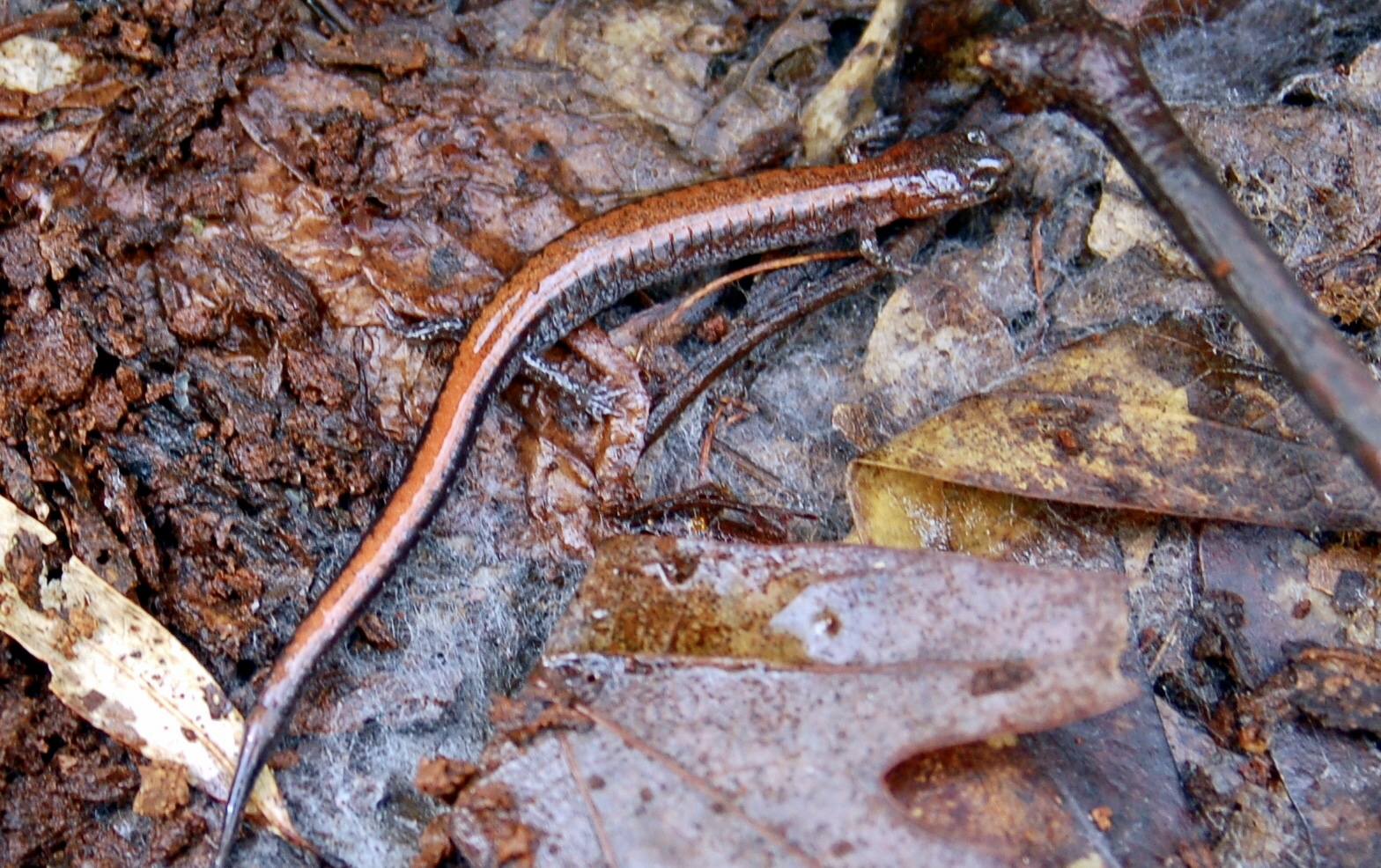
Photo: FMN Jerry Nissley – Red backed salamander


Arlington County Department of Parks and Recreation is offering two FREE herp-related Virtual Programs:

Salamanders of Virginia

Wednesday Jan. 28, 2026
7:00-8:00pm
Activity #622940
Section letter (not number) ID: I

This online talk will cover the common species of salamanders in Northern Virginia as well as the diversity and biology of these elusive amphibians.

A Year in the Life of a Box Turtle

Tuesday Feb. 24, 2026
7:00-8:00pm
Activity #622940
Section letter (not number) ID: O

A naturalist will discuss life history through the seasons, the threats facing turtle populations, and what you can do to be a friend to box turtles!

Park Naturalist Aide and VHS member, Leeanna Pletcher, will be giving these talks. You do not need to live in Arlington County to register. In-county registration begins today, Dec. 4th. Out of county registration begins on Dec. 10th. To register for these free classes, you need an Arlington Parks and Recreation account. Go to registration.arlingtonva.us to login or establish an account. Once you are logged in, the easiest way to locate and enroll in the talk is to go to Quick Enroll and enter the Activity # and Section ID (listed in the program description above) to add it to your cart.

Confirmations are sent via email, the day they are processed. An email reminder with the Microsoft Teams link will be sent a few days before the program. If you already have an account but have forgotten your user ID and password, contact the main registration office (703.228.4747 option 1 or registration@arlingtonva.us).

Sincerely,
Kelly Geer
Chair, Community Outreach Committee
Virginia Herpetological Society


Virginia’s Amazing Vultures, March 8th

Photo: Friends of Dyke Marsh – Virginia Vultures

Sunday, March 8, 2026
3:00PM

FREE and In-person
The Mount Vernon Government Center, 2511 Parkers Lane (between the GWM Parkway and U.S. 1)

On Sunday, March 8, wildlife rehabilitator Heather Shank Givens will give a presentation on Virginia’s fascinating vultures and bring her black vulture, Dusty, a non-releasable vulture wildlife ambassador for which she holds federal and state permits.

Vultures are a critical component of the ecosystem but are often misunderstood and maligned. The presentation will explore the natural history of vultures in Virginia, the unique biology and ecology of vultures, global conservation concerns and human–vulture conflicts and mitigation strategies. Every year, the Wildlife Center of Virginia treats from 50 to 60 injured black and turkey vultures.

Heather is a volunteer wildlife rehabilitator with the Blue Ridge Wildlife Center and a wildlife educator.

This free, in-person-only meeting will be at 3 p.m. at the Mount Vernon Government Center, 2511 Parkers Lane (between the GWM Parkway and U.S. 1).

Sponsors:  Friends of Dyke Marsh, Northern Virginia Bird Alliance, Friends of Huntley Meadows Park and the Northern Virginia Bird Club


Spotted Lanternfly – The Fight Continues

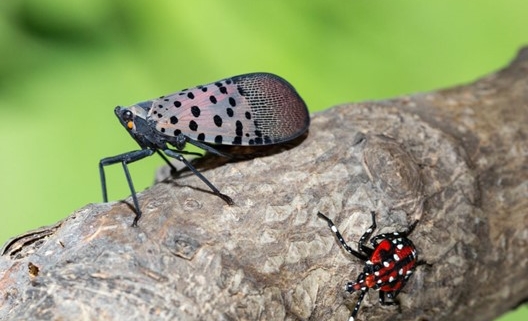
It is increasingly hard nowadays to avoid running into a Spotted Lanternfly (SLF). They are in our parks, backyards, and favorite public spaces.

However, efforts to stomp, squash, and smash the spread of this nuisance invader has a stalwart champion in FMN Susan Laume. Via a pilot program under Fairfax County’s Urban and Community Forestry Division (UCFD) and with support from FCPA’s Natural Resources IMA group, she and the Laurel Hill Park Volunteer Team (FMNS Kathy Stewart, Aurora Boughi, and others) have been vacuuming SLFs at Laurel Hill Park.

Yes vacuuming – an innovative, environmentally safe, and non-toxic tool in the toolbox to help control the invasion. Given the good initial results and positive feedback, UCFD is planning to add vacuums to the county library’s equipment rental program.

In addition to Susan’s habitat management work, she also contributes articles to the Connection Newspaper. Please read more about the SLF and the county’s management program in her Connection article from this summer. Scroll down to page 10 looking for, what else, “Stomp, Squish, Slap, Smash”.

Service hours removing invasive insects may be recorded under one of two FMN codes. S109 for service in County parks; S256 for non-park sites.
S109: FCPA Habitat and Insect Management – – Fairfax County Park Authority.
S256: Fairfax County Habitat and Insect Management — Fairfax County

Acknowledgements:

Cover photo credit: Stephen Ausmus, USDA

Black-Footed Ferrets: The Road to Recovery, January 20th

Photo Credit: U.S. Fish and Wildlife Service – Paul Marinari releases a black-footed ferret into a preconditioning pen


Tuesday, January 20, 2026
7:00pm – 8:30pm

Sign up on Zoom to watch live stream or on demand

Free

Speaker: Paul Marinari, retired biologist of the Smithsonian’s National Zoo and Conservation Biology Institute

Half a century ago, scientists believed the last black-footed ferrets—the only ferrets native to North America—had gone extinct. Today, their recovery marks one of the most hopeful conservation stories of the 20th and 21st centuries. In this kickoff lecture of 2026, discover how this endangered species rebounded with Paul Marinari, a retired biologist with the Smithsonian’s National Zoo who assisted in the ferret’s recovery for much of his career. Paul will discuss how black-footed ferrets are a unique part of the North America Great Plains and what led them to become endangered. He will also highlight the role the Smithsonian and its scientific research played in their reproduction, genetics and animal husbandry, and offer an update on recovery efforts to date.

This event is part of the Smithsonian Environmental Research Center (SERC)’s free evening science talks, and it will be recorded. Closed captions will be available during the live stream and on the recording. By signing up on Zoom, you’ll be able to watch live and receive a link to the recording a few days after the live stream. SERC seeks to showcase a wide variety of topics and perspectives for its evening science talks. Views expressed during these talks belong to the individual speakers and not the Smithsonian.


Ranger at the Refuge: Tundra Swans, December 28th

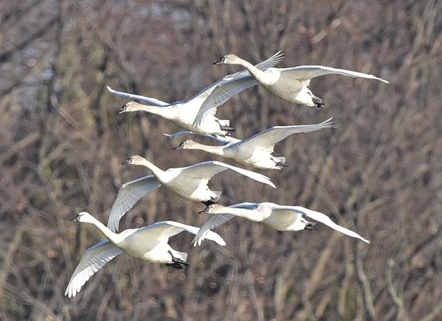
Photo: Tundra Swans, Randy Streufert, The Potomac Flier (The NVBA)

Sunday Dec. 28, 2026.
10:00 a.m. – 12:00 p.m.

Other details:

Standard parking or admission fee applies: No.
Extra fee: No.
Registration required: No.
Children welcome: Yes.
Phone: 703-339-2385
Email Address: MasonNeck@dcr.virginia.gov

Mason Neck State Park, 7301 High Point Rd., Lorton, VA 22079.
Woodmarsh Trail Observation Deck at Elizabeth Hartwell Refuge

Tundra Swans are known for their striking white plumage and long, graceful necks, making them a favorite among birdwatchers. Each year, these incredible birds undertake a remarkable migration from their Arctic tundra breeding grounds to warmer winter habitats. Along the way, they face numerous challenges, including harsh weather and the need to find suitable feeding areas. During your visit, you’ll learn about their impressive strength and stamina as they fly thousands of miles to return to the tundra they call home.

Meet rangers stationed at the observation deck at the Woodmarsh Trail within the Elizabeth Hartwell Mason Neck National Wildlife Refuge. The Woodmarsh Trail Observation platform is approximately 1 mile from the parking lot. The trail is unpaved with slight elevation changes. The trail offers a longer loop to the observation platform if you like.   Please stay tuned to the website for any weather-related changes to the program.

Additional dates

Ranger at the Refuge: Tundra Swans – Jan. 3, 2026. 1:00 p.m. – 3:00 p.m.
Ranger at the Refuge: Tundra Swans – Jan. 11, 2026. 1:00 p.m. – 3:00 p.m.
Ranger at the Refuge: Tundra Swans – Jan. 17, 2026. 10:00 a.m. – 12:00 p.m.
Ranger at the Refuge: Tundra Swans – Jan. 25, 2026. 12:00 p.m. – 2:00 p.m.

Winter Fest 2026 – Mason Neck State Park, January 1, 2026

Image: Mason Neck State Park – Winterfest 2026

Jan. 1, 2026
7:30 a.m. – 1:00 p.m.

Mason Neck State Park, 7301 High Point Rd., Lorton, VA 22079.
Various Locations throughout the Park


Other details:

Standard parking or admission fee applies: No.
Extra fee: No.
Registration required: No.
Children welcome: Yes.
Phone: 703-339-2385
Email Address: MasonNeck@dcr.virginia.gov

Bundle up and celebrate the wonder of the season! Join folks for a day of frosty fun, nature exploration, and cozy community cheer. Discover how wildlife adapts to winter, take a guided hike through the quiet woods, create nature-inspired crafts, and warm up by the campfire with a hot beverage. It’s a perfect way to enjoy the beauty and magic of winter outdoors! Festivities will take place near the picnic area. Look for specific information on the hikes. Please plan to be outdoors the entire time. If the weather becomes unfavorable, we will make alternative arrangements.

7:30 a.m. – 9:30 a.m. Sunrise Hike 3.6 miles moderate hike, meet at the trailhead for High Point Trail near the picnic area.
Folks will hike along the High Point Trail to Wilson Springs to Kanes Creek, then to Eagle Spur, and back. This hike will be a moderately paced hike to start the new year with a heart-healthy activity. You will then spend a short time at the observation point, then return to the picnic area. This trail is partially paved, mostly dirt, with some elevation changes. Not wheelchair nor stroller-friendly.

10:00 a.m. – 1:00 p.m. at the Picnic Area

Crafts.

Snow Science.

Campfires and warm beverages.

10:30 a.m. – 11:00 a.m. Winter animal adaptation story “hike”. This family-friendly “hike” will explore how different animals adapt to winter. Meet Interpreters at the picnic area at 10:30, or, if you prefer to learn and explore on your own, the story walk will be available from 10:00 a.m. to 1:00 p.m.

11:30 a.m.-12:30 p.m. Winter Tree ID Hike on High Point Trail. This will be a slower-paced hike, with many stops along the way to identify trees. Interpreters will have some winter tree ID guides to share and will teach you to look for the subtle signs trees give us for identification. Interpreters will meet you at the trailhead to High Point near the group picnic area. This is wheelchair and stroller-friendly.

About First Day Hikes

Every year on Jan. 1, Virginia State Parks celebrates First Day Hikes. This nationwide initiative invites people to ring in the new year by connecting with nature and making lasting memories at a state park. Ranger-led and self-guided First Day Hikes are offered across the state, giving visitors of all ages and skill levels the chance to explore outdoors. January 1 is a Free Parking Day at all Virginia State Parks. (The admission fee at Natural Bridge still applies).