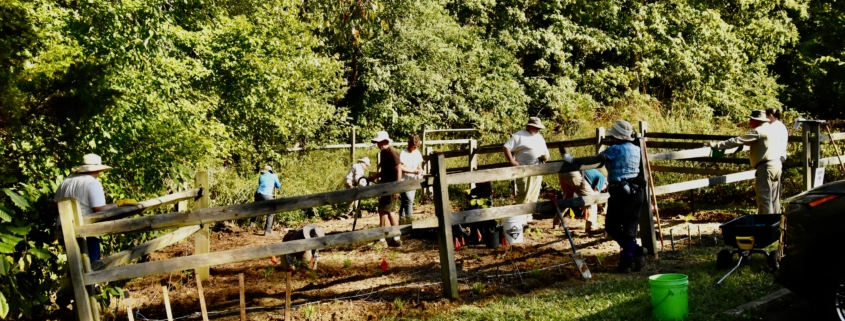
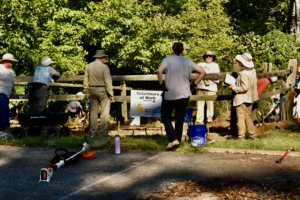
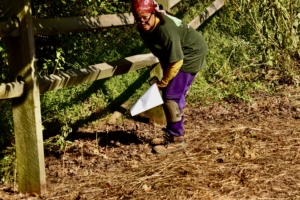
Many of our Fairfax County parks, NoVA Parks, and even our local state park (Mason Neck) have active Trail Steward Programs. They vary in responsibilities from physical trail maintenance to passive monitoring and reporting on trail conditions and nature interpretation for park visitors.
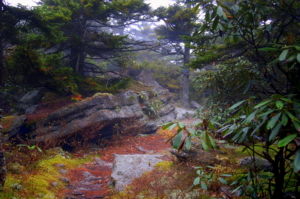
Photo – FMN Jerry Nissley
Trail Stewardship is one way to provide a greatly valued service to your favorite park. Our parks appreciate the efforts of their volunteers and most parks REALLY appreciate VMN/FMN volunteers because they have gone through training in conservation of natural resources and they tend to have a genuine passion for nature.
FMNs interested in Trail Steward or Trail Monitoring programs in the Fairfax County Park system can simply call your local park or search the Volunteer Fairfax opportunities site. For NoVA Parks, there are a few existing programs and you may contact Rachel Doody, Park Manager Potomac Overlook Regional Park & Winkler Botanical Preserve – rdoody@nvrpa.org for more details. For Mason Neck, please call the park and ask for the Volunteer Coordinator. A few stalwart FMN even volunteer as trail crews on segments of the Appalachian Trail via the Appalachian Trail Club. And yes, FMN has service codes for each opportunity.
So you may be wondering why this article is titled, Unintented
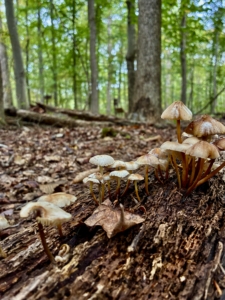
Huntley Meadows Mushrooms – photo FMN Jerry Nissley
Consequences? Primarily, because I find that for every intentional action taken volunteering with nature projects there are potential unintentional consequences that manifest by developing a deeper appreciation of a specific “place”. Volunteering at one or two parks on a consistent basis, experiencing seasonal change, immersed in multiple ecosystems, the volunteer learns the phenological cycles of the park – the heart beat. For example, Fall reveals the glorious pallet of natural colors, and up sprout fungi – nature’s decomposer. The pulse slows.
Winter bares the bones of the forest and marks a period of rest for much of the flora and fauna. Reserving energy, blood flow slows to sustain itself through the cold. Spring ushers in an explosion of new life to wetlands, meadows, and forests showing us ephemeral plants, the migratory patterns of birds, micro-fauna, and the treasures found in vernal pools. The pulse quickens.
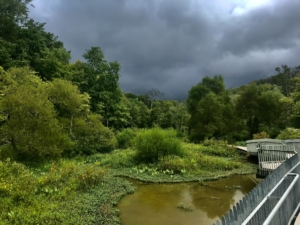
Thunderstorm over Barnyard Run, Huntley Meadows – photo FMN Jerry Nissley
Summer displays lush growth and the ability of nature to flourish through heat and harsh environmental events. The beat is strong.
I am fortunate, and at times blessed, to participate in various Stewardship and Educational programs at Mason Neck and, admittedly my favorite park, Huntley Meadows. Each park offers beauty, serenity, solitude, and an inner satisfaction that reaches new heights of appreciation as more time is spent understanding the heart beat of each.
Mason Neck offers Trail Steward programs that include clearing trails and reporting large trail obstructions to park staff in addition to the more casual Trail Monitoring.
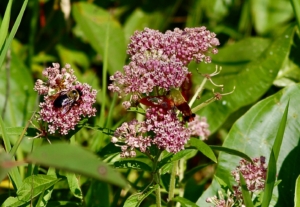
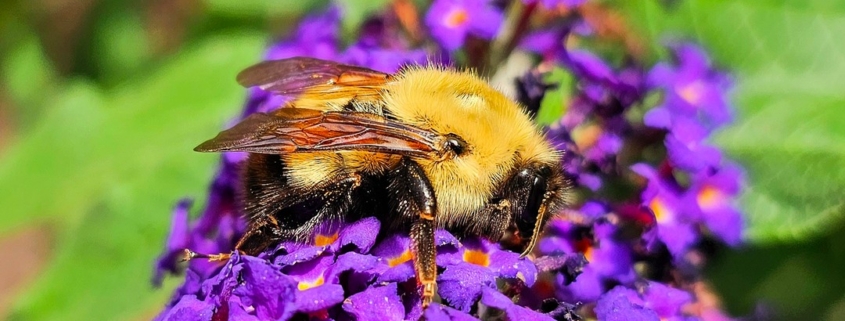
Bumble bee and clear wing hummingbird moth – photo FMN Jerry Nissley
Huntley Meadows offers Trail Monitoring, designed more as an interpretative trail service for visitors. We count visitors, report trail conditions, answer ad hoc visitor questions, and provide interpretation of nature within the park. Huntley is a unique FCPA park, in that it has three ecosystems – hardwood deciduous forest, meadows, and a non-tidal, hemi-marsh wetland. The boardwalk snakes its way around and through the wetland with additional trails that lead through the forest and around the meadows.
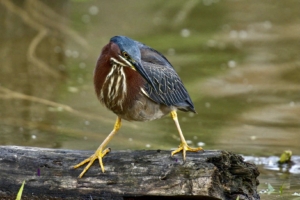
Green Heron ready to strike at Huntley Meadows – photo FMN Jerry Nissley
Being there on average six or seven times a month all year long provides such insight into the various macro- and micro-cycles of a living park land.
For example, my most recent trail monitoring report to the park included visitor engagement and general observations:
Miscellaneous Discussions:
- General discussion on the resurrection of a fallen owl’s nest (replaced by WRL with a cool basket) and the rescue of two owlets.
- Frog discussion with a group inquiring about different species at HMP
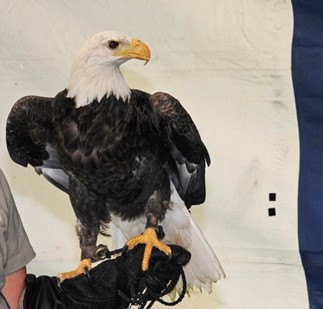
- Eagle vs Osprey discussion – aerial conflict, nesting, feeding at HMP
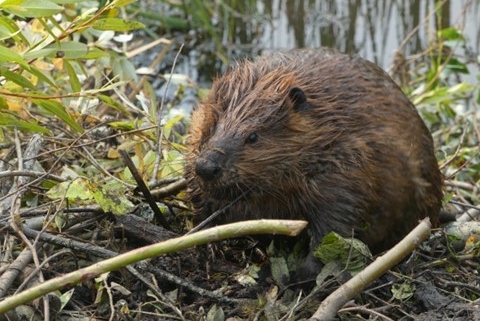
- New beaver dam in barnyard creek watershed – new family in town??
- Consistency of otter scat on the boardwalk (they eat freshwater mussels and clams, so shell fragments our found mixed in).
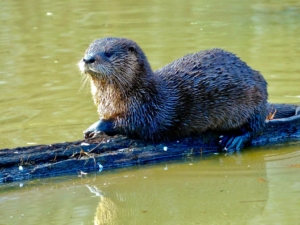
River Otter lounging at Huntley Meadows – photo FMN Jerry Nissley
Daily Observations:
Air still; sunny; warm; 81°
– Birds: Downey wood peckers; mallards; wood ducks; ravens; Canada geese; great horned owlet on nest; black vultures; pileated WP; red shouldered hawk; Cooper’s hawk; Osprey; Bald Eagle
– Mammals: muskrats
– Arthropods: blue azure butterflies on trail; damselflies; giant centipede
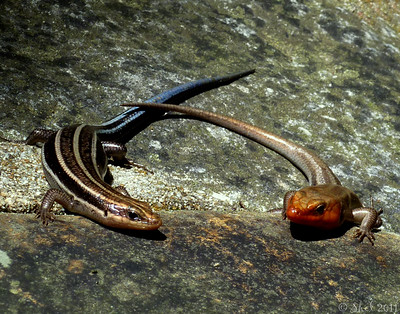
– Herps: snappers; painted turtles; several species of frogs; spotted turtle; black rat snake; northern water snake
– Fish – spawning carp
– Plants: aquatic grasses, cattails emerging; spring beauties have sprung; Sweet Cicely; May apple in flower; cinnamon ferns unrolling; dogwood.
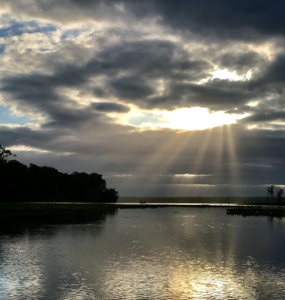
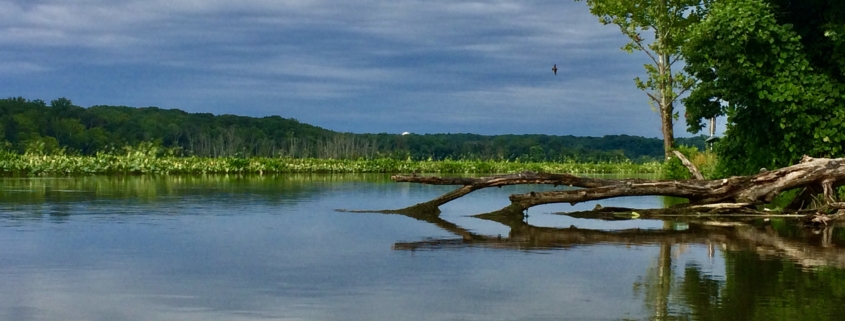
Kane’s Creek, Mason Neck State Park – photo FMN Jerry Nissley
What is the adage we all learned in our VMN cohorts?
“Awareness leads to knowledge, knowledge leads to understanding, understanding leads to appreciation, and appreciation leads to conservation.”
Give Stewardship a try. Reap the rewards of unintended consequences.