SHARE YOUR PASSION FOR THE NATURAL WORLD – National Museum of Natural History Volunteer Program

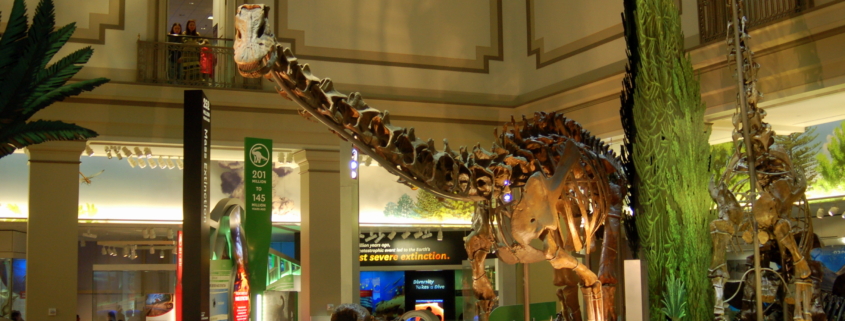
Photo: FMN Jerry Nissley, Smithsonian Institution’s National Museum of Natural History
The Smithsonian Institution’s National Museum of Natural History is putting out a general call for volunteers and is developing a training program to help increase the number of people in the different disciplinary halls.
Typically 100 hours are requested per year and this is easy to complete with the flexible schedule available.

Do you have a passion for understanding the natural world and our place in it? Spark conversations about science and natural history with the world by joining the volunteer team at the Smithsonian’s National Museum of Natural History!

The National Museum of Natural History Volunteer Program is recruiting new volunteers to engage visitors in four amazing opportunities:

  • Bison: Standing Strong
  • Cellphone: Unseen Connections
  • David H. Koch Hall of Human Origins
  • Sant Ocean Hall

See Brochure for more details!

https://vol.si.edu/pages/opportunities

Accepting applications until December 31st

For more info contact:

NMNHVolunteer@si.edu

George Mason’s Virginia Climate Center Releases First-ever Statewide Climate Assessment

Cover of the First Virginia Climate Assessment, Virginia Climate CenterGeorge Mason University

George Mason University’s Virginia Climate Center (VCC) has unveiled the commonwealth’s first comprehensive, peer-reviewed climate assessment—a landmark report that provides science-based insights into Virginia’s changing climate and its impacts on communities, infrastructure, and the economy. 

This report marks the inaugural comprehensive assessment of climate conditions across the Commonwealth of Virginia. While Virginia’s diverse weather and climate patterns have been examined in both local and broader national and global contexts, no prior effort has synthesized the wealth of scholarly research specific to Virginia into a unified resource.

The Virginia Climate Assessment provides a science-based evaluation of the ways past, current, and anticipated climates have and will impact Virginia and its people. As the first report of its kind for the state, it provides a collection of evidence-based key messages that have been prepared and extensively reviewed
by technical and scientific experts across Virginia and beyond. It is expected to be the first in a series of such assessments, establishing a baseline against which future changes and impacts can be measured and understood, and adaptation effectiveness and resilience can be evaluated.

READ THE FULL REPORT

An executive summary for busy readers and the VCA’s top findings.

KEY MESSAGES

1. Virginia’s climate is shaped by weather patterns stemming from higher and lower latitudes, while regional variation reflects topography and coastal
proximity (high confidence).

2.The Virginia climate has become warmer (very high confidence) and wetter (medium confidence) in recent decades, with greater precipitation extremes
(high confidence) and more frequent tidal flooding (very high confidence) along the Atlantic coast.

3.Climate projections indicate continued warming (very high confidence) and wetting (medium confidence) for Virginia through the middle to late 21st century, with chronic tidal flooding along the Atlantic coast (very high confidence).

The Virginia Climate Assessment is intended to be used to inform climate adaptation plans, resilience strategies, and policy decisions, and provide evidence for developing targeted responses to climate impacts. Key Messages can be used to identify areas of critical need for strategic planning, provide supporting evidence for budget proposals, and outline potential directions for policy development or climate action planning.

Connecting People with Nature: FMN Outreach in Action

Article and Photo by FMN Marilyn Parks

Connecting People with Nature: FMN Outreach in Action

Our programs could reach thousands of people and have deep impact on the community.  The Outreach Committee supports volunteer activities hosted by our partner organizations, represents the chapter at public events, and creates hands-on opportunities for county residents to experience environmental science up close.

In 2025, the Committee focused on promoting awareness of Fairfax Master Naturalists and advancing our mission to preserve, protect and promote the natural habitat of Virginia.

Senior Engagement

We established a partnership with Arbor Row Senior Center in Tysons and scheduled a series of nature presentations geared to the 50+ community in the county.  FMN Speakers Bureau volunteers presented engaging presentations designed toward immersing seniors in nature.  Jo Doumbia presented an overview on hummingbirds; Pete Mecca spoke about living with black bears.  We had an engaging discussion on turtles with Dr. Jan Wolf.  Professor Mike Walker gave an overview of the naturalist, Aldo Leopold, with his in unique impersonation. Nature immersion events are currently being planned for next year.   In January we will host a discussion on how and where to hike in Fairfax County.  February will focus on birds you are likely to see in February and cover the basics on how to use Merlin.  What nature subject are you passionate about?  Would you like to share that passion by educating seniors?  Begin by updating your profile in BI and join the Speakers Bureau.

Library Engagement

Fairfax County libraries host events on a range of topics of interest to the Fairfax community.  These events occur in the library branches and at venues such as schools, parks, theater spaces and senior centers.  Events are always free to the public, and the library outreach has recently expanded to citizen science and nature.  In October, emmy award winning photographer and director, Kathryn Pasternak visited Tysons-Pimmit and offered tips on improving your own photography skills.  As an FMN, Kathryn explored ways residents can contribute to the local scientific community through the app, iNaturalist.

Culmore Teens Programs

FMN Jo Doumbia, along with 10 other FMN members, supported the Culmore Teen Center and Second Story summer activities, by introducing socio-economically challenged teens to nature through lectures, nature hikes, fishing and kayaking at several FCPA parks.


Promoting our Basic Training

To expand our advertising outreach, we assisted the Training Committee by distributing awareness of the registration process of our Basic Training Course.   We placed informative pamphlets at the local Fairfax County libraries. We also sent the registration details to the communication officers of all county District Supervisors asking they post our announcement in their newsletters.

Tabling Events

Tabling events involve participation in high traffic public areas to promote awareness of our cause and to engage with the public.  This year, our tabling events got a fresh new look.  We purchased a new exhibit tent sporting our new label and updated tablecloths to match.  FMN members have been responsive to the chapter’s call for staffing these events, providing a clear call to action that is much appreciated.  Tabling events have included:  Mason Neck Eagle Festival, Sully Historic’s Earth Day Festival, Reston’s Walker Nature Center Spring Festival, and many more.  Recognizing the value we bring, FMN is fortunate to be invited back to continue supporting our partner programs.

We are thrilled to invite you to join our committee as we work to strengthen our connection with the local community.  Your fresh ideas and unique perspective will be invaluable as we plan and execute new community programs.  How do you think we can best serve our community?  Please share any ideas you may have for new programs or ways to improve our current efforts.  We are especially interested in ideas that address specific community needs.  Contact Jo Doumbia 120411tigre@gmail, Kelly Gilbert kellyjo.gilbert@gmail.com or Marilyn Parks marilynanneparks@gmail.com


Our friends at Mount Vernon HS Are Asking for Volunteers to Judge Their Science Fair

Stephanie Duchaine, of Mount Vernon High School in Fairfax County, is reaching out to the FMN Membership for volunteers interested in being a judge for the Mount Vernon High School science fair.  They would love to have you join them!  

The science fair will be held on January 27 (snow date: February 3) from 8:00 am to roughly 12:00 pm for general judging, or as late as 1:00 pm for Grand Prize judging.  Judging is easy!  Previous experience as a judge is not needed; however, judges should have an interest in science.  Judges will listen to student presentations, ask questions, and evaluate student work using a simple rubric.  Refreshments will be served 

On a personal note, Ms. Duchaine wanted to share how much their students and science teachers appreciate the FMN judges’ time and feedback.  Mount Vernon would be extremely grateful if you were able to volunteer as a Science Fair Judge.  If you are interested in volunteering your time as a judge, please complete this Google Form to let them know if there is a particular category that you would like to judge.

 Thanks for your consideration,

Stephanie Duchaine

DWR Asking Public to Report After Increase in Suspected Cases of Avian Influenza

Photo: Joe Subolefsky – Black Vultures./Audubon Photography Awards

PRESS RELEASE: RICHMOND, VA

The Virginia Department of Wildlife Resources (DWR) has recently received reports of groups of dead black vultures across the state including several counties in Southwest Virginia. Preliminary testing indicates that the likely cause is H5N1 highly pathogenic avian influenza (HPAI). Although disease activity is currently centered in black vultures, with migration season beginning, it is likely there will be mortalities in other bird species as well.

DWR asks that if you observe any of the following, please notify the Department by calling the Virginia Wildlife Conflict Helpline at 1-855-571-9003 or emailing wildlifehealth@dwr.virginia.gov.

  • �� Five or more dead vultures, waterfowl, shorebirds, or seabirds in the same area within five days
  • �� Sick or dead eagles, hawks, owls, or turkeys, excluding ones found on the road
  • �� Ten or more dead wild birds of any species in the same area within five days

The public is advised to avoid picking up or handling sick or dead wild birds. If you must dispose of a dead bird on your property, wear rubber gloves and other personal protective equipment, such as a mask and eye protection. Dead birds should be buried or double bagged and disposed of in a secured outdoor trash can or landfill. After disposing of the carcass, wash hands thoroughly with soap and water or use an alcohol-based hand sanitizer, and disinfect clothing, and shoes. If you are frequently in contact with poultry, including backyard flocks, or other domesticated birds, you are encouraged to have separate clothing and shoes for use in the areas where you keep those birds. In addition, keep flocks away from vultures and ponds or similar bodies of water that are also accessible to wild waterfowl. Taking these precautions will help reduce the risk of spreading the virus.

If you develop any flu-like symptoms after handling wild birds (fever, body aches, red or itchy eyes, etc.), contact your state or local health department.

More information on Avian Influenza can be found on the Virginia DWR website.

Living with Black Bears Project Wins National Award!


Alliance of Natural Resource Outreach and Service Programs (ANROSP) 2025 Award for Outstanding Volunteer Project Presented to Virginia Master Naturalist Program: Living with Black Bears in Virginia

TheLiving with Black Bears project, a partnership between VMN and the Virginia Department of Wildlife Resources, received the 2025 Outstanding Volunteer Project Award from the Alliance of Natural Resource Outreach and Service Programs (ANROSP). ANROSP is a professional organization for Master Naturalist-type programs, and the Virginia Master Naturalist program was one of the founding program members in 2006. The Outstanding Volunteer Project Award recognizes a volunteer service project that promotes natural resource management and provides natural resource education. The award was given in October at the 2025 ANROSP annual conference in Destin, Florida.

The Living with Black Bears project addresses the serious concern of human-bear conflicts in Virginia, aiming to alleviate negative interactions through spreading awareness and education. It also aims to strengthen the partnership between the VMN program and DWR by modeling how VMN volunteers can effective assist DWR in its mission. In the project, trained VMN volunteers give presentations and conduct outreach to share a common message about behaviors Virginians can adopt to reduce conflict with bears.

From when the project was piloted in 2022 through July 2025, VMN volunteers have given 70 presentations to community groups, tabled at 83 different community events, and made more than 53,000 direct contacts. Evaluation results from the sit-down presentations indicate that attendees are learning more about bears and plan to adopt some new behaviors, such as leashing their dogs and taking down their bird feeders when bears are active.

Congratulations to all the following VMN volunteers, Peter Mecca, Marilyn Parks, Sarah Mayhew, Jo Doumbia, and Gerald R Warren, who have been part of this project and to Courtney Hallacher of DWR, who coordinates the effort! If your chapter is not currently participating in the project and would like to, contact the VMN State Office.

Native Tree and Acorn Collection Results – It Went NUTS.

The VA Department of Forestry (VDoF) Acorn and Seed Collection Program was established several years ago to help sustain the native tree population in Virginia by collecting native seeds and acorns, raising trees on VDoF farms, and reforesting areas that may have been destroyed by fire or disease. In 2025, VDoF again partnered with Potomac Conservancy’s Tomorrow Tree’s Program, Fairfax Tree Stewardsm and Virginia Master Naturalists to improve the quality of the collection.

Seed collection bin at Mt Vernon Gov Center – photo Jerry Nissley

In an effort to increase and distribute collection sites in and around Northern Virginia, Mindy Kania (Tommorow’s Trees program coordinator) and Jacob Zielinski (Community Forester for VDoF) developed a presentation that was hosted at Hidden Oaks Nature Center (HONC). It was well attended by VMN members of both the Fairfax and Arlington Region chapters, which resulted in an increase of collection sites for 2025 as shown below.

Whereas this article focuses on Northern Virginia chapters, I would be remiss not to mention that many other VMN chapters around the state contributed to the at large VDoF program as well. Twenty one FMN members contributed 163 hours this year.

FMN Kristina Watts (site manager at HONC) monitored their bin and commented that it seemed to be constantly full. “We had a lot of visitors asking about it, what the collection was for, how they could contribute, etc. So I think it was a good conversation starter about forest stewardship. We also had people calling to ask directions to find our site to drop off their bags, so it was a great way to get new people to find our park. Lots of benefits to this program!  I’m happy that Hidden Oaks could help.”

Vienna Town Center bin – photo Maryum Dadkhah

FMN Maryum Dadkhah is pictured with the Vienna Community Center bin she helped monitor.  This was a new bin for 2025 and reported collecting 884 pounds of acorns and seeds.

The recorded poundage astonishingly increased this year over 2024, which is a compliment to preparation by Mindy and Jacob and the many volunteers that monitored the bins and transported the collective bounty. Mindy mentioned that the unrecorded boxes and bags of seeds randomly dropped off  at the Fairfax County Government Center, significantly increased the total collected. VDoF did report the need to bring in additional containers to hold the increased volume delivered to the cold storage facility in Gainsville.

All that being said, Mindy and Jacob would like to Thank all the volunteers that steadfastly contributed to the measurable success of the 2025 VDoF Acorn and Seed collection activity this year – it was #Treemendous20th.

Collection bin Locations and recorded totals in pounds:
1. Fairfax City Composting Center – City Hall (1860)
2. Herrity VDoF office (unknown but ALOT)
3. Hidden Oaks Nature Center (938)
4. Mt Vernon District Governmental Center (295)
5. Potomac Overlook Park (786)
6. Vienna Community Center (884)
7. Walker Nature Center (1017)
8. Winkler Botanical Preserve (1111)
9. Private Individual Donations (2250+)

Sample list of tree species collected include – black walnut, chinkapin oak, white oak, red oak, willow oak, pin oak, chestnut, hickory, Shumard oak, and black oak.

Acknowledgements:

Cover Photo and Vienna Town photo – FMN Maryum Dadkhah

Mt Vernon bin – FMN Jerry Nissley


Italy’s Birds and Conservation Efforts with Marco Valtriani, November 24th


Image Courtesy of the Northern Virginia Bird Alliance (NVBA)

Free Event – Registration is required

Virtual AND In-person at National Wildlife Federation
11100 Wildlife Center Drive
Reston, VA, 20190United States (map)

Come for an evening with Marco Valtriani, an Italian biologist who has over twenty-five years of experience guiding birders and nature lovers through Italy. He’s a pioneer in Italian ecotourism and a certified nature guide (Guida Ambientale Escursionistica). You can learn more about Marco here.

Join in welcoming Marco to northern Virginia where he will share how Italy’s passion for birds, nature, and conservation has shaped the country’s landscapes through history. You’ll also get an opportunity to learn more about Marco’s ongoing ecotourism initiatives with S-Cape Travel, which offers unique opportunities for birding adventures across famous Italian “boot.”

This is a hybrid event! You can join in one of two ways:

  • In Person: Meet Marco and connect with other guests at he National Wildlife Federation office. There will be Italian treats for those who come in person!

  • Online: You can also join the event via Zoom. Please note that online participants will only see Marco at the podium, not the full room view. Questions from virtual participants will be submitted through the Zoom chat. The link will be sent to registered participants one week before the event.

Whether you’re a nature enthusiast, looking to travel soon, or simply curious about Italy’s rich environmental heritage, this event offers a rare opportunity to learn directly from a passionate expert.

2026 Hog Island Scholarship Virtual Event, November 20th

Image: Courtesy of the Northern Virginia Bird Alliance (NVBA)

Thursday, November 20, 2025
7:00 PM – 8:00 PM

Virtual Event
FREE –  Registration is required

Each year, Northern Virginia Bird Alliance (NVBA) offers one classroom teacher, specialist or school administrator a scholarship toSharing Nature: An Educator’s Week at Hog Island Audubon Camp, in coastal Maine. The scholarship covers tuition, room, board and transportation. Hog Island Audubon Camp has offered environmental education programs for adults, teens, families and conservation leaders since 1936.

Last year’s scholarship recipient, Deborah Hammer, is an Autism and Low Incidence Specialist with Arlington County Schools. She coaches hundreds of teachers, paraprofessionals, and other staff across the district who work with over 1,200 students. She is using her experiences from camp to implement nature-focused strategies that helps teachers make academic content fun and engaging for their students who struggle to learn. Want to learn more about this opportunity? Join us for this virtual info session!

Who is this for? This free virtual event is for anyone interested in hearing about Deborah’s camp experience, asking questions about the camp or scholarship program, or applying for next year’s program. After Deborah’s presentation and Q&A, NVBA staff will share details about this year’s scholarship and camp.

Scholarship Eligibility: Applicants must be a public classroom teacher, specialist or school administrator in the NVBA chapter territory (Counties: all of Arlington, Fairfax, Prince William, and Stafford; and portions of Loudoun, Fauquier, Culpeper, Rappahannock and Spotsylvania. Independent cities: Alexandria, Fairfax, Falls Church, Fredericksburg, Leesburg, Manassas and Manassas Park.)

Audubon Christmas Bird Count (CBC) for 2025 Needs New Coordinators

Photo: FMN Lori Scheibe

Article by FMN Elaine Sevy

After many years, Su Jewell and Kurt Gaskill are stepping down as Audubon Christmas Bird Count coordinators, and are searching for new coordinators so the count for 2025 can go on.

Su was the Sector 10 coordinator, which included boundaries called “Lake Accotink,” described below.  Kurt has served as the compiler for the Ft. Belvoir sector, also described below.  Kurt is trying to set the date for the count this year. It’s not definite, but it’s likely to be either Jan. 3 or 4 (2026).

Su is willing to set up the new coordinator for Sector 10 and can be reached via email at naturewrite@yahoo.com.  Please contact her directly if you’d like to help keep this tradition alive, and continue compiling important data for Lake Accotink and the Ft. Belvoir sector.

Here are the boundaries of Su’s area, Sector 10, which is called “Lake Accotink” but covers the surrounding areas:

Sector 10 – “Lake Accotink”

E to I-495 and I-95, S to Pohick Rd

Pohick Rd NW to Fairfax Co. Parkway, NW on Fairfax Co Pkwy to Burke Lake Rd

NE on Burke Lake Rd to Rolling Rd then angle to Braddock Rd near the intersection with Northhampton

N  to Braddock Rd.

Includes L. Accotink, Accotink Stream Valley Park, Springfield G & CC, Pohick Stream Valley Park, Huntsman Lake, and Fort Belvoir Proving Grounds.

Su said some of the volunteers who have participated in past “Lake Accotink and Environs” CBC counts are available to assist this year as well.  She can provide names and contact information.  It’s also critical to recruit new volunteers.

Here’s the description for Kurt Gaskill’s responsibilities as Ft. Belvoir sector leader: 

“First, appoint Sector Leaders familiar with the habitats and birds of a Sector.  Ideally, a Sector Leader should take on the task for a few years (otherwise the compiler spends all of his/her time recruiting Leaders).  Sector Leaders are responsible for recruiting volunteers, assigning routes, and collecting results which are then tallied and forwarded to the compiler.  Currently, the Sectors are: Huntley Meadows, Fort Hunt, Mt Vernon, Fort Belvoir, Gunston, Mason Neck, the Maryland Potomac (Colonial Farms down thru Chapman Landing to Indian Head plus nearby marshes), Occoquan Bay NWR, Leesylvania, Burke Lake and Lake Accotink.

Second, obtain permission to count key areas such as the wildlife refuges and state parks.  Sector Leaders often deal with the park level (and landfill) permissions.  For permits to the refuges, the compiler contacts the biologist of the refuge, fills out the form for the permit and obtains the permit, lock codes, etc.  All of this should be done relatively early – before Thanksgiving as the December holidays often make it difficult to finalize paperwork.