
Citizen Science Project – Caterpillars Count!
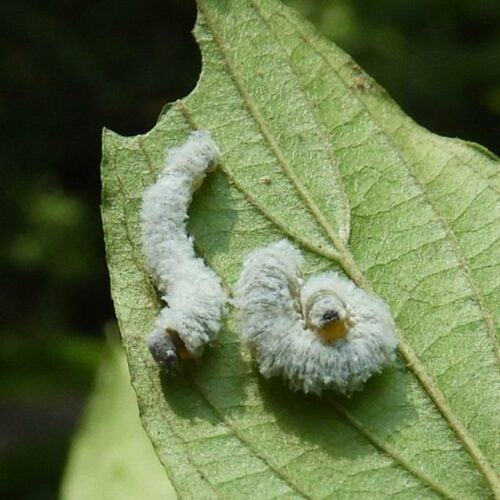
Photo credit: Don Coram, Sawfly larvae observed during CaterpillarCounts!
Greetings Master Naturalists and Biodiversity Enthusiasts!
Volunteers for this Cit Science activity can record hours under: C254: Caterpillars Count! — National Science Foundation
In 2025 several FMN volunteers contributed 85 hours to this code.Please read below for registration details. Volunteers will use INaturalist as the field tool.
Thank you.
You are invited to learn more about the citizen science project Caterpillars Count!, which aims to better understand:
• insect declines (and hence bird declines)
• shifts in seasonal insect activity
• impacts of climate change and urbanization
• importance of insect-host plant relationships.
Participants conduct surveys on the branches of trees and shrubs to monitor seasonal variation and abundance of arthropods like caterpillars, beetles, and spiders, and to establish critical baseline data for evaluating long term trends. To date, 2,500 participants have conducted 140K surveys across 37 states and provinces in North America.
The project can be easily carried out ANYWHERE IN THE WORLD with woody vegetation, especially:
• Nature and environmental education centers
• Parks and botanical gardens
• School campuses (used at 14 colleges and universities)
• Private backyards
The Maps and Graphs page allows anyone to fully explore the dataset, and the team has published a variety of lesson plans and learning activities surrounding both data collection and analysis.
For more details on the project and what hosting a survey site for Caterpillars Count!entails, watch the short video on our project website, and check out the Frequently Asked Questions page.
In the meantime, do not hesitate to contact the team to answer any questions. You can reach the team by emailing caterpillarscount@
And, please, forward this email along to any friends, colleagues or local groups you think may be interested in monitoring the biodiversity around them.
Best wishes,
Allen Hurlbert
Professor
Department of Biology
University of North Carolina
Director, Caterpillars Count!

