
Seedling giveaways and native plant sales
Seedling sales and giveaways are going on now, and native plant sales start at the end of March. Plan ahead and thank Plant NOVA Natives for the terrific lists!

Seedling sales and giveaways are going on now, and native plant sales start at the end of March. Plan ahead and thank Plant NOVA Natives for the terrific lists!
Key Bridge Marriott, 1401 Lee Highway, Arlington, VA 22209
Thursday, 21 March 2019
11:30 am Registration/Networking
12-2 pm Lunch and Program
Save the date for the Northern Virginia Conservation Trust (NVCT) 2019 Conservation Luncheon! On March 21, 2019 NVCT will host their 25th Anniversary Luncheon at the Key Bridge Marriott in Arlington, VA. The speakers for the luncheon are going to include top business and political leaders from Northern Virginia, including Chairman of the Arlington County Board Christian Dorsey, about the impact of Amazon’s arrival in our region. The featured speakers will share their expertise and views on the balance we must find between open space and land conservation and the new development and infrastructure necessary to attract growing, innovative businesses.
Secure your seat now. Click here to purchase your ticket. If you’re interested in learning about sponsorship opportunities, click here.
Wednesday, March 6th, 2019 10:00- 11:30 am
Fairfax County Animal Shelter 4500 West Ox Rd., Fairfax, VA 22030
A free workshop for parks, private citizens, homeowner associations, schools, golf courses, corporate parks, etc.
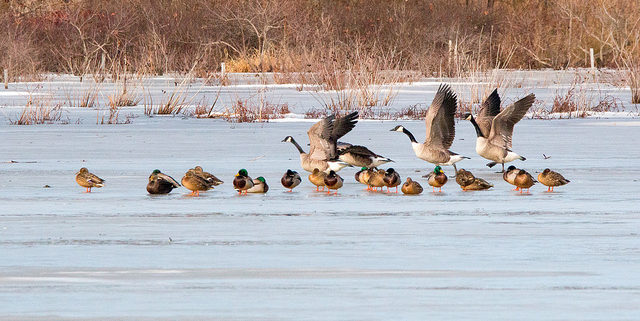
Learn about Canada goose behavior, effective goose management techniques (egg oiling, border collies, exclusion techniques), community case studies and regulations. This event is limited to 40 participants. Please register by March 4th.
Sponsored by the:
For more information and to register please contact Kristen Sinclair by phone at (703) 324-8559 or email kristen.sinclair@fairfaxcounty.gov.
Attend the next monthly Volunteer Orientation: Saturday, March 2, 9:30 am – 12:00 pm
Learn about our upcoming opportunities, projects, and events and get started on your training with a hands-on project!
Upcoming Opportunities
Contacts:
Valeria Espinoza, Volunteer Coordinator valeria.espinoza@fairfaxcounty.gov
Rita Peralta, Natural Resources Manager rita.peralta@fairfaxcounty.gov
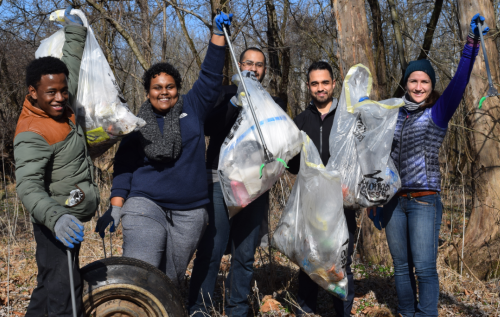
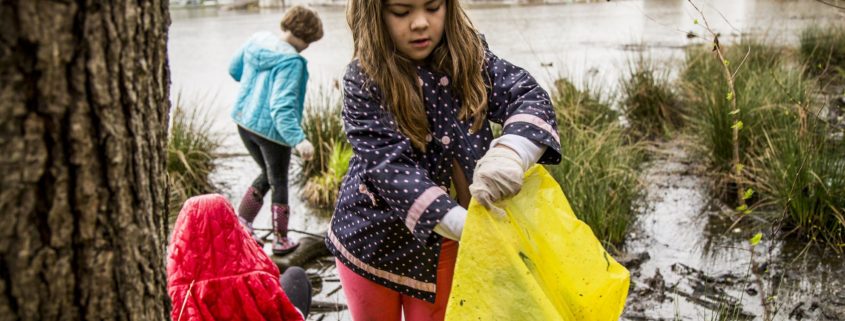
The Alice Ferguson Foundation is sponsoring the Potomac Watershed Cleanup on Saturday, April 13.
Join the 31st Annual Potomac River Watershed Cleanup. The official date is Saturday, April 13, however, there will be cleanups throughout the entire month of April.
The Annual Potomac River Watershed Cleanup is the largest regional event of its kind, and the Cleanup aims to engage citizens and community leaders and to generates momentum for change.
The Friends of Accotink Creek website has information about Accotink Creek watershed cleanups on weekends, April 5 through May 11.
This project is eligible for FMN service credit.
As urban development in Northern Virginia continues to accelerate, the management of open spaces becomes more important than ever. Wolf Trap National Park for the Performing Arts, which encompasses more than 130 acres with 2.7 miles of trails, forests, native gardens, streams and a pond, contains important natural, recreational and historical resources for the community. As a not-for-profit organization, the Friends of Wolf Trap (FOWT) contributes to community awareness and assists the National Park Service with providing educational programs, recreation, and preservation through centralized volunteer efforts. The FOWT are interested in increasing involvement from Fairfax Master Naturalist members in conducting citizen science projects and promoting the Park’s natural resources to the public.
Please register for one or more upcoming events listed at http://friendsofwolftrap.org/events/ and mark your calendars and join us for the following upcoming events:
Are you a bird lover who wants to create habitat to attract birds to your or your neighbors’ yards? Are you a native plant lover? Are you intrigued by observing wildlife in your own yard? Do you lament the prevalence of English ivy, and sterile, conventional landscapes and lawns in Fairfax County suburbs?
If so, this is the gig for you! Sign up to be trained as an Audubon at Home Ambassador and help transform the landscape of Northern Virginia, one yard at a time.
A training/orientation session will be offered Saturday, April 1, at the National Fish and Wildlife Federation headquarters at 11100 Wildlife Center Drive, Reston, from 10 a.m. to 1. Bring a bag lunch.
Please email Betsy Martin at audubonathome@folhc.org by Tuesday Feb. 26th if you’d like to sign up.
Audubon at Home Ambassadors visit properties and provide advice to homeowners on what natives to plant, what invasives to remove, and how to improve wildlife habitat in peoples’ backyards. We certify properties as Wildlife Sanctuaries when homeowners adopt Best Habitat Practices, and when beneficial Sanctuary Species actually show up and use the yard. (Our motto is, “Let the animals decide.”) You can learn more about the Audubon at Home program at http://audubonva.org/audubon-at-home-1 .
On April 1, Betsy Martin (Fairfax County Audubon at Home Coordinator) will give a presentation on the program and its philosophy, the role of Ambassador, and resources that will help you research and advise clients on native plants and habitat improvements.
After lunch, Charles Smith of Fairfax County Stormwater Planning Division will lead a walk on the beautiful and natural NFWF grounds, showing trainees how to read a landscape, what to look for when assessing its habitat value, and how to think about creating wildlife habitat.
Audubon at Home is an approved FMN service project. You will receive 3 hours of Continuing Education credit for attending this training session and service credit for each home visit.
Reviewed by Tami Sheiffer
Studying mass extinction events from tens or hundreds of millions of years ago shows us that life on Earth is both precarious and resilient. In The Ends of the World, science writer Peter Brannen vividly describes the five past mass extinction events: End-Ordovician, Late Devonian, End-Permian, End-Triassic, and End-Cretaceous, and the lessons we can learn from them. This book offers something of interest to anyone interested in natural history, paleontology, geology, climatology, ecology, or evolution.
Brannen paints vivid pictures of life and destruction eons ago, interwoven with his personal tales of travel around the country talking with scientists and visiting paleontological sites. You can preview Brannen’s writing in one of his science articles, like this one titled “A Climate Catastrophe Paved the Way for the Dinosaurs’ Reign,” published in The Atlantic. Occasionally, Brannen’s storytelling risks anthropomorphism, as when he describes the first fish to walk on land in the Devonian as “bold explorers” and “brave pioneers.” However, Brannen’s engaging writing makes this book enjoyable reading for a broad audience.
By studying the causes of past mass extinctions, we find that most were caused by climate change. The Earth’s climate has changed naturally in the past, but drastic changes were violent and caused massive destruction. Life is ultimately resilient, and, eventually, surviving species evolved to repopulate a new Earth, but life after the extinction looked very different from life before. In the most deadly mass extinction, the End-Permian event, nearly all life was wiped out. This extinction event was caused in part by volcanic activity in the Siberian Traps burning underground coal basins and releasing vast amounts of carbon dioxide into the atmosphere.
Our present day fossil fuel activity has a similar effect of releasing carbon dioxide into the atmosphere, but at an even faster rate than in the end-Permian extinction. The overarching theme of the book is that past mass extinctions can teach us lessons for the present, as we find ourselves in the midst of a sixth mass extinction. This time, human activity is the cause of the extinction–beginning tens of thousands of years ago with the loss of megafauna like marsupial lions, giant kangaroos, woolly mammoths, mastodons, and giant ground sloths due to hunting, and continuing today due to habitat loss and human-induced climate change. This book is ultimately a cautionary tale: learn from the past so we can avoid a catastrophe on the same scale today.
On March 20, 2019, Peter Brannen will be speaking at an event at the Library of Congress called “Climate Change, Nature, and the Writer’s Eye”, along with distinguished authors Annie Proulx and Amitav Ghosh. The authors will discuss environmental change and a writer’s responsibility to the issue. This event is approved for FMN continuing education credit. The event is free but registration is required.
Want to review a resource? We’d love to hear from you. Instructions for submission await your click and commitment.
The Ocean Plastic Innovation Challenge, a key component of National Geographic and Sky Ocean Ventures’ partnership to reduce plastic waste, asks problem solvers from around the globe to develop novel solutions to tackle the world’s plastic waste crisis.
More than 9 million tons of plastic waste end up in our oceans each year, and without interventions, this number is expected to almost double to 17 million tons per year by 2025. The Ocean Plastic Innovation Challenge will focus on three strategic ways to address this growing crisis: designing alternatives to single-use plastic, identifying opportunities for industries to address plastic waste throughout supply chains, and effectively communicating the need for action through data visualization.
Teams will compete for aggregate prize purses of up to $500,000, and qualified participating teams may have the opportunity to receive a minimum of $1 million in aggregate investment from Sky Ocean Ventures.
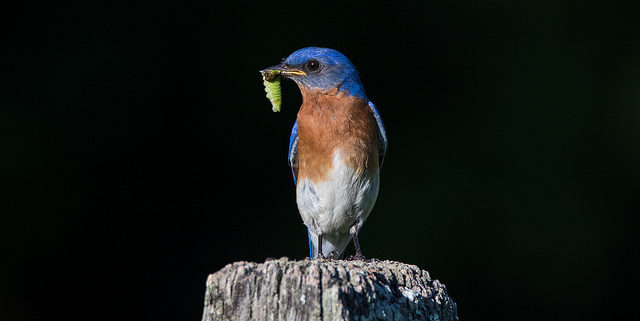
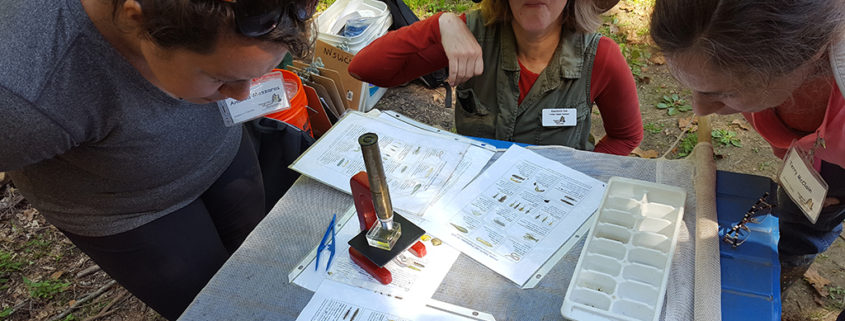
Learn about the Fairfax Master Naturalist citizen science project, CaterpillarsCount! (Service code C254 if you’re an FMNer), including the results from last year and plans to continue the project this year.
FMN efforts are part of a larger study to determine whether seasonal activity of plants, insects, and birds are all responding synchronously to climate change.
CaterpillarsCount! is part of a National Science Foundation-funded study with University of North Carolina, Georgetown University, and University of Connecticut as lead universities. Additional volunteers are needed to continue to collect data this year during spring and summer.
Guest presenters: Elise Larsen, PhD, Georgetown University and Don Coram, PhD, Fairfax Master Naturalist.
Location: Walker Nature Center, Reston, VA.
Date and time: April 23, 7:00 – 8:00 pm.
The presentation counts toward FMN continuing education credits