This one is an awesome twofer: attend to learn (as a high school or college student or as family member, friend, teacher, neighbor…) and get continuing ed credit (Smithsonian Conservation Discover Day). Attend as a volunteer, and get service hours (C-200).
If you want to attend as a learner
Conservation Discovery Day at the Smithsonian’s Conservation Biology Institute in Front Royal, Virginia, includes hands-on activities, research demonstrations, and career panel discussions with conservation biologists, field ecologists, research scientists, veterinarians and animal keepers.
It’s the one day of the year this facility is open to the public, so don’t miss your chance to learn how you can join the conservation ranks and make a difference for wildlife and habitats worldwide!
Purchase a pass for these activities on Saturday, 6 October, 9:00 am-4:00 pm
If you’re willing to volunteer be part of the team delivering a fantastic visitor experience
Lend a hand to SCBI scientists, veterinarians, animal keepers, and researchers as they run their exhibits; or help facilitate hands-on themed games and activities; or help engage visitors and raise awareness of SCBI’s vital conservation work. Your skills are quite welcome at Conservation Discovery Day. The day runs offers two shifts: 8:30 am-12:30 p.m. and 12:30-4:30 p.m. You can sign up for one or both.
If you are interested in volunteering , please complete the on-line application, https://nationalzoo.vsyslive.com/pages/app:CDD2018 or if you have any questions, please contact Nick Davis, Volunteer Program Specialist, 540-635-0495 or davisnic@si.edu
Here are the activities of the day
Big Killers Come in Small Packages
Elephant endotheliotropic herpesvirus (EEHV) is a leading cause of death in young Asian elephants. The EEHV Lab at the Smithsonian’s National Zoo runs EEHV diagnostics for U.S. zoos and helps develop EEHV testing labs in other countries.
- Learn about molecular diagnostics of EEHV and check out some elephant poop, teeth and tails
- Hear how EEHV affects elephant conservation efforts
- “Diagnose” EEHV in your own elephant
Bird Banding
Experience one of the main methods that Smithsonian Migratory Bird Center scientists use to study birds: bird banding!
- Learn first-hand how scientists attach bands and what information banding provides
- Observe wild birds up close
- Discover how humans influence ecosystems in ways that help and hurt bird populations
Caught on Camera: Wildlife Monitoring Booth
Discover how SCBI researchers use camera traps to monitor wildlife around the world and to address important conservation-related questions.
- Learn about the exciting camera-trapping projects SCBI scientists are conducting around the world
- Receive tips and hints for identifying species in camera trap images
- Participate in eMammal photo identification through Zooniverse, an online resource where anyone can be a researcher
Cheetah Conservation
SCBI scientists study cheetahs living in managed collections in human care to better understand cheetah biology.
- Find out how much scientists can learn from cheetah poop! They use it to study all types of biology, including reproductive hormones, pregnancy and gut health.
- Cheetah matchmaking — discover what goes into creating the perfect cheetah breeding pair.
The Doctor Is In: Veterinarians and Conservation Health
Meet the veterinary staff who are committed to saving species at SCBI and beyond!
- Learn how veterinarians at SCBI care for more than 20 different species.
- Go behind the scenes at the vet hospital to see where and how SCBI veterinarians and vet technicians help animals.
Dynamite DNA: What Animals’ Genomes Tell Us
For more than 20 years, the Smithsonian’s Center for Conservation Genomics has helped elusive and endangered species like tigers, Asian and African elephants, San Joaquin kit foxes and maned wolves by studying their genomes.
- Learn how an animal’s genomes can help scientists identify appropriate conservation methods, while providing data on an animal’s sex, mating patterns and relationships.
- Get the chance to “perform” a DNA extraction and test.
- Participate in interactive demos and discussions with scientists.
Please note: This is a timed tour with limited space. Registration at the information desk on the day of the event is required. Space is limited and is first come, first served.
Freezing for the Future: Smithsonian Frozen Collections
Scientists working with the Smithsonian’s cryo-collections have the COOLest job!
- Find out what cryopreservation is and how it’s saving species.
- Participate in games and interact with scientists to learn what and why these scientists freeze and how they reanimate living cells.
GIS Lab: Wildlife Tracking & Forest Mapping
SCBI researchers and scientists use geographic information systems (GIS) mapping to monitor animal movement and quantitatively map habitat using satellite technology.
- Try your hand at a computer-based exercise of forest mapping using satellite images.
- Borrow one of the lab’s GPS devices to go on a scavenger hunt in the field.
Global Canid Conservation
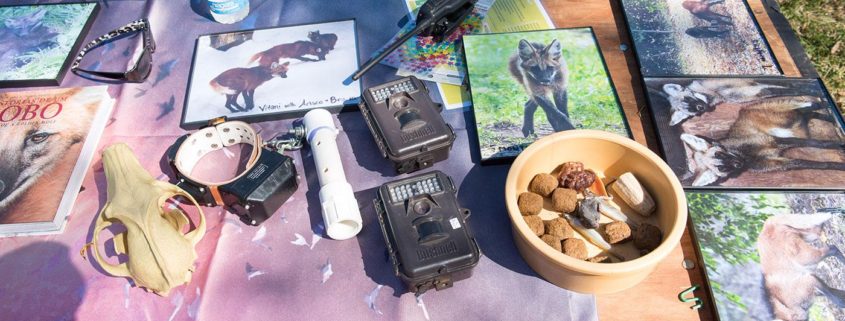
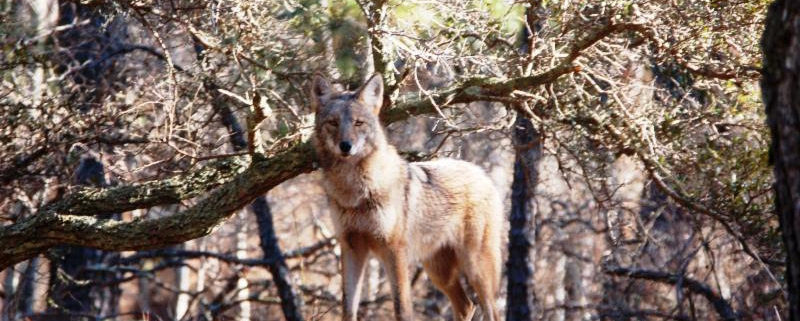
SCBI scientists and researchers use multidisciplinary approach ranging from reproductive technologies to field conservation to solve conservation issues of threatened and endangered canids around the world.
- Discover the world of canids. How many are wild canids? Where are they? Why are maned wolves so unique?
- Learn how to grow eggs in the lab and how an animal’s gut microbial community can impact overall health.
- Explore SCBI’s tracking techniques for dholes in Thailand.
Kiwi Conservation
Brown kiwi, flightless nocturnal birds, are native to New Zealand and are endangered due to nonnative predators introduced by humans. In 1975, the Smithsonian’s National Zoo became the first organization to hatch a brown kiwi outside of New Zealand. SCBI has hatched six kiwi eggs since 2012.
- See life-size models of kiwi adults and chicks, as well as a kiwi skeleton with an egg.
- Watch videos of various kiwi research, kiwi in the wild and kiwi hatching.
Life in the Forest
Did you know that the Smithsonian leads a global forest monitoring network, is the leader in camera-trap monitoring wildlife and is part of the National Ecological Observatory Network? Learn how SCBI and NEON scientists measure trees, study animals and assess the health of forests and freshwater ecosystems in Virginia and around the world.
- Visit SCBI’s forest plot to learn about forest research here and around the world.
- See how wildlife cameras work.
- Learn how NEON measures stream biodiversity.
Please Note: This is a timed tour with limited space. Registration at the information desk on the day of the event will be required. Space is limited and is first come, first served. This tour is only accessible by shuttle and involves walking through a forest with uneven terrain in thick vegetation. Closed-toed shoes are required for this tour; tennis shoes or hiking shoes are recommended.
One Health: Humans and Wildlife
The Global Health Program employs wildlife veterinarians, pathologists, biologists, researchers and technicians to address wildlife health concerns, investigate diseases that can infect both humans and animals, and conduct international training programs. GHP has projects around the world and is dedicated to global wildlife health and conservation.
- Field Scientist #Selfie Booth: Dress as a field scientist and snap a selfie! Pose with an array of props, including headlamps, traps, protective equipment and gear, nets and (pretend) bat patients.
- Tools of the Trade: See some of the equipment used by wildlife and research veterinarians, including field anesthesia, darting equipment, diagnostics and more. Meet real field veterinarians and learn about their international projects and what it takes to be a wildlife veterinarian.
- Suit Up! PPE Race: When working with infectious organisms, it pays to keep yourself safe! See the gear that scientists in the field use to protect themselves from pathogens like bacteria and viruses. Race your friends to see who can suit up the quickest!
- Pole-darting Practice: Discover how research veterinarians immobilize wild patients, and practice your aim!
- What’s Your Diagnosis? Learn about some of the most pressing infectious diseases affecting wildlife species around the globe. Answer questions correctly to earn some prizes!
Remount History: Photos and Artifacts
How did Remount Road get its name? Where is the recognized birthplace of America’s K-9 Corps? Discover the inspirational and unique 100-year history of the land that is now home to the Smithsonian Conservation Biology Institute.
- Hear fascinating stories about this Front Royal property from the early 1900s through the Cold War.
- View rare period photographs and historical artifacts.
Smithsonian-Mason School of Conservation: Help Save the Planet!
The Smithsonian-Mason School of Conservation offers interdisciplinary programs in conservation biology for undergraduate and graduate students and professionals.
- Learn how SMSC students play an active role in sustaining biodiversity and promoting conservation.
- Learn about and participate in radio telemetry practice, insect specimen prep, native bee habitat construction and a GPS/orienteering scavenger hunt.
Please note: These are timed presentations with limited space. Registration at the information desk is required. Space is limited and is first come, first served. Each presentation lasts 30-45 minutes and university representatives will be answering questions between sessions.
Wildlife Endocrinology: Unlocking Animal Hormones
The Endocrinology Research Laboratory at SCBI is the oldest and largest wildlife endocrinology lab in the world.
- Learn about endocrinology and how it can be a useful tool in wildlife conservation.
- Discover how scientists study hormones of different species to help evaluate the health and breeding window of an animal.
Directions to SCBI