Scholarship application to Hog Island Educator’s Week now open!

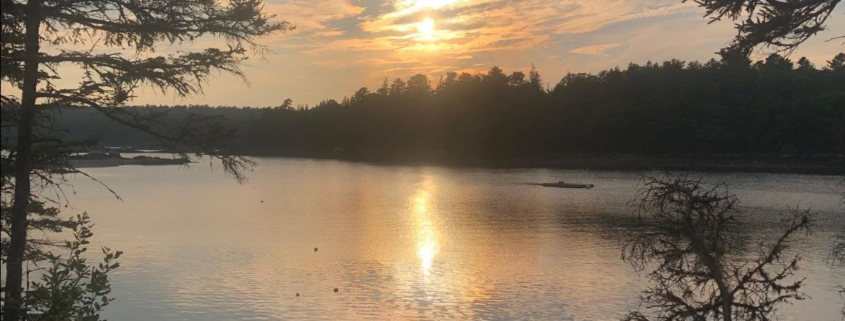
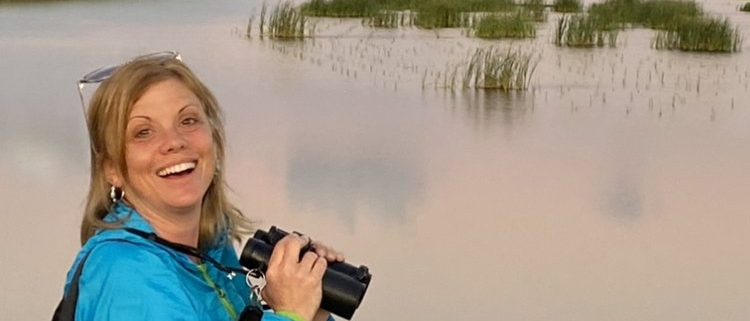
Photo:  Gretchen Linton

Each year Audubon Society of Northern Virginia offers a full scholarship to Sharing Nature: An Educator’s Week at Hog Island Audubon Camp in coastal Maine. Hog Island Audubon Camp has offered environmental education programs for adults, teens, families, and conservation leaders since 1936. While there, educators learn interdisciplinary hands-on methods and approaches to environmental education while immersed in the natural world.

Applicants must be public classroom teachers, specialists, or school administrators in the ASNV chapter territory: Arlington, Fairfax, Fauquier, Loudoun, Prince William, Rappahannock, and Stafford counties and the Independent cities of Alexandria, Fairfax, Falls Church, Fredericksburg, Leesburg, Manassas, and Manassas Park.)

Sharing Nature: An Educator’s Week will be July 17 – 22, 2022.To apply, please complete the online application and submit two letters of recommendation no later than February 28, 2022. Please see the application for additional details, including post-camp requirements.

What’s in Your Knapsack?

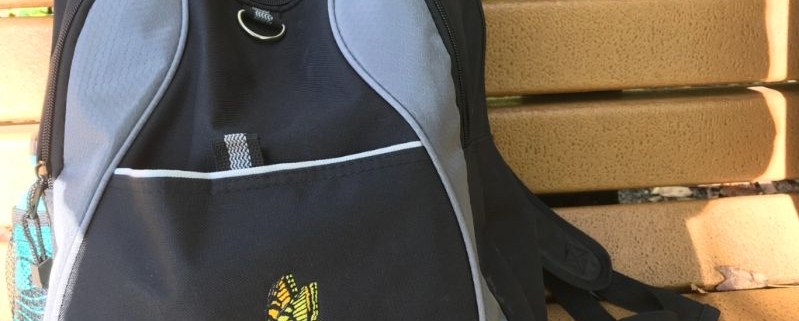
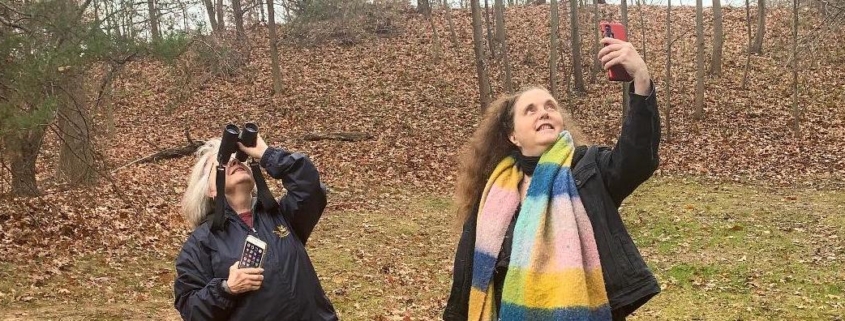
Photo by Jerry Nissley

By: Mary Jane Poulter, Central Piedmont Chapter and
Marilyn Parks, Fairfax Chapter

At the annual Virginia Master Naturalist conference this year, a favorite activity was the chat room. The chat room was a sub-area of the conference where attendees could start discussions on topics of interest. Since the conference was virtual, discussions could occur in real time or asynchronously.

Mary Jane had already been thinking about possibly writing an article for Central Piedmont about a naturalist’s toolkit – “What do you carry when you go out into the field?” Marilyn Parks reached out to Mary Jane via the chat room and said she had been collecting information and was also thinking of writing a “What’s in your backpack” article for the Fairfax Chapter!

The two shared emails and decided going forward with an article that should be less of a story and more of a list.

Here is the list that they developed. The items that you decide to pack in your knapsack will vary with the focus of the activity, with the environment where the activity is occurring, with the time of the year, and with the planned length of the activity. Sometimes you may only need a light knapsack and other times you may want a backpack. Whatever the plan is for the activity, you should always plan for the unexpected!

So, what’s in your knapsack? Did we forget anything? Feel free to send additions and comments to jane.poulter@hotmail.com

Possibilities for Your Toolkit
Gear

  • Appropriate clothing – long/short pants, long sleeved shirts, shoes that can get wet, hat, gloves, good walking shoes/water shoes
  • Bug, tick spray
  • Sunscreen
  • Tissues
  • Zip lock bags to keep knapsack items dry and organized
  • Plastic bags for picking up litter
  • Large plastic or “dry bag” if needed for protecting backpack from wet ground or rain
  • Water
  • Food bars

Identification

Safety Equipment

  • Smartphone, optionally with portable charger or extra battery
  • Map and compass and/or GPS if out of cell range
  • Basic first aid kit (band-aids, antiseptic, etc.)
  • Emergency reflective blanket
  • Flashlight
  • Few pieces of hard candy if needed for diabetic need
  • For Master Naturalists – Virginia Master Naturalist emergency contact card and incident report form

Observational Equipment

  • Journal and pencils/pen
  • Field Guide
  • Hand lens
  • Binoculars
  • Flashlight
  • Poker/ chop stick for poking into a crevasse

Apps for Identification

  • Seek
  • Leaf
  • INaturalist
  • eBird
  • Merlin
  • Flora of Virginia

Apps for geography/navigation

  • Apple Maps
  • Google Maps
  • Google Earth
  • Hiking or map app for offline use

Party Time on the Disc Golf Course

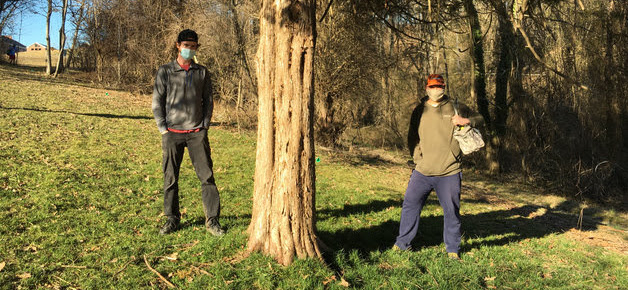
Photo courtesy of Plant NOVA Natives

We don’t usually associate the native plant movement or a tree campaign with sports, but players at the Giles Run Disc Golf Course see it as a natural connection. Their course, about a third the size of a regular golf course, was created in 2008-2009 by the Fairfax County Park Authority on land that was formerly mowed grass around the Lorton Prison. Unfortunately, disturbed land with a lot of edge habitat is an invitation to invasive non-natives plants to move in, and move in they did with a vengeance after the prison closed in 2000. The Oriental Bittersweet vine has been particularly problematic, turning the areas next to the fairways into a tangled mess and swallowing up the native trees and shrubs as well as the players’ discs.

Most people would probably just expect someone else to fix the problem, but disc golfers turn out to be a different sort. Organizers Tommy Donelson and Kemper Pogue started recruiting players to participate in invasive removal parties, complete with music from a portable speaker. Forty or fifty club members have joined in this fun and free way to build upper body strength, clearing out large swathes of invasives. They have also recruited other volunteers to help, starting the sessions with half an hour of education before tackling the job. Altogether, they have been putting in a hundred hours in nine sessions every month, year round.

Oriental Bittersweet is a particularly troublesome plant when taken out of its native habitat in East Asia and imported elsewhere, as it was for its pretty red and yellow berries which are used for decorations. It twines around trees, strangling them and bringing them down. It curls itself into impenetrable thickets. When cut down, it simply regrows stems that can reach high up into trees to latch onto the branches and keep going up from there. Eliminating it requires either pulling it up by its roots, some of which can be several inches thick, or using herbicides.

It did not take long for the disc golfers to understand that the invasives issue on their course is just one example of a much greater threat to our ecosystem in Fairfax County and the world in general. They are planning to eventually replant with native plants and have been spreading the word about how important it is for residents to take out invasive ornamentals from their own yards and use more natives to support the struggling ecosystem. Information about garden-friendly native plants can be found on the Plant NOVA Natives website. Meanwhile, they would be happy to invite others to their work parties. They can be contacted at GilesRunVolunteer@gmail.com. There are plenty of opportunities in other parks as well to help with invasive removal. Cold weather (within reason) is no obstacle, since this is warm work.

Winter Volunteer Opportunities at Fairfax County Parks

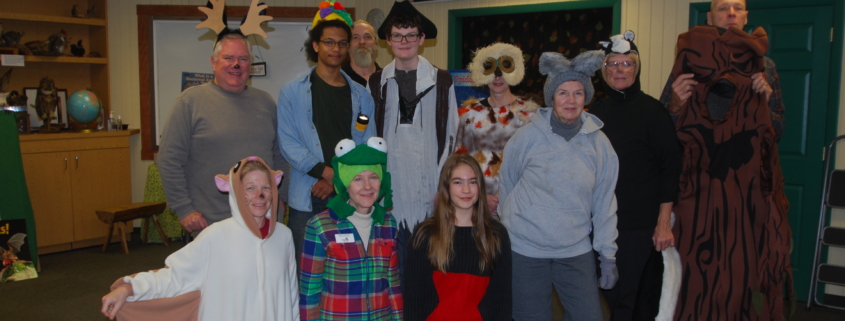
Photo: Suzanne Holland

Volunteering is a year-round adventure at Fairfax County Parks!  Here is a selection of exciting opportunities at Ellanor C. Lawrence Park, Hidden Oaks Nature Center, and Riverbend Park.  Have fun!

Ellanor C. Lawrence Park
5040 Walney Rd. Chantilly VA

Projects that volunteers could be working on in the winter:
1. Removal of Japanese bush honeysuckle using weed wrenches from the historic loop area and beyond.
2. Removal of autumn olive trees using hand saws from the corner of the park near the intersection of Walney Rd and Poplar Tree Rd.
To volunteer, contact Gabby Hrycyshyn, Natural Resource Manager, gabrielle.hrycyshyn@fairfaxcounty.gov.
Receive a 1 hour training on identifying and removing Japanese bush honeysuckle and/or autumn olive. Then come in on your own schedule with 1-2 days advance notice so that tools can be made available.

(Master Naturalists:  Record hours as S108: Invasive Plant Removal)

Hidden Oaks Nature Center
7701 Royce St., Annandale VA

Variety of nature programs

Contact Suzanne Holland, suzanne.holland@fairfaxcounty.gov to volunteer.
Be at site 30 min. prior if assisting, 1 hr. prior if leading.

Salute the Bald Eagle Fr. 1/14 from 7-8 p.m.

Full Moon Nature Hike and Campfire Monday Jan. 17 from 7-8 p.m.

Skiing Penguins and Snowman Fun  Th. Jan. 20 3-4 p.m. or Feb. 17 from 10-11 a.m. or 4-5 pm
Build Your Own Birdfeeder (Pinecone) F Jan. 21 from 10:30-11:30 a.m. or 1-2 p.m. or 2:30-3:30 p.m.

Owl Walk & Talk (ages 2 yr. +) Sa. Feb. 12 5-6 p.m.

(Master Naturalists:  Record hours as E110:  FCPA Nature Programs.  In the Description, include Hidden Oaks and the name of the program.  In Direct Contacts, write the number of people you spoke to or who attended the program.)
Riverbend Park
8700 Potomac Hills St., Great Falls, VA

Natural Resources Projects, every other Wednesday, 9am – 12pm or 1pm – 3pm
Help maintain and protect native plants through plantings, pullings, and projects.
To volunteer, contact Rita Peralta at rita.peralta@fairfaxcounty.gov
(Master Naturalists:  Record hours as S109: FCPA Habitat and Parkland Management)

Adopt-a-Spot, every other Wednesday, 9am-12pm or 1-3pm
Adopt an area at Riverbend Park to maintain and care for.
To volunteer, contact Rita Peralta at rita.peralta@fairfaxcounty.gov
(Master Naturalists:  Record hours as S109: FCPA Habitat and Parkland Management)

Animal Care, Tuesdays, Thursdays, Fridays
Help us care for our turtles and snakes, must complete training before solo care, schedule flexible.
To volunteer, contact Mo Swirnsky at aliceanna.starrs@fairfaxcounty.gov
(Master Naturalists:  Record hours as S182: FCPA Nature Center Animal Care)

Forest Friends, Monday-Friday
Chaperone, craft, organize, accompany on trips/hikes, mentor and teach young children
To volunteer, contact Amy Cullen at amy.cullen@fairfaxcounty.gov
(Master Naturalists:  Record hours as E110:  FCPA Nature Programs.  In the Description, include Hidden Oaks and the name of the program.  In Direct Contacts, write the number of people you spoke to or who attended the program.)
Audubon Afternoon Ornitherapy: For Your Mind, Body, and Soul, January 9th

Sunday, January 9, 2022
3 – 4 pm
Virtual
Free but registration required.
Register here.

Watching birds- it’s not only fun, but good for you! Learn why getting your daily dose of Ornitherapy is just what the doctor ordered.

Ornitherapy, or a more mindful approach to the observation of birds, benefits our mind, body, and soul. We’re pushed and pulled in many directions, no matter our age. If we allow birds and nature to slow us down, we are practicing a form of “self-care.” Research shows that exposure to nature actively reduces stress, depression, and anxiety, while helping build a stronger heart and immune system. Birds are gateways into deeper experiences with nature, magnifying these benefits. Through observation we can learn not only about birds, but gain insight into our own lives while exploring our connection to the world around us. This fosters stewardship and bolsters conservation.

Within the program, Audubon Society of Northern Virginia‘s presenter, Holly Marker, will delve into our connections to birds, how to practice Ornitherapy for optimal benefits, and learn about the latest research in the power of nature for overall well-being. Come listen to how watching birds can bring you more than just the enjoyment.

Bird Walks-Audubon Society of Northern Virginia

Photo:  J. Quinn

Bird walks are back! Audubon Society of Northern Virginia follows the Center for Disease Control’s COVID-19 guidelines: in brief, fully vaccinated people can resume activities without wearing a mask or physically distancing. Unvaccinated people are required to wear a face mask covering nose and mouth and physically distancing from others. As always, anyone experiencing symptoms of illness should not attend.

Walks currently require registration and may limit attendees to a number that the walk leader feels they can guide effectively. The leader may elect not to allow any participant to use the leader’s scope and may discontinue participation if they are not comfortable with the precautions.

They strive to make their walks and other events inclusive. Please refer to the Birdability map for general information on the accessibility of parks and trails in our area for those with disabilities.

Recurring Bird Walks schedule.

Earth Sangha is Hiring Conservation Interns

Want to learn more about the day-to-day operations of a native plant nursery, improve your plant ID skills, and more? Then apply to be one of Earth Sangha’s 2022 Native Plant Conservation Interns! They’re looking for two “Full-Season” Native Plant Conservation Interns (from March through November) and 1 Summer Native Plant Conservation Intern (June through August). Click here for more information.

If you’re interested in applying, please email a CV and cover letter to Matt Bright at mbright@earthsangha.org.

Skulls and Skeletons, January 15th

Lewinsville House
1659 Chain Bridge Rd, McLean, VA
Saturday, January 15, 2022
10 – 11am
$10 per person
Register here.

Ever wonder what skull or bone you saw while walking in the forest? This Fairfax County Park Authority class will teach you about the skulls and skeletons of local animals using materials found in Fairfax County parks. You will learn to identify skulls, see a variety of bones and learn how similar four-legged mammals really are on the inside.

If you have a bone or pictures you want identified bring them with you and they can try to figure out what it goes to. There will also be a chance to see some non-mammal representatives.

First Day Hikes at Mason Neck State Park

Photo courtesy of Friends of Mason Neck State Park

7301 High Point Rd.
Lorton VA
Saturday, January 1, 2022
9:30 am, Noon, or 2:30 pm

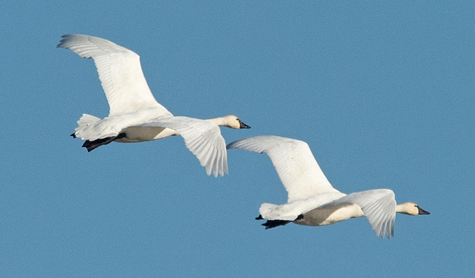
Start the New Year off right with an invigorating hike at Mason Neck State Park. The Park’s rangers will lead hikes for adults and children throughout the day. You can join them for a 2-mile round-trip walk to see the Tundra Swans at 9:30, noon or 2:30.

The Tundra Swan hikes leave from the parking lot for the Woodmarsh Trail at the Elizabeth Hartwell Wildlife Refuge, about a quarter mile before you reach the Contact Station. The Friends of Mason Neck State Park will provide hot beverages at the start of the hikes. There will be telescopes at the shelter overlooking the marsh so you can get a better look at these magnificent birds, which spend the winter here after their long migration from far northern Canada and Alaska. Parking is limited at the Woodmarsh Trail, so you’ll need to register for the hikes by calling the park staff at 703-339-2380 or emailing them at masonneck@dcr.virginia.gov.

Admission to the Park is free on January 1, and there is no charge for these hikes.

Fairfax Master Naturalists’ Donation Making a Difference!

Article by FMN Steve Wright

Plant NOVA Trees is a new, five-year drive by the Plant NOVA Natives campaign to increase the native tree canopy in Northern Virginia by promoting planting and preservation of native trees. The drive kicked off with a bang on 1 September 2021 with over 50 local organizations executing more than 100 events throughout the fall to celebrate trees. Events included tree plantings; tree rescues; conferences; webinars; tree walks; library displays; story time and art classes with youth; and many others.

Fairfax Master Naturalists was approached to support the new campaign and made a generous donation of $2,500, one of the largest donations received. Plant NOVA Trees is using the contribution to create Plant NOVA Trees promotional materials including brochures, stickers and native tree hang tags that have been used during the kick-off events and distributed to organizations, businesses and nurseries across the region.

Following a presentation about Plant NOVA Trees, the members of the Fairfax County Board of Supervisors agreed in October to have their Office of Public Affairs help support the Plant NOVA Trees campaign outreach efforts. The office will develop a communications strategy to include social media, sharing Plant NOVA Trees information and content, and encouraging all residents to consider participating by planting native trees.

As all Master Naturalists know, native trees are an essential part of our local ecosystem, supporting our butterflies, songbirds, and all other wildlife. The social, economic, community and environmental benefits of trees are massive, and thanks to our chapter’s “seed money,” the Plant NOVA Trees campaign is off to a rousing start.

You can find Celebration of Trees events and information about the campaign and how to protect and plant native trees on the Plant NOVA Trees website. There are many ways to help, including joining the Tree Rescuers program to survey your community for trees at risk from invasive vines, participating in the speakers’ bureau, organizing community tree plantings, and planting trees yourselves. Volunteers are also needed to approach corporations to ask them to participate in the campaign.