Edge of Extinction, by Two Sisters in the Wild  

Reviewed by Kristina Watts

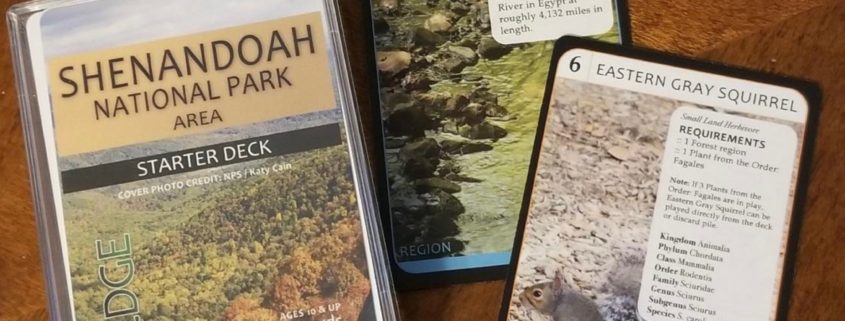
Looking for a fun and low-maintenance game to play with young naturalists or to get kids excited about nature? On a whim, I picked up Edge of Extinction (2017, 15-30 minutes playing time) for my kids, because visiting national parks is one of our family’s big things and anything that teaches about ecosystems is fun to us. I was afraid that it would be one of those educational tools that the kids can see right through and refuse to play. I was wrong. My three sons, nature lovers all, immediately opened their packs and started to play. And LOVED it.

At first, the rules seemed complicated, but in this age of Pokémon and Magic the Gathering, the 10-year olds had no trouble. The object is to earn the most points by building the most complicated ecosystem within 10 rounds. Each player must have their own deck of cards, which represent a park or regional area. The cards depict ecological regions (e.g., forest, running water, grassland) plants, animals, fungi, and humans (e.g., botanist, woodsman) that are likely to be found in that area. Each card represents something that affects the ecosystem, either positively or negatively. Each turn, players draw a card and play as many from their hand that they can.

Players start with a region, the foundation of the ecosystem. The plants are the next easiest to play, as they may simply require a region. It gets more complicated as animals require certain combinations of regions, plants, and other conditions. The human cards have powers of protection (e.g., the botanist protects ecosystems from invasive plant species.) Within several rounds, the ecosystems grow robustly. (Competitive players can always throw out a multi-player card like Early Frost to slow down their opponent.) Players learn about relationships and dependencies within their ecosystem as they play. Different decks introduce players to different species and conditions of that area. My son Logan particularly enjoys the “Did You Know” questions on the Region cards with fun facts that he can share.

This game is recommended for ages 10 and up, with each game taking 15-30 minutes. The fact that the game was invented by two young nature-loving girls  just makes it more appealing. My 10-year olds had so much fun with it that I ordered two more decks so my husband and I could join in.

I would recommend this game as a tool for teachers to have in their classrooms as well as for young master naturalist-in-training family fun night.

Want to review a resource? We’d love to hear from you. Instructions for submission await your click and commitment.


Green Breakfast: Harnessing the Power of Stormwater: Micro-turbines in GMU Storm Drains

Saturday, 10 March, 8.30am
Brion’s Grille, 10621 Braddock Rd, Fairfax, VA 22032
Get ready to look at stormwater in a totally different way.  George Mason University’s Dr. Jennifer Sklarew, of the Department of Environmental Science and Policy, and STEAM Undergraduates for Renewable Energy will be placing two hydropower micro-turbines in the stormwater network on GMU’s Fairfax campus. Coupling the turbines with battery storage, the project will analyze the potential for small-scale clean power applications on a university campus, for use in cell phone charging stations and emergency lighting. This project will contribute to Mason’s sustainability goals and it is hoped that the lessons learned from this project can create other uses for this renewed energy source in other ways.
Dr. Jennifer Sklarew, George Mason University Department of Environmental Science and Policy
Nathan Moravitz, President, GMU’s STEAM Undergraduates for Renewable Energy

2018 Virginia Working Landscape survey season activities kicking off

Virginia Working Landscapes, a program of the Smithsonian Conservation Biology Institute, hosts citizen science service projects for master naturalists and other members of the public.

Joe Guthrie, the new field coordinator, is a local conservation biologist with extensive experience in designing and implementing ecological surveys and brings with him a strong passion for biodiversity conservation and research. He and his team have set dates for spring  trainings:

Grassland Bird Training: Saturday, 14 April, 9 am-1 pm at the Smithsonian Conservation Biology Institute, in Front Royal. Led by Joe Guthrie and Amy Johnson.

Grassland Plant Training: Saturday, 28 April, 9 am-1 pm at the Smithsonian Conservation Biology Institute, in Front Royal. Led by Sally Anderson and Joe Guthrie

Pollinator Training: Sunday, 13 May, 9 am-noon at Blandy Experimental Farm, in Front Royal. Led by T’ai Roulston, Alex Newhart and Joe Guthrie.

If you are a current citizen scientist, please send a note to Charlotte Lorick (LorickC@si.edu) with your name and survey interest. VWL will put your name down as confirmed for 2018 surveys, and Joe will be in touch with more specific details later this spring.

If you are not yet a volunteer, but are interested, please sign up here.

The VWL events page hosts additional learning and service opportunities.

Dr. Leslie Reis to speak on butterflies and climate change at Huntley Meadows

Join Fairfax Master Naturalists and Friends of Dyke Marsh for a talk by Georgetown University biologist Dr. Leslie Reis. She will discuss butterflies, their host plants, and how both are responding to climate change.

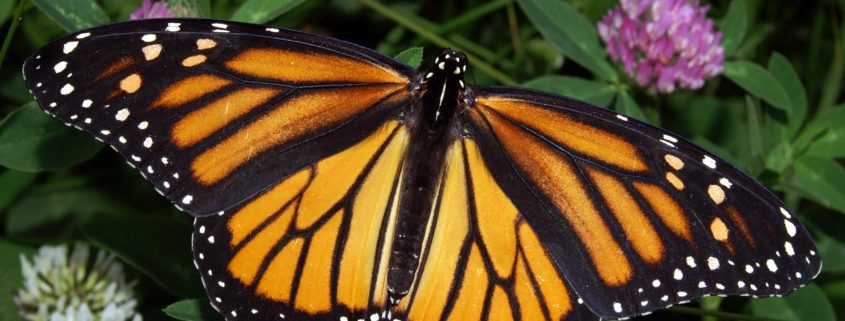
Summarizing her work with the monarch, the Baltimore checkerspot, and the silver-spotted skipper, Dr. Reis will show how she builds on work by citizen scientists such as Jim Waggener, who has contributed 25 years of data on behalf of the Audubon Society of Northern Virginia at the Occoquan Bay National Wildlife Refuge.

9 May 2018

7.30 pm

Huntley Meadows Park Visitor Center

3701 Lockheed Blvd., Alexandria, VA 22306


Bluebird Trails: Learn and Volunteer

Saturday, 10 March from 3.00 – 5.00 pm

Pohick Regional Library

6450 Sydenstricker Road, Burke, VA

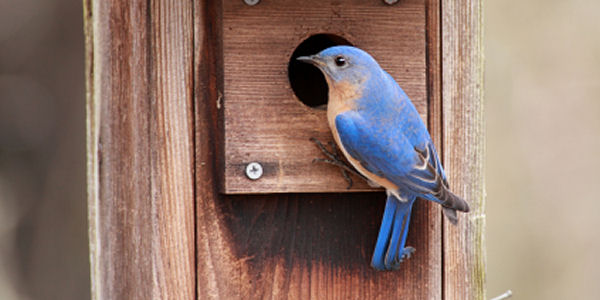
Come learn how a favorite songbird, the Eastern Bluebird, lives and breeds right in our community and how volunteers have helped this bird come back. There are about 80 bluebird trails which house at least three bluebird houses each, in Fairfax County.  The Virginia Bluebird Society is seeking volunteers to monitor these houses.  This presentation will include information about what is involved in monitoring and how you can help this species.


Rod Simmons presents Last Defense for Local Forests: Edges of Woodlands

Thursday, 8 March, 7-9 pm
Dolley Madison Library,
1244 Oak Ridge Ave, McLean, VA 22101

Sponsored by the Virginia Native Plant Society, this program is free and open to the public.

Rod Simmons is a plant ecologist, with a background in biology and geology, who has extensively surveyed the flora and natural communities of the mid-Atlantic region, especially the inner Coastal Plain and Piedmont of the greater Washington, D.C. area. He is a Research Associate with the National Museum of Natural History, Smithsonian Institution; a member of the Virginia Botanical Associates; and works closely with the Virginia and Maryland natural heritage programs. He is the Natural Resource Manager and Plant Ecologist for the City of Alexandria, Virginia.

Semi-open conditions along woodland edges and openings give rise to a diverse suite of light-demanding native flora. A variety of habitats that occur in woodland edges and openings will be presented, including meadowy areas, seepage wetlands, stream banks, rocky outcrops, and others. Simmons will also discuss best management practices , including non-native invasive plant threats and control.

Fairfax Vernal Pools Tours

Saturday Feb 24, Kutner Park – 1-2.30pm – 3901 Jermantown Rd, Fairfax, VA 22030 (Sign up here: https://www.meetup.com/Accotink/events/247996570/
Monday, Feb 26, Old Colchester Park – 9.30am-12pm – 10721 Old Colchester Rd, Mason Neck, VA 22079 (200 feet before the entrance gate to the Fairfax Yacht Club) Sign up here: https://www.meetup.com/Accotink/events/247997608/

Vernal pools are seasonal wetlands, rare ecological features that provide essential habitat for a variety of living beings, including frogs and salamanders. They are vulnerable to a variety of threats associated with human impact.  Michael Hayslett (Virginia Vernal Pools LLC), a state expert on vernal pools, will lead the tours.  He is conducting an inventory of the pools as part of an initiative for Fairfax County Park Authority and is being aided by the Friends of Accotink Creek.  For more information, contact Kris Unger at krisunger@gmail.com, or 301-980-5621.

Canada Goose Management Workshop

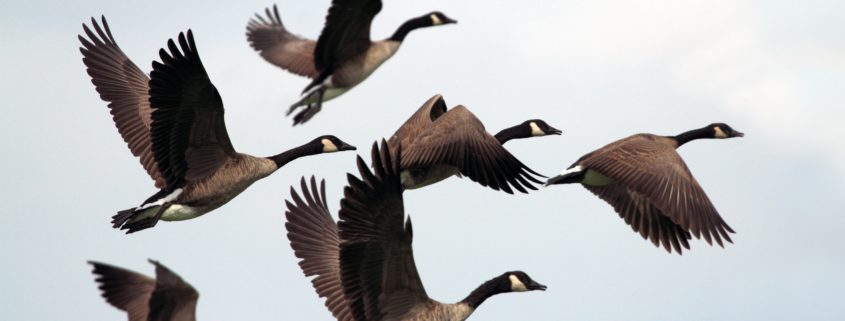
Learn about the behavior of Canada geese, effective goose management techniques (egg oiling, border collies, exclusion techniques), community case studies and regulations. Volunteers should plan to make a commitment to survey a minimum of one park during the egg laying season.

Thursday, 8 March 2018
10-11.30 am

Fairfax County Animal Shelter Training Room
Limited to 40 participants

Register by 5 March with Kristen Sinclair  or call 703-324-8559

Help Earth Sangha Nursery on Volunteer Workday: Sunday, 18 February

Meet at the nursery in Springfield (6100 Cloud Drive in Franconia Park) at 10 am on Sunday, 18 Febrary. You’ll be spreading gravel, weeding and preparing soils for germinating woody plants. If it rains or the temperature dips into low 40 degrees, the workday will be cancelled.

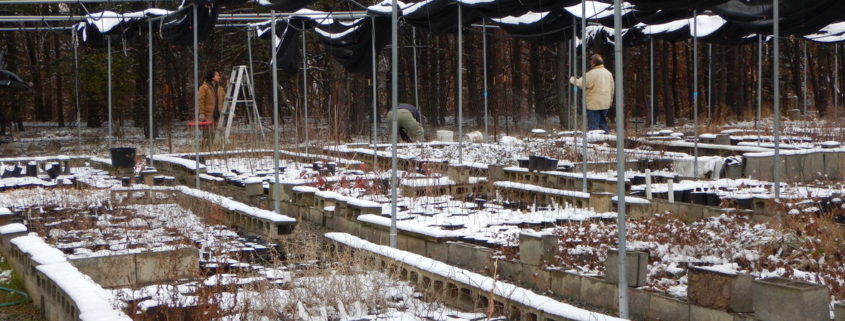
The Wild Plant Nursery is a resource for ecological restoration in the greater Washington, DC, area. Established in 2001 in Springfield, Virginia, under an agreement with the Fairfax County Park Authority, the nursery is the region’s most comprehensive source of local, wild native-plant material (“local ecotypes”).  Learn more here.

Citizen Science Opportunities via the National Museum of Natural History

Anyone can be a citizen scientist–especially you! It only takes an interest, some curiosity, and a little time to volunteer. Tweens and teens who want to contribute to real science can get involved. Teachers can bring citizen science into their classrooms, engaging students in authentic and relevant science. And naturalists from Fairfax County!

The Museum of Natural History collaborates with the Smithsonian Conservation Biology Institute, Virginia Working Landscapes, City Nature Challenge 2018, and other organizations to design rewarding, meaningful opportunities for those of us willing to volunteer for them.

Ask other naturalists to join you and do the work as a team!

Learn more and sign up