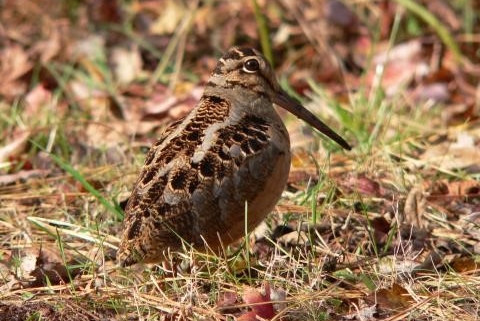
Come for an evening walk through the woods to one of the park’s large meadows. Listen for the call of the male woodcock and hopefully see his amazing courtship display and flight. Bring a flashlight. Approximately 1.5 mile walk on uneven terrain. Canceled if rain. Children must be accompanied by a registered adult. Meets at the South Kings Highway entrance to the park.
https://fairfaxmasternaturalists.org/wp-content/uploads/2022/02/Woodcock_Courtesy-of-Fairfax-Park-Authority-1.jpg360480Mary Ann Bushhttps://fairfaxmasternaturalists.org/wp-content/uploads/2023/08/VMN-Fairfax-cmyk_w223h156.jpgMary Ann Bush2022-02-27 14:50:372022-03-05 13:43:35Family Woodcock Walk, March 19th
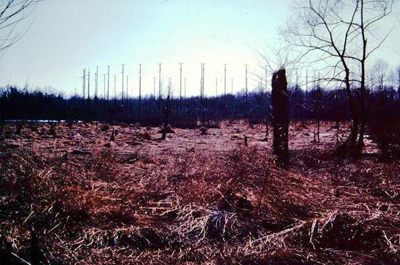
This double ring of antennae was the first U.S. tracking station to compile data on the path of the Russian satellite Sputnik just five hours after its launch.
Huntley Meadows Park is home to a nationally significant historic house, majestic forests, wildflower-speckled meadows and vast wetlands bursting with life. Some of the best wildlife watching in the Washington metropolitan area is here. The Park we know and love today does have an intriguing history.
Take a stroll through the less-visited side of Huntley Meadows Park to uncover the history of spies, espionage and how the Cold War struggle between the US and the USSR shaped Huntley and the Fairfax County we know today. The program at Huntley Meadows Park runs from 2 to 4 p.m. The cost is $12 per person. Meet at the South Kings Highway entrance. The program includes a 2.4-mile walk over flat terrain.
https://fairfaxmasternaturalists.org/wp-content/uploads/2022/01/HM-History-Aerials-6A-Remnants-V2.jpg265400Mary Ann Bushhttps://fairfaxmasternaturalists.org/wp-content/uploads/2023/08/VMN-Fairfax-cmyk_w223h156.jpgMary Ann Bush2022-01-28 18:20:062022-01-31 20:22:58Secrets, Spies, Sputnik and Huntley, February 28th
Huntley Meadows Park with its beautiful wetlands and boardwalk is a great place to volunteer!
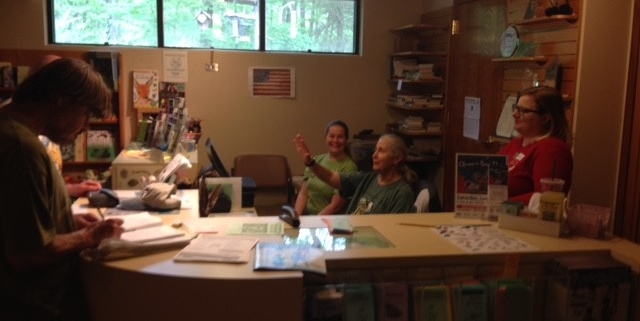
The staff is seeking volunteers to serve as Volunteer-on-Duty (VOD) at the visitor information desk. There are opportunities on weekday afternoons and weekends.
The VOD is the face of the park, the first and last chance to make an impression on visitors. Assist them in enjoying the park and understanding its resources. Communicate and interact with people of all ages. Seeking a commitment of two four-hour shifts per month for one year.
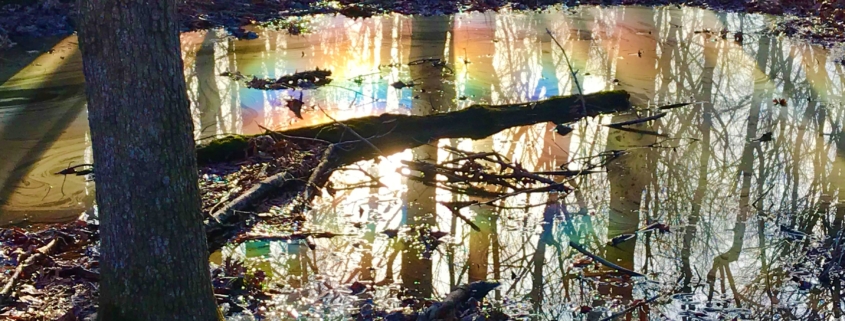
I am almost certain that most of the FMN newsletter readers have seen or heard of the phenomenon described in this article, commonly called rainbow pools. However, since I recently had my first opportunity, unplanned as it was, to photograph them at Huntley Meadows Park I thought I would share my good fortune. I was returning to the nature center following an afternoon of trail monitoring when conditions came together and gifted me with a fleeting glimpse of this colorful phenomenon. I say fleeting because several conditions need to be met to see the rainbow effect: A. decomposed organic surface slime, B. still waters, and C. just the right angle of sun light. And they were all in convergence as I unsuspectingly walked by; and alas, the effect dissolved in ten minutes as condition C degraded.
They are called rainbow pools because the surface coating on the pools resemble oily layers of red, blue, pink, yellow, purple, and colors that may not have a name. The coating is iridescent too like an oil slick but it disperses when disturbed unlike an oil slick, so disturbing the slick is a good way to test between the two.
HMP Rainbow Pool – photo Jerry Nissley
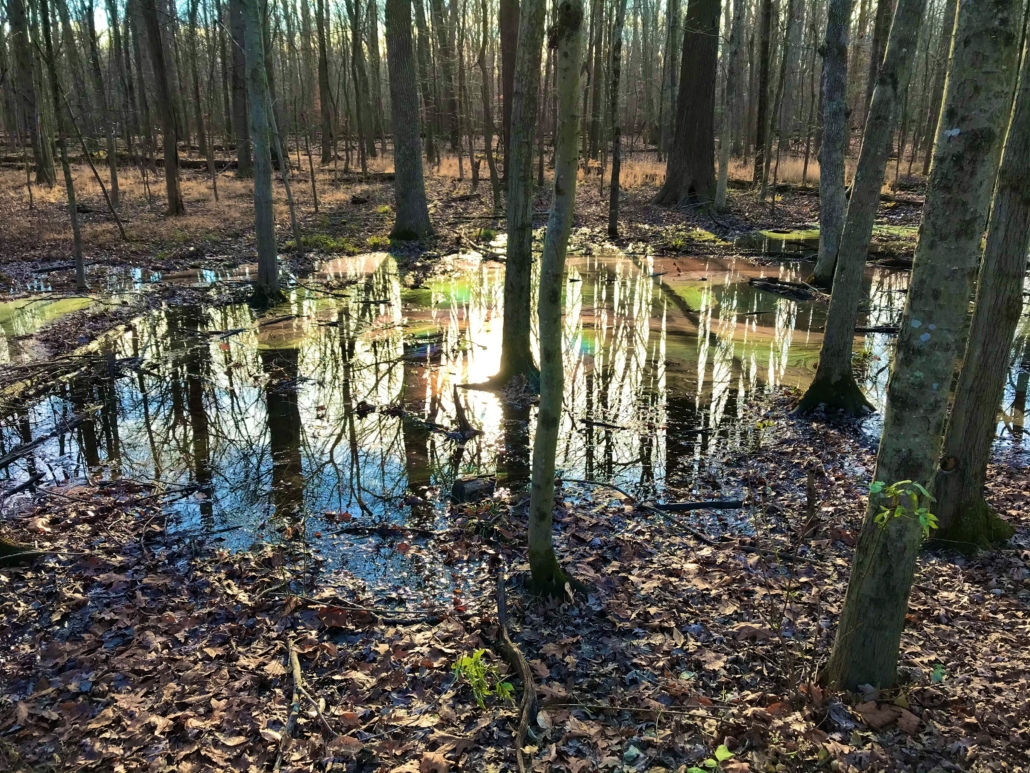
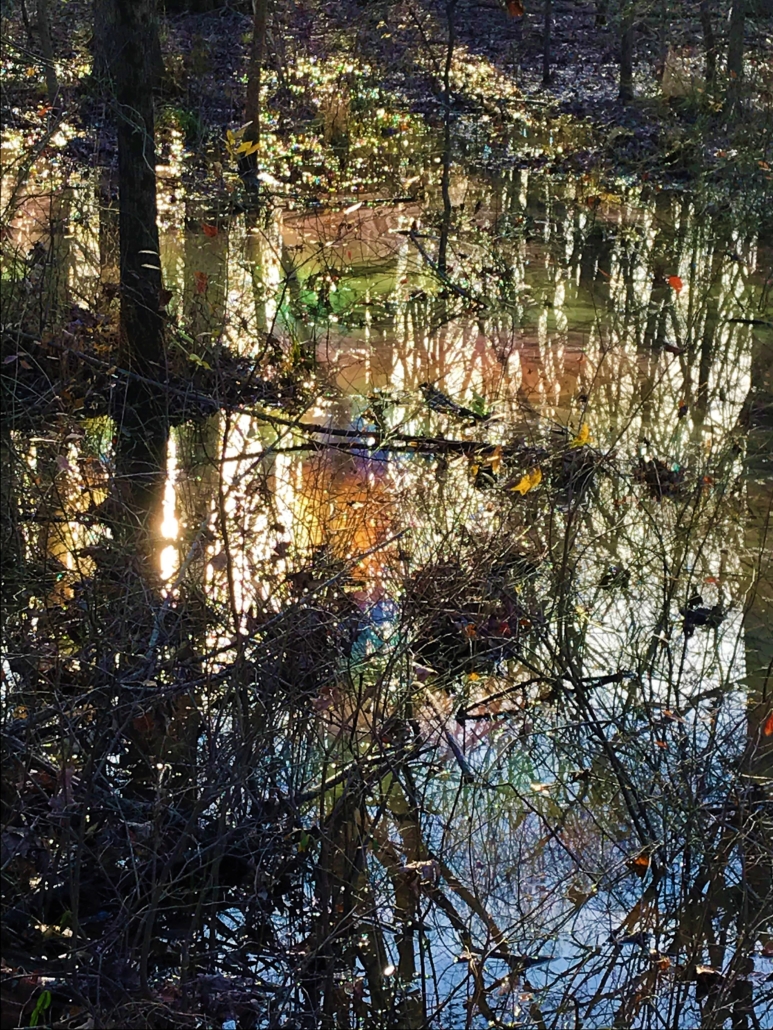
These rainbow pools are not a sign of pollution but are instead a natural occurrence in most wetlands. Given a combination of very still waters, a few days without rain or wind to disturb surface tension, and the correct angle of light, nature may provide you with a truly colorful experience. I have seen photos that show much more vibrant colors then in the ones I took. My personal observation is that the darker the water (more tannin) the higher the reflective value of the surface material. In addition, these pools sit among hardwood trees so less oil is exuded in the decomposition process of leaf litter when compared to pine or cypress forests. The pools in this section of the park tend to be temporal and, therefore, are less stained with leached tannins and oils creating a more pastel pallet.
HMP Rainbow Pool – photo Jerry Nissley
Most often the sheen forms as a result of decaying vegetation, especially from plant materials that exude natural oils, such as pine cones and needles. Another cause can be anaerobic bacteria breaking down iron in the soil. Once the cells begin to decay, they release a reddish slime material, which floats to the surface. Iron bacteria are of no threat to human health. They are found naturally in soils and water in low numbers and will thrive as more iron becomes available. Yet another example of how wetlands are ecologically important systems due to their high plant productivity and their capacity to recycle nutrients. Bacteria in wetland soils break down organic and inorganic structures.
The rainbow effect is typically seen during cooler months and as the sun approaches the lower degrees of an acute angle such as in the morning or as the sun is setting, providing the appropriate reflective angle. The pools pictured in this article are located in the back still waters off the wooded section of Cedar trail at HMP, not in areas near the creeks or other moving water. These photos were taken on 3 December around 3:30 p.m. as I finished an afternoon of trail monitoring. Other pools can be found in other sections of the park.
So you want to chase a rainbow? Try running down a rainbow pool at Huntley Meadows. But running on the boardwalk is not permitted … those trail monitors will get cha.
https://fairfaxmasternaturalists.org/wp-content/uploads/2020/12/IMG_E1772-scaled.jpg19202560Jerry Nissleyhttps://fairfaxmasternaturalists.org/wp-content/uploads/2023/08/VMN-Fairfax-cmyk_w223h156.jpgJerry Nissley2020-12-07 14:59:382020-12-07 14:59:38Rainbow Pools of Huntley Meadows Park
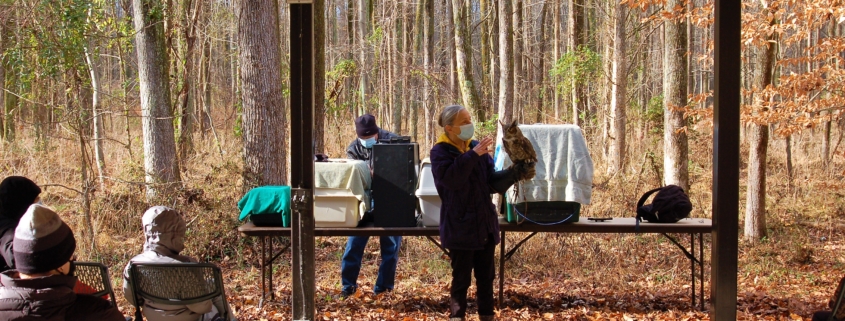
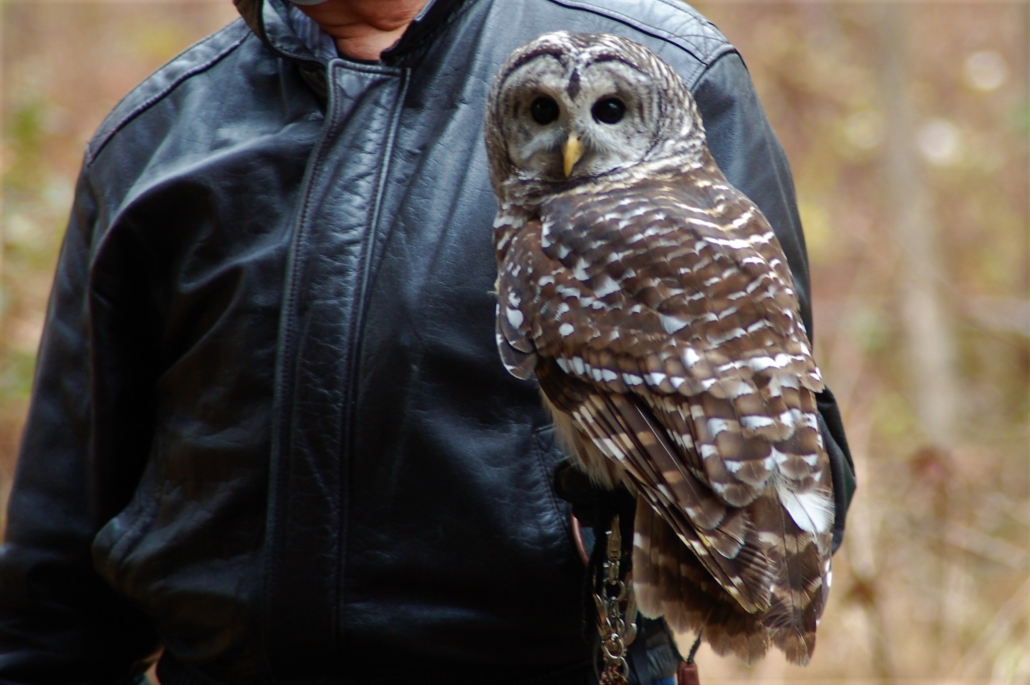
It wasn’t the best weather for an outdoor event. Reports had predicted storms. Though the rain had passed through the area over night it was still blustery and overcast. Even with the sun trying desperately to peek through the clouds, occasionally succeeding, a chill remained in the air. The owls didn’t mind. The barred owl even panted a bit after flapping wildly on the handler’s arm, posturing for its admirers. A testament to how well dense feathers insulate an owl against the offerings of winter.
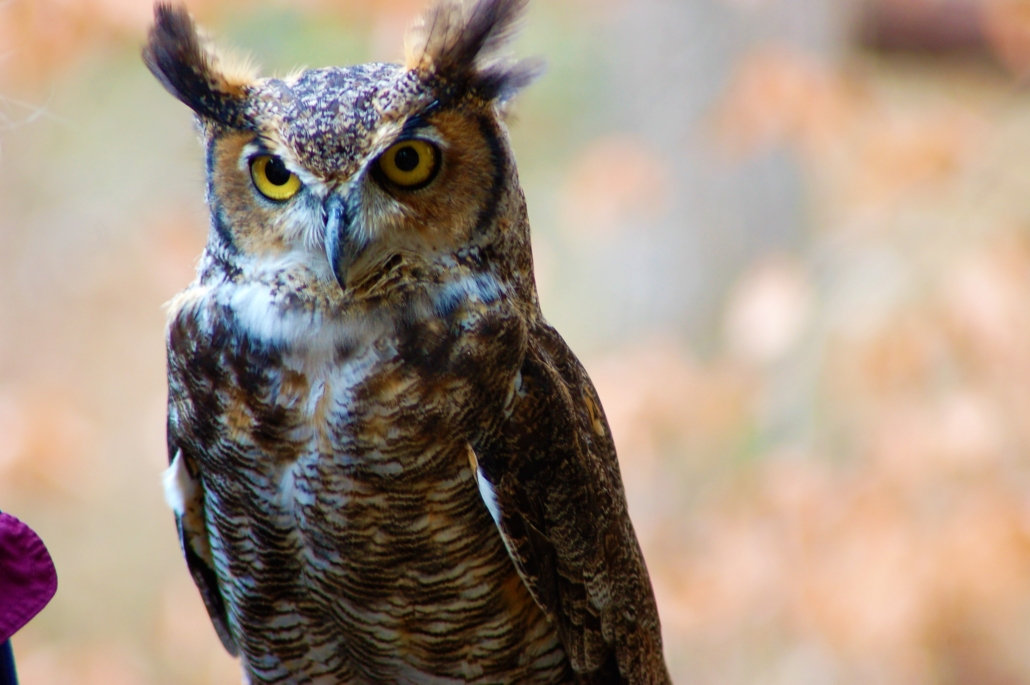
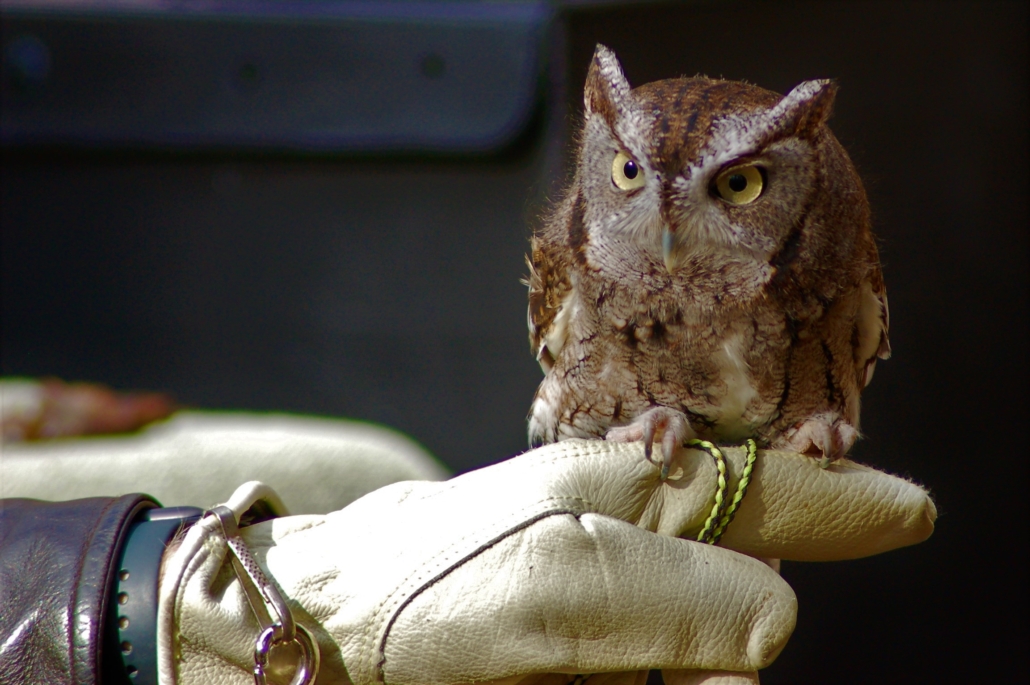
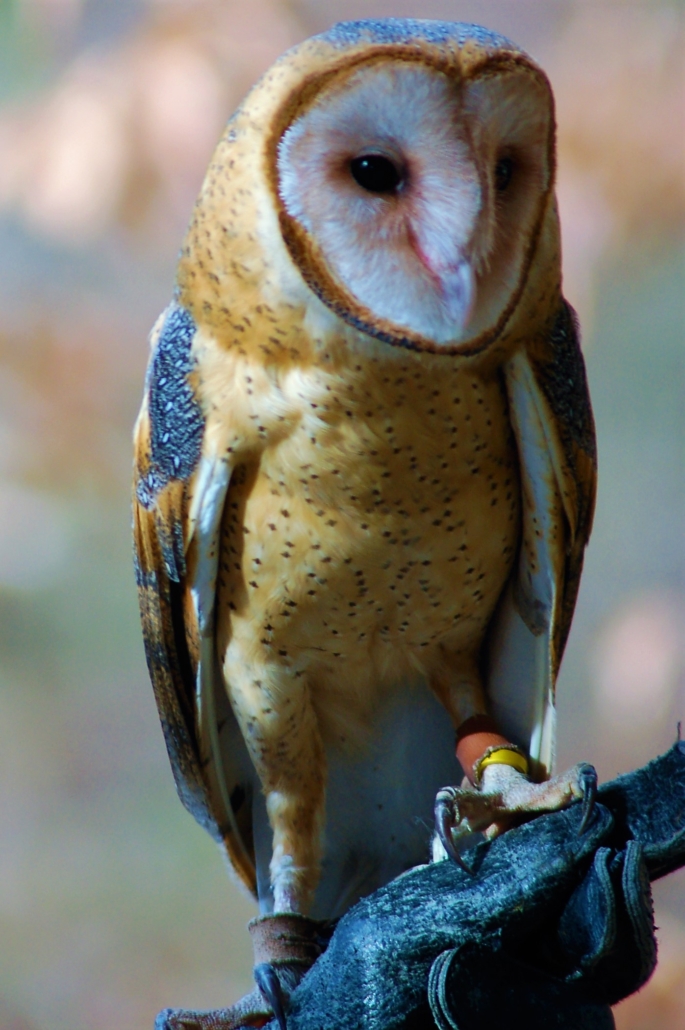
Huntley Meadows Park (HMP) hosted an owl program presented by ‘Secret Garden Birds and Bees (SGBB)’ on 5 Dec 2020. This organization of wildlife rehabilitators, falconers, beekeepers, and naturalists is dedicated to sharing their love of nature through informative and entertaining educational programs, events and activities. This day at HMP the team of Liz Dennison (VMN Banshee Reeks – Loudon) and Tim Dennison showcased 4 owls (Great Horned, Screech, Barn, and Barred) along with Big Red, a red-tailed hawk. As an organization they offer additional programs on general raptor habitat and identification, falconry, seasonal specific raptor behavior, as well as beekeeping and gardening. You may have had the pleasure of seeing them at events around the tri-sate area including Friend’s of Mason Neck’s Eagle Festival and Owl Moon Program. The birds have each been rehabilitated from injury (i.e. being hit by cars) but residual effects from their injuries (i.e. damaged eye sight, beak deformation) precludes safe release back into the wild. They are cared for on SGBB property in Loudon County along with bees and gardens.
SGBB Great Horned Owl – photo Jerry Nissley
SGBB Screech Owl – photo Jerry Nissley
The HMP program was offered through Fairfax County ParkTakes on-line registration system and was fully attended in compliance with current Virginia state limitations. The families in attendance were kept actively engaged and asked many questions about the bird’s behavior, characteristics, and habitat; and were treated to, how should I say, ‘spontaneous natural owl functions’ much to the joy of a couple of nine year old boys in the front row. Father said, “well son you got your wish”! The other function was the regurgitation of an owl pellet, which contained bone fragments from its last meal. Hey – people literally cheer for this bonus material folks!
SGBB Barn Owl – photo Jerry Nissley
SGBB Barred Owl – photo Jerry Nissley
To complement the spontaneous material the scripted information covered a description of each bird, how it nests, seasonal diets, how loss of habitat affects populations, the harmful impact to raptors that eat rodents that have ingested rodenticides, and preservation tactics such as owl box programs. Learning about how owls contribute to the environment and how they survive throughout the year builds a meaningful understanding of these magnificent birds of prey. The following Baba Dioum quote is on their website, “In the end we will only conserve what we love. We love only what we understand. We understand only what we are taught.” I say – we can never be taught too much! We just need to listen. This program was an excellent fun learning experience for all ages.
Contact information for Secret Garden Birds and Bees along with additional resources:
https://fairfaxmasternaturalists.org/wp-content/uploads/2020/12/DSC_0015-scaled.jpg17022560Jerry Nissleyhttps://fairfaxmasternaturalists.org/wp-content/uploads/2023/08/VMN-Fairfax-cmyk_w223h156.jpgJerry Nissley2020-12-06 14:35:252020-12-06 14:35:26Who’s Whooo Program at Huntley Meadows Park
Green Spring Gardens 4603 Green Spring Road, Alexandria Thursday, 9 April 2020 7:30 – 9pm
David Lawlor will discuss the recent Natural Resource Management activities at Huntley Meadows Park including the newly revised Natural Resource Management Plan based on Natural Vegetation Communities found in the park. He will review the quality and types of Huntley Meadows Park Natural Vegetation Communities, as well as the monitoring and protection efforts for the rare plant communities and rare plants found in the park. David will also speak about the surveys and research being conducted at HMP to enhance the understanding of the ecosystems being protected.
David Lawlor is a native of Fairfax County growing up in Annandale, VA. He graduated with a B.S. in Biology from George Mason University. David has over 20 years of experience in the field of Natural Resource Management planning and implementation. David worked as the Fairfax County Assistant Wildlife Biologist for six years and has been the Natural Resource Manager at Huntley Meadows for over 15 years.