
The Evolution of Naturalist Societies
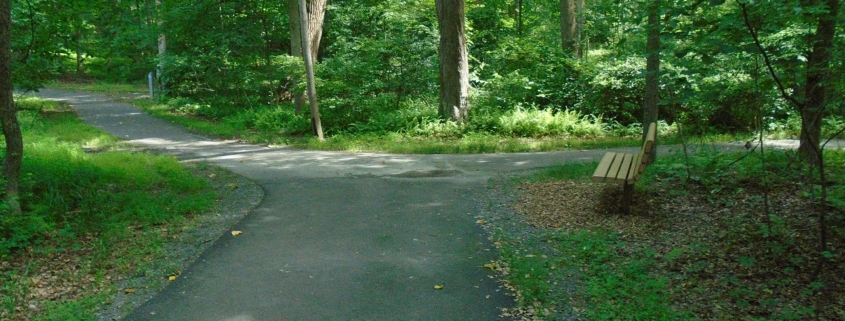
Feature photo: The Turquoise Trail in Reston. Reston, in Fairfax County, is a designated Biophilic City, celebrated for deeply embedding nature into its planned community structure. It is home to over 55 miles of trails with preserved open spaces with abundant wildlife habitats.
Photo and article by FMN Stephen Tzikas
Three factors influenced the development of early naturalist societies in the 19th century. These were the beginning of the industrial revolution, the growing availability of education, and a growing conservation crisis, particularly concerning wildlife and habitat preservation. To understand the beginning of naturalist societies in the 19th century, one needs to understand the context in which it found itself. Most people struggled to survive daily life in the early 19th century. As harsh as the industrial revolution could have been in its early years, it eventually provided for better lifestyles. Education made great progress during the 19th century, which allowed the emergence of a larger pool of university students. At the beginning of that century, the majority of the people could neither read nor write. With the extension of the free-school system there had been a great positive change in education. College education improved too. However, it was not until after the Civil War that disposable incomes rose enough for people to enjoy more leisure and personal investment.
There were only about 30 universities in the United States in 1801, with about 3,000 students. In 1897 there were 472, with about 156,000 enrolled students. Explosive growth in the number of colleges occurred in bursts, especially after World War II. Early pedagogy at universities was more hands-on and similar to what amateurs do today. In 1870, there were 9,400 bachelor degrees awarded, no master degrees, and 1 PhD. By 1890, bachelor degrees awarded rose to 15,500, master degrees to 1,000, and PhDs to 149. By 1950, bachelor degrees awarded amounted to 432,000, master degrees to 58,200, and PhDs to 6,600. By 1990, the million-bachelor degree awarded mark was breached. Today, over 10 times the number of degrees at the master and PhD levels is awarded annually as there was in 1950. That makes for tremendous interest in professional and amateur activities, regardless of the topic. It was at university that I joined my first “naturalist organization,” the university’s outing club.
The late 19th century marked the rise of the first naturalist societies and publications. These organizations were often founded by professionals who understood the science. Early naturalist organizations, and the years they were founded, included:
- The Boone and Crockett Club (1887)
- Sierra Club (1892)
- Wildlife Conservation Society (1895)
- Fauna and Flora International (1903)
- National Audubon Society (1905)
- The Izaak Walton League of America (1922)
- International Union for Conservation of Nature (1948)
- The Nature Conservancy (1951)
- World Wildlife Fund (1961)
Carnegie libraries were funded between 1883 and 1929. During this time, industrialist Andrew Carnegie and his foundation donated over $56 million to build 2,509 public and academic libraries worldwide. Vintage naturalist books and journals, that may have been found at these libraries, can be found on the internet and especially the Internet Archives website. These include: Nature (1869- Present); The Nature Almanac (1893- Present), and The Nature-Study Review (1905-1923).
The Virginia Master Naturalist organization was launched in 2005 by five state agencies and Virginia Tech. Also in 2005 the Fairfax Chapter of the Virginia Master Naturalists was founded. The Fairfax chapter is dedicated to providing education, outreach, and service related to the beneficial management of natural resources. Its members include both concerned citizens and professionals.
Organizational historian reports preserve the history of an organization. Such reports preserve institutional memory, providing valuable insights into the organization’s past, including key decisions, events, personnel, and partners. These reports document an organization’s present trends and future anticipations. Today’s naturalist societies offer environmental science programs to the masses, offering much fulfillment, education, and satisfaction. But the evolution has not stopped.
Naturalist societies today are empowered by Presidential Executive Orders and the citizen science revolution, which incorporates artificial intelligence. This will fuel its development into the future. The FMN Newsletter is an excellent historical record of trends and topics. With enough passage of time, it will show an evolution of these themes, and will leave behind valuable information for future generations of Fairfax Master Naturalists.