

Posts

AERO Opportunities: Want to Get More Involved with Wildlife? Learn About Getting Licensed in 2026

Photo: Provided by A.E.R.O Animal Education and Rescue Organization


AERO Opportunities: Want to Get More Involved with Wildlife? Learn About Getting Licensed in 2026

Community Outreach – S213: DWR Stewardship Projects — Department of Wildlife Resources (VDWR)

 AERO education events are eligible for Continuing Education hours as well.

Hello A.E.R.O. Volunteers & Friends,
If you’ve been thinking, “I’d love to help more” or “I wish I could work more directly with wildlife,” this is your chance. The 2026 licensing cycle with the Virginia Department of Wildlife Resources (DWR) is coming up soon, and it is time to reach out specifically to those of you who do not currently hold a wildlife rehabilitation license but might be interested in taking that next step.

Why Get Licensed?

Having a DWR wildlife permit allows you to:

  •   Help with hands-on wildlife care
  •   Transport/rescue injured or orphaned animals more independently
  •   Assist rehabbers in their homes or facilities
  •   Participate in hands-on trainings and free A.E.R.O. classes in 2026 at a deeper level

For many volunteer roles with A.E.R.O. – especially transport, caregiving, and in-depth training opportunities – it is strongly preferred that you hold at least a Category IV (Care Provider / Wildlife Hospital Aide) license.


Interested in Apprenticing or Getting a New License?

If you are interested in:

  •   Getting more involved
  •   Becoming permitted to work with wildlife, or
  •   Starting as an apprentice under a sponsor

  Please reply to this email and let me know. 

I’ll help you figure out which path and category makes the most sense for you.

To become an apprentice, you will need: 

  •   A formal agreement with a sponsor (Olivia)
  •   A room dedicated exclusively to wildlife care
  •   A setup that meets the state’s facility requirements (I can send you the DWR checklist)
  •   Completion of 6 hours of Continuing Education (CE)

Don’t worry if that sounds like a lot — A.E.R.O. Volunteers will walk you through each step, connect you to trainings, and help you meet the requirements.

License Categories (Quick Overview)

Here are the main volunteer-related categories:

  •   Category I – Apprentice: For beginners under sponsorship
  •   Category II – Rehabilitator: For experienced rehabbers handling most species
  •   Category IV – Care Provider / Wildlife Hospital Aide: For assisting at permitted facilities
  •   Category V – Student / Intern: For short-term training or school-related experience

If you’re not sure where you fit, just reach out — A.E.R.O. Volunteers can talk through your interests, time, and space at home.

Ready to Take the Next Step?

If you’re curious, even if you’re not 100% sure yet, please email me back and say you’re interested in learning more.
We’re happy to support you in moving from “helper” to permitted wildlife caregiver or apprentice in 2026. Our animals – and our rehab team – always need more good people.

Thank you for all you already do for A.E.R.O. and Virginia’s wildlife.

 — Olivia

EMAIL: olivia@aeroanimalrescue.org

President, A.E.R.O

Animal Education and Rescue Organization

DWR Asking Public to Report After Increase in Suspected Cases of Avian Influenza

Photo: Joe Subolefsky – Black Vultures./Audubon Photography Awards

PRESS RELEASE: RICHMOND, VA

The Virginia Department of Wildlife Resources (DWR) has recently received reports of groups of dead black vultures across the state including several counties in Southwest Virginia. Preliminary testing indicates that the likely cause is H5N1 highly pathogenic avian influenza (HPAI). Although disease activity is currently centered in black vultures, with migration season beginning, it is likely there will be mortalities in other bird species as well.

DWR asks that if you observe any of the following, please notify the Department by calling the Virginia Wildlife Conflict Helpline at 1-855-571-9003 or emailing wildlifehealth@dwr.virginia.gov.

  • �� Five or more dead vultures, waterfowl, shorebirds, or seabirds in the same area within five days
  • �� Sick or dead eagles, hawks, owls, or turkeys, excluding ones found on the road
  • �� Ten or more dead wild birds of any species in the same area within five days

The public is advised to avoid picking up or handling sick or dead wild birds. If you must dispose of a dead bird on your property, wear rubber gloves and other personal protective equipment, such as a mask and eye protection. Dead birds should be buried or double bagged and disposed of in a secured outdoor trash can or landfill. After disposing of the carcass, wash hands thoroughly with soap and water or use an alcohol-based hand sanitizer, and disinfect clothing, and shoes. If you are frequently in contact with poultry, including backyard flocks, or other domesticated birds, you are encouraged to have separate clothing and shoes for use in the areas where you keep those birds. In addition, keep flocks away from vultures and ponds or similar bodies of water that are also accessible to wild waterfowl. Taking these precautions will help reduce the risk of spreading the virus.

If you develop any flu-like symptoms after handling wild birds (fever, body aches, red or itchy eyes, etc.), contact your state or local health department.

More information on Avian Influenza can be found on the Virginia DWR website.

Submit Photos to Virginia Wildlife’s Photography Showcase!

Image: Courtesy of the Virginia Department of Wildlife Resources (DWR)

The Annual Photography Showcase is offered each year as a way to recognize the rich heritage of Virginia’s wildlife and natural resources and pay tribute to the mission of the Virginia Department of Wildlife Resources (DWR).

Images will be chosen by the editorial staff from those submitted via our online link, available now! Selected images will appear in the July/August 2025 issue, although some entries may appear on the DWR website, blog, Facebook, Instagram, and Twitter sites to promote the mission of the agency and advertise future photography showcases. Promotional usage rights must be available to Virginia Wildlife staff and the Department’s webmaster.

AGAIN THIS YEAR! The DWR will choose the photo to use on the cover of the 2026 Virginia Wildlife Calendar from the photos submitted to the 2025 Virginia Wildlife Photography Showcase Issue! The Virginia Wildlife Calendar has become iconic and is sold and distributed to thousands in Virginia and across the United States. The DWR source calendar photos from professional wildlife photographers, but they wanted to give Virginia Wildlife Photography Showcase photographers the chance to be included as well.

There is no separate category for the calendar cover; DWR will select the winning image from entrants to the usual categories for the Photography Showcase Issue, and all entry rules and directions apply.

Here are some guidance on what type of image will work on the calendar cover:

The calendar dimensions are 10″ x 14″, horizontal format. Please do not crop your image too tightly. The image must have 3 to 4 inches of “clean” space at the bottom, so the logo is easily readable.

Please make sure your file is at least 300ppi and can be made into the above-mentioned size without any resulting pixelation. The image must be sharp to begin with, so please do not over-sharpen, as this will disqualify the image. Also, do not over-saturate color of the image.

We will be looking for fauna for their cover, and they do not repeat species in close succession. They are looking for colorful, eye-catching, and dynamic images, so give the DWR your best shot! Good luck! Submissions must be uploaded by 5:00 PM on Monday, February 10, 2025.

Categories:

  • Virginia Fauna: Native mammals and birds (game and nongame), insects, reptiles and amphibians, underwater images of fish and aquatic life.
  • Textures & Patterns: Abstract designs, textures, and patterns found in nature. Make us guess what it is!
  • Trail-Cam Images: Images captured on trail cameras that reveal something interesting or funny about the subject.
  • Explore the Wild: Images captured on public lands found through the DWR Explore the Wild online tool, such as DWR Wildlife Management Areas, Virginia Bird and Wildlife Trail sites, and state and local parks. Entries to this category can include photos of wildlife, native plants, and textures and patterns. Entries in this category MUST specify in the description at which public land the image was taken.

PLEASE CLICK HERE FOR ENTRY AND SUBMISSION DETAILS!!!!

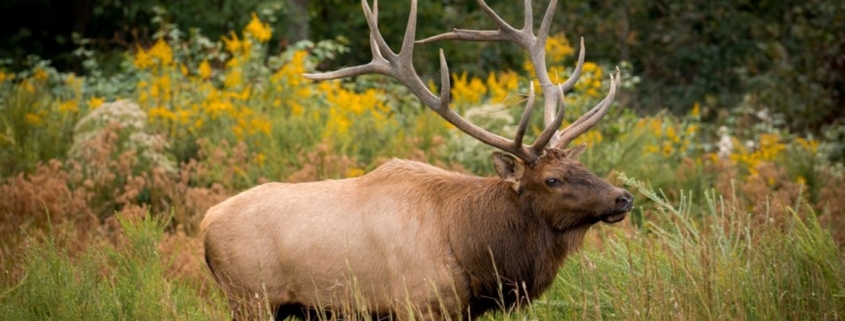
Elk Viewing Tours, Experience Virginia’s Elk In Person!

Dates and Times (Space Limited)

  • Tuesday, September 5 @ 6 pm
  • Thursday, September 14 @ 6 pm
  • Thursday, September 21 @ 6 pm
  • Thursday, September 28 @ 5 pm
  • Thursday, October 5 @ 5 pm
  • Tuesday, October 10 @ 5 pm
  • Tuesday, October 24 @ 5 pm
  • Tuesday, October 31 @ 5 pm

Location

Tours meet at Southern Gap Outdoor Adventures (1124 Chipping Sparrow Road, Grundy VA 24614).

Cost

$20 per person

How to Sign Up

Each tour will be limited to 25 guests who will be required to pre-register through the DWR website.

Enjoy an informative guided bus tour of Virginia’s elk country in scenic Buchanan County this fall. These public elk-viewing tours, offered by the Virginia Department of Wildlife Resources (DWR) in partnership with Breaks Interstate Park, will travel through private lands, with special permission from the landowners, to view elk habitats that are otherwise inaccessible to the public. Pre-registration is required.

BOOK NOW

What to Bring

You can bring a camera, binoculars, and water. Plan on wearing footwear appropriate for the outdoors and bring a raincoat and an extra layer. (There will be some opportunities to get out of the bus.)

Policies

  • Participants under 18 years of age must be accompanied by an adult.
  • Pets are NOT allowed on the tour.
  • Unless otherwise instructed, please remain within arm’s reach of the bus.

What to Expect

Tours will last approximately 3 hours. Guides will have one or two designated stopping locations along the way where you can get out of the bus to see the elk. However, the tour and viewing of the elk will primarily take place from the bus. Tours will start and end at Southern Gap Outdoor Adventures Visitor Center, where restrooms will be available along with one stop during the tour.