Beyond the Spray: Protecting Wildlife and Biodiversity with Safer Mosquito Control Solutions,

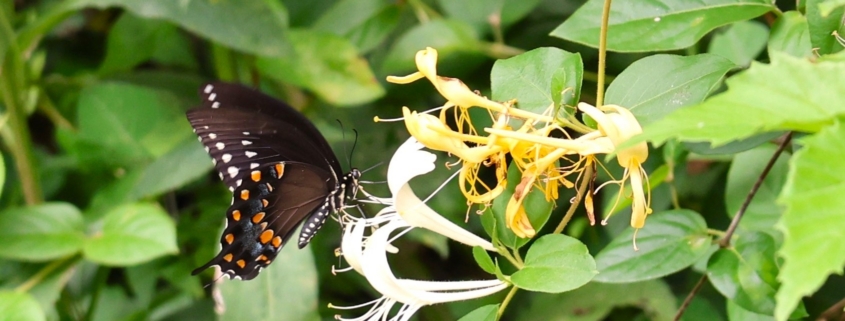
Image: Courtesy of the Northern Virginia Bird Alliance – Beyond the Spray

Saturday, April 25, 2026
2:00 PM 3:00 PM

Mount Vernon Unitarian Church
1909 Windmill Ln Alexandria, VA 22307United States (map)

FREE, but registration is required 

Liz Train, NVBA’s Fairfax County Wildlife Sanctuary Program Coordinator, will give a presentation on mosquito control solutions that avoid pesticides. She will review the research on harms to wildlife caused by broadcast spraying for mosquitoes and talk about alternative (and more effective) methods to reduce mosquito populations. NVBA urges homeowners to consider the long-term health of their yards, ecosystems, and communities, and “Say No to the Spray.” The Wildlife Sanctuary Program promotes healthy, pesticide-free habitats that nurture biodiversity from the soil up.

Your Yard Can Help Save Our Streams

Dense plantings of native plants capture stormwater

Article and photo by Plant NOVA Natives

Northern Virginia’s stream and river water quality is not great. Although agriculture is the largest contributor by far of nutrient and sediment loads in Virginia’s streams, rivers, and the Chesapeake Bay,  urban and suburban stormwater runoff is the second largest and the fastest growing contributor to these pollutants.

Consider, for example, the 52 square mile Accotink Creek watershed in Fairfax. For several years, the U. S. Geological Survey (USGS) and Fairfax County have partnered to monitor pollutants in 20 watersheds across the County, including Accotink Creek. The good news is that nitrogen levels have generally dropped. But phosphorus concentrations have remained exceptionally high. Why? Because 87% of the Accotink Creek watershed is developed with 27% of the land covered in impervious surfaces. Such intensely developed regions produce large loads of sediment from stormwater runoff, and phosphorus is bound to sediment. Reduce the sediment levels in our local streams, and you will lessen the phosphorus pollution.
Both the Virginia Department of Conservation and Recreation (DCR) and the Virginia Department of Environmental Quality (DEQ) have announced focused efforts during 2026 to reduce nutrient-based pollutants and sediment loads in our water. By December of 2025 we had met 100% of our sediment reduction targets, which is excellent news. But we met only 80% of the nitrogen and 62% of the phosphorus reduction goals.

This is a compelling call to action for all property owners in the Plant NOVA Natives community. Here are several strategies to reduce nutrient pollution and sediment loads in our waterways:

·   Plant more native plants, especially where stormwater tends to flow. Their deep roots stabilize the soil and absorb far more harmful nutrients than turfgrass lawns. Notice where stormwater tends to flow on your property along swales or slopes and plant there first.

·    Plant a street-side garden. Remember the underused strips of your property next to the street or sidewalk. These are ideal spots to add native plants, as their roots will catch stormwater overflow before it hits the pavement. Take care, however, to avoid underground lines, pipes, and overhead wires. And please consider whether your plantings impact people’s access to their cars, mailboxes, or safe crossing to the sidewalk. See Plant NOVA Natives’ comprehensive list of considerations for street-side gardens before you begin to dig.

·    Use organic compost. Ditching commercial fertilizers and using organic compost is always the best option to enrich the soil. But if you must use fertilizers, choose only phosphorus free or low-phosphorus brands and use them sparingly. 

·     Pick up pet waste: Nitrogen, phosphorus, bacteria like E. coli and Salmonella, parasites, and ammonia can all be found in pet waste! While pet owners often remember to pick up pet waste in public areas, remember to do so on your own property as well for the sake of our streams and rivers.

·    Compost and mulch yard waste: Composting and mulching are two strategies that effectively return nutrients to the soil and keep them out of stormwater. Grass clippings should be composted or mulched back into the lawn. Leaves are best left in non-lawn areas, but those that fall on the lawn can also be mulched or raked up and added to your compost pile. Keep lawn debris out of the street and away from storm drains.

·    Create a rain garden: Rain gardens are landscaped areas constructed to capture and hold stormwater so that it seeps into the soil instead of running off our property. A link to a step by step guide on how to build a rain garden can be found here on the Plant NOVA Natives website.

·    Use rain barrels: If you can capture water from downspouts and use it later to water your plants, this greatly reduces stormwater runoff caused by our roofs. 

·     Redirect downspouts to vegetated areas rather than paved impervious surfaces: When rain barrels are not an option, try to redirect downspout water flow away from sidewalks and driveways and towards the more vegetated areas of your property. 

·    Reduce impervious surfaces: Replacing asphalt with gravel or permeable pavers will capture and keep more stormwater on your property. But reducing the lawn by converting parts of it to native plant gardens is also highly effective. Turf grass, while green, behaves more like concrete when it comes to water absorption.

·    Maintain septic systems: Regularly inspect and pump septic systems to prevent nutrient leaching into groundwater.

·    Wash cars responsibly: Either use a commercial car wash or wash your car on grass to filter soapy water before it enters the ground.

Additional strategies to capture stormwater are discussed here on the Plant NOVA Natives website, along with a discussion of planting and maintaining riparian borders. Finally, here is a link to a Fairfax County Soil and Water Conservation District manual with instructions on how to build and maintain rainwater gardens, green roofs, and more.  


Paleontology on the Trail

Diatom microfossil fragments at Brownies Beach, Maryland, magnified under the author’s microscope (Bausch and Lomb Stereo Zoom Microscope DD740). Diatoms are unicellular organisms and can be in various shapes.

Article and photos by FMN Stephen Tzikas

Anthracite fern fossils from Minersville, PA, commonly found in discarded coal piles in Schuylkill county, PA.

Fossils can be found on many trails.  I have collected them from coal deposits in Schuylkill County, PA, in the Calvert Cliffs, Maryland area as part of a Northern Virginia Community College (NVCC) course, and here in Fairfax County at Holmes Run Gorge.  The excursion to Holmes Run Gorge was also a NVCC geology field trip.  For the latter, upon reaching the main gorge area, we encountered fine examples of boulders of bedrock that were piled.

The larger, lighter gray, rounded boulders are mostly Occoquan granite. The flatter layered slab-like boulders with square corners are Indian Run rock of metamorphosed sandstone. In the main gorge area we discussed quartz rocks. Quartz is the last mineral in the Bowen reaction series, which is a geological concept detailing the specific order in which minerals crystallize from cooling magma. I collected a sample of cloudy white milky quartz, which is extremely resistant to weathering. The cloudiness of milky quartz comes from microscopic inclusions of fluids that have been encased in the crystal from the time the crystal first grew.

Our NVCC professor showed multiple examples of Quartzite with “slashes” (see photograph below).

Skolithos Linearis fossils at Holmes Run Gorge

High-energy waters transported these cobblestone size rocks originating from the Harper’s Ferry Antietam Formation. This Quartzite was originally Quartz sandstone that underwent metamorphic changes. Most noteworthy were the Tubeworm line boroughs (the “slashes”), about a half billion years old. Samples were numerous and I took one with a dark patch, probably of magnesium oxide on it.

The fossil in the Holmes Run Gorge photograph is the Skolithos Linearis in well-cemented quartzite of the early Antietam Formation, found in Pennsylvania, Maryland, and West Virginia. The formation is largely quartz sandstone with some quartzite and quartz schist. Quartzite is a hard, non-foliated metamorphic rock that was originally pure quartz sandstone. Sandstone is converted into quartzite through heating and pressure usually related to tectonic compression within orogenic belts. These are Virginia’s oldest fossils and date to the Cambrian Period. Skolithos is a common trace fossil ichnogenus that is, or was originally, an approximately vertical cylindrical burrow. It was produced by a variety of organisms in shallow marine environments and appear as lineated features in sedimentary rocks.

Fairfax County Spring Watershed Cleanups, Various Dates April – May

Photo: Courtesy of Fairfax County Spring Watershed Clean-up

Join The Nature Conservancy and Fairfax County Park Authority to remove trash from these parks in your watershed.

Saturday, April 4

Sign up: Ossian Hall Park—10:00 a.m. – 12:00 p.m. | Annandale

Saturday, April 11

Sign up: Merrybrook Run Stream Valley Park—9:00 a.m. – 12:00 p.m. | Herndon
Sign up: Sully Historic Site—9:00 a.m. – 11:00 a.m. | Chantilly

Sunday, April 19

Sign up: Lake Accotink Park (second clean up)—9:00 a.m. – 11:00 a.m. | Springfield

Saturday, May 9

Sign up: Frying Pan Farm—9:00 a.m. – 11:00 a.m. | Herndon

Saturday, May 23

Huntley Meadows Park—9:00 a.m. – 11:00 a.m. | Alexandria

WINGS OVER WOLF TRAP birds, butterflies, dragonflies +optional garden tour, April12th

Photo: Courtesy of Wolf Trap Park,  Native Woodland Garden


Sunday, Apr 12, 2026
9:30 am to 10:30 am

This Event is FREE however Space is limited so please register early

Wolf Trap National Park for the Performing Arts
1551 Trap Road
Vienna, VA 22182

Overview:


Expert led nature walk to identify migratory birds, butterflies, dragonflies, and more at Wolf Trap National Park for the Performing Arts

🐦Join Larry Meade for a fun and educational nature walk around the grounds of Wolf Trap National Park for the Performing Arts. April is prime time for bird migration as colorful birds such as warblers sing and show off their breeding plumage. While attendees are enjoying the birds, they will also be looking for other interesting creatures such as butterflies and dragonflies. With over 300 species of birds migrating over the area, attendees should spot quite a few species of birds. Larry works with various conservation groups in the area and will share his deep expertise in a fun and educational manner. Appropriate for all ages. Explore and learn more about the nature side of this gem of a National Park.

🦋Learn how to identify species by sound, color, size, shape and patterns.

🕛Nature walk leaves promptly at 9:30am. Please arrive at least 15 minutes early.

🔍Larry Meade is president of the Northern Virginia Bird Club. He is a frequent bird walk leader, a writer, a photographer, and program presenter. He also has an interest in butterflies and is the compiler of the Alexandria Butterfly Count which is held is September.

📸Photo Credits: Larry Meade. For more information, to join and/or to make a donation Northern Virginia Bird Club | WATCH – STUDY – ENJOY – UNDERSTAND – CONSERVE (nvabc.org)

Please note: There is an optional one-hour Native Woodland Garden Tour led by the Green Spring Extension Master Gardeners following this event from 10:45am-Noon

All ages welcomed. Paths are not stroller friendly.

We love dogs but ask that you leave them at home for this event.

This Event is FREE however Space is limited so please register early as we expect this Event to be SOLD OUT. If you pre-register and cannot make it, PLEASE use Eventbrite to Cancel well ahead of time as we are sure to have a waiting list for this Event.

📍Meeting Location: Main Entrance to the Filene Center- adjacent to the Box Office.

Directions: Turn into Wolf Trap’s main entrance at the digital sign (1551 Trap Road, Vienna), and follow the road to the Filene Center. Free Parking available in nearby lots

🤓Prepare: Wear clothing and shoes suitable for woods, trail walking and the weather. Rain or shine. You may want to bring binoculars, sun and bug protection, water, a basic first aid kit and your cell phone for taking photos. iNaturalist uploads are always appreciated.

Leave No Trace.

Assumption of Risk and Waiver of Liability Attendees assume all risks and accept sole responsibility for any injury, illness, damage, loss, claim, liability or expense of any kind that attendee may experience or incur in connection with attending the event. Attendee hereby releases, covenants not to sue, discharges and hold harmless Friends of Wolf Trap, its volunteers, members, and guests, of and from any such claims, including all liabilities, claims, actions, damages, costs or expenses of any kind arising out of or relating thereto.

📷Photo Consent: Your participation means you give your consent to be photographed, filmed or otherwise recorded and to the release, publication, exhibition or reproduction of and all recorded media of your appearance, your voice, for any purpose whatsoever in perpetuity including, by way of example ony, use on social media.

🌩️N OTE: In the case of inclement weather, this event will be rescheduled.

Wolf Trap National Park Visitor Information. For more information and directions, visit: Wolf Trap National Park Visitor Information

https://www.nps.gov/wotr/planyourvisit/index.htm

www.friendsofwolftrap.org

For FMN’s: These events count as educational credit under “Continuing Education – National Park Service” (sponsoring organization).  Each session that you attend counts as one hour of educational credit.

In-person Art Class: Sketching Birds 101 with Jess Michetti, April 8th


Sketch: Sketching Birds 101 by Jess Michetti

Wednesday, April 8, 2026
7:00 PM – 8:30 PM

Fee: Members $12.00, Nonmembers $23.00

National Wildlife Federation Building
11100 Wildlife Center Drive
Reston, VA 20190

Click here for Registration and Sign-up

About the course:

In the spirit of Draw A Bird Day (04/08/2026), students will use pencils, pens and copy paper to enjoy drawing birds – together! This event celebrates drawing birds as a way to enjoy the challenge of putting pencil to paper and learn something about our subject along the way.

Draw A Bird Day began in the UK in the 1940s when a young girl asked her wounded uncle to draw a bird for her while visiting him in the hospital. He obliged, and the girl told him he was not a good artist and laughed. The simple act of drawing and sharing lifted his spirits, and from then on, he and others in the hospital drew birds together every time the girl would visit, taking their minds off their injuries and bringing a bit of joy to the hospital ward. Draw a Bird Day is celebrated every year on her birthday, April 8.

Students will talk about materials and techniques along the way as we draw an American Robin together, step-by-step. Absolutely no experience is required, and all skill levels are welcome!

About the Speaker

Jess Michetti is the graphic designer and artist behind Good Goose Graphics. She’s an avid bird watcher, and birds are her favorite subject to draw. She shares her highly detailed colored pencil drawings online and at northern Virginia area art shows throughout the year and hopes that her work inspires viewers to slow down, notice and care for the beauty of nature all around them…to choose wonder.

Spring 2026 Tree Rescuer Extravaganza!

Photo: Courtesy of Fairfax Prism

March 21-April 12, 2026

JOIN volunteers at any of these tree rescues to learn about invasive plants and what you can do to help!

What to Know Before You Go

What to Wear: Long-sleeved shirts and long pants to protect against thorns, sturdy shoes, a hat.

What to Bring: Water. See instructions for each event about tools. If you have them, bring clippers, loppers, and/or small saws. If you don’t, most event leaders will have some extra tools you can borrow.

Sign Up: Please use the registration form or link on the calendar to let the event leaders know you are coming. Children must be over age 11 to actively participate.


Would you rather help in other ways?

Volunteer to help organize? Please fill out the interest form.

Donate money to support the work of the PRISM or adopt parks? Please see this page

PLEASE CLICK HERE FOR A THE SCHEDULE OF EVENTS!


28th Annual Eagle Festival!


Photo: Courtesy of Eagle Fest at Mason Neck State Park

May 9, 2026
10:00 a.m. – 4:00 p.m.

Mason Neck State Park,
7301 High Point Rd.,
Lorton, VA 22079.
Visitor Center Lawn

All events for the festival are free for everyone to enjoy!
Click here for additional information.

Join this full day of live animal shows, hands on educational opportunities, and outdoor recreation clinics that all aim to highlight the rich natural history of Northern Virginia and foster stewardship of our environment.

  •  See live wildlife up close
  •  Learn about our resident bald eagles and see them fly overhead
  •  Visit exhibits from our many conservation partners
  •  Enjoy live music, food, and more

Special thanks to the Friends of Mason Neck State Park for their continued support of the park and this event, and thanks to all our Peninsula partners and sponsors that make this event possible.

Other details:
Standard parking or admission fee applies: Yes.
Extra fee: No.
Registration required: No.
Children welcome: Yes.
Phone: 703-339-2385
Email Address: MasonNeck@dcr.virginia.gov

Spring 2026 Native Plant Sales in Northern Virginia

Photo: Courtesy of LOUDOUN WILDLIFE’S NATIVE PLANT SALE AT MORVEN


Saturday, March 28
8:00am-1:00pm
National Arboretum Native Plant Sale
2400 R Street
Washington DC 20002Held in conjunction with the National Arboretum’s Lahr Native Plant Symposium 
Friends of the National Arboretum:
http://www.fona.org

Friday, April 10 & Saturday, April 11
9am-3pm
American Horticultural Society Spring Garden Market at River Farm
7931 E Boulevard Drive
Alexandria VA 22308
See Garden Market site for details.
Native plant vendors include Seven Bends Nursey.

Saturday, April 11
9am-2pm
Loudoun Wildlife Conservancy Native Plant Sale
Morven Park
17195 Southern Planter Ln, Leesburg, VA
Native plant vendors include Hill House Farm & Nursery and Nature by DesignWatermark WoodsSeven Bends NurseryYellow House Natives.
See Loudoun Wildlife Conservancy website and facebook page for details

​​​

Saturday, April 11
10:00am
Friends of Riverbend Park Bluebell Sale
Riverbend Park
8700 Potomac Hills Street
Great Falls, VA 22066
Pre-sales orders end on March 31, 2026 for native plant and bluebell orders.
Pickup close to the visitor center and in conjunction with the Bluebell Festival. Bluebells will be available to purchase in person at the festival.
 – and –

Saturday, April 18
10am-5pm
Friends of Riverbend Park – Pickup for Native Plant Sale Riverbend Park Educational Pavilion
8700 Potomac Hills Street
Great Falls, VA 22066
Pre-sales orders end on March 31, 2026 for native plant and bluebell orders.


Saturday, April 18
10am-3pm
Master Gardeners of Northern Virginia Spring Celebration and Plant Sale
Glencarlyn Library Community Garden
300 South Kensington Street
Arlington, VA 22204
Vendors include Hill House Native Plants & Master Gardeners Hosted by Master Gardeners of Northern Virginia

Saturday, April 18​
9:30am-1:00pm pickup
Walker Nature Center Native Plant Sale
11450 Glade Drive
Reston, VA 20191
Pre-orders are due by April 3rd at 5pm.
Online form for pre-orders is available.
See naturecenter@reston.org for other details.

Saturday, April 18
9:00am-2:00pm pickup
Seven Bends Primavera Party
76 Moose Road
Berryville, VA 22611
2nd yearly gardening and conservation celebration

Saturday, April 25
9:00am-4:00pm
National Arboretum Garden Fair and Plant Sale
National Arboretum
3501 New York Ave NE
Washington DC 20002
Contact Friends of National Arboretum: http://www.fona.org

Saturday, April 25
9am-2pm
Northern Alexandria Native Plant Sale
The Church of St. Clement Episcopal Church
1701 N. Quaker Lane
Alexandria, VA 22302
See website for details

Saturday, April 25
1pm-4pm​
Long Branch Nature Center Plant Pickup
625 S Carlin Springs Road
Arlington, Va 22204
Visit registration.arlingtonva.us starting sometime in March  to pre-order, and payments can be made by e-check or credit card online. Email longbranch@arlingtonva.us or call 703-228-4747 (option 9) for questions


DONT FORGET –  LOCAL PLANT NURSURIES:

Nature by Design in Alexandria, Earth Sangha in Springfield and Watermark Woods in Hamilton, Virginia are open throughout the growing season to supply your needs. 

Mason Neck Chapter Project – 2026 Plan

The FMN Chapter Stewardship Project is restarting in mid-March 2026.

This project is for the long-term maintenance of Mason Neck State Park’s Pollinator Gardens. The volunteers on this project are providing long term care and maintenance of the 2 main pollinator gardens on the grounds of Mason Neck State Park and the beds around the visitor’s center. FMN is collaborating with the Friends of Mason Neck State Park and Park staff.

Photo by Sarah Mayhew, FMN Rob Warren with weed whacker Mason Neck Chapter Project

Purpose: This project will help volunteers gain knowledge and experience with the care and maintenance of pollinator gardens, how to collect seeds for sustainment of the gardens, how to identify and care for native plants, how to control undesirable invaders (weeds and pests), and work in a team environment.

Mason Neck State Park Pollinator Gardens work plan for 2026:
The plantings from 2024 have taken root and should be well established this year. We will see what happens with the attempt to bury weeds in the parking lot garden when the growing season starts up.
There are two big focus areas for this year. On March 14 we will bury the buttercups and other weeds in the driveway garden. Hopefully, this will knock them back enough that hand weeding will keep them under control.
The second big task will be a September planting in both areas we have spread deep wood chips on. This technique has worked in other landscapes as a way of restoring badly overrun gardens.

Project Location:
Mason Neck State Park – 7301 High Point Road, Lorton, Virginia 22079

FMN crew at MNSP – photo Rob Warren

FMN contact: Jim McGlone at dofmcglone@gmail.com if you are planning to attend so he can let you know if there are any schedule changes. Or register in BI calendar. Dress for the weather, drink plenty of water, use sun and insect protection.
Workdays have been scheduled in BI calendar so you can signup there. For 2026, workdays will be the second Saturday and third Wednesday of each month March to October from 9:30 to 11:30. Check BI calendar to sign up.  Most days will be spent weeding and sharing gardening tips.

To register:
1. Login to BI and click on your ‘Opportunities’ tab.
2. Select ‘Opportunity Calendar’ from the pull-down menu.
3. Find event in the displayed calendar; Click it to see event details.
4. To sign up, Click the ‘Sign Up’ box in the lower right. This automatically signs you up and puts the event on your personal calendar.

To record hours, please use CP179: Mason Neck Pollinator Garden Maintenance