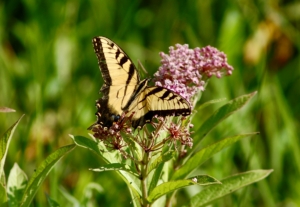
Butterfly Walk & Learn at Wolf Trap National Park, August 2

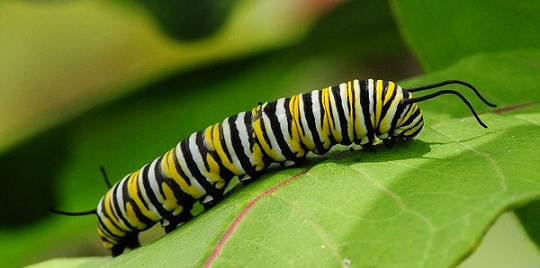
Photo: Sam Schaen – Monarch Butterfly


Sunday, August 2, 2026
10:00 AM – 11:30 AM

Free event

REGISTRATION REQUIRED

Meet – In front of the Wolf Trap Filene Center Box Office
Wolf Trap National Park for the Performing Arts Vienna, VA

Join Dr. Elise Larsen at Wolf Trap National Park for our August 2nd Butterfly Walk and Learn!

Immerse yourself in the world of butterflies at Wolf Trap National Park for the Performing Arts. Dr. Elise Larsen, ecologist and post-doctoral associate at the Ries Lab of Butterfly Informatics at Georgetown University, assisted by the Friends of Wolf Trap National Park and the Fairfax County Master Naturalists, will take you on a guided tour through the park’s native gardens and grounds to discover beautiful butterflies, including brightly colored brushfoots and soaring swallowtails. This relaxed stroll along walking paths will delight nature lovers, gardeners, and photographers of all ages. Learn about the local butterflies, tips for spotting and identifying some of the common butterflies of our region, and the plants they rely on. Learn how to help butterflies in your own backyard. Bring your camera and binoculars as we observe and admire butterflies around the Park.

Please Note: Participants will spend time on narrower paths and uneven ground as well as wide walkways. We recommend dressing appropriately for the weather and bringing a water bottle. The guided tour will be approximately 90 minutes.

Event Details:

  • Date: Sunday, August 2, 2026
  • Time: 10:00 AM – 11:30 AM
  • Meeting Point: In front of the Wolf Trap Filene Center Box Office
  • Parking: Free parking available in the east or west lots as you enter Wolf Trap National Park.
  • Duration: Approximately 90 minutes
  • Heavy Rain: Event will be rescheduled
  • Safety Notice: Participants are responsible for their own safety and well-being. By attending, you agree to accept any risks associated with outdoor activities and consent to having your photo/likeness used.

Tickets:

  • Cost: Free
  • Space: Limited
  • Registration: Please RSVP only if you plan to attend. If your plans change, cancel your tickets so others can participate.

For more information and directions, visitWolf Trap National Park Visitor Information

We look forward to seeing you at this exciting and educational event!

www.butterflyinformatics.org

www.friendsofwolftrap.org

www.farifaxmasternaturalists.org


Virtual CEU Opportunities – Walker Nature Center Deep Dives: Spiders – Silk Specialists, August 20th & Fall Migration, September 17th

Photo: Courtesy of the Reston Walker Nature Center

Walker Nature Center has upcoming “Deep Dives” – one-hour virtual explorations of natural history topics:

Spiders – Silk Specialists:  Thursday, August 20th, 7:00 – 8:00 pm
Join Nature Center Manager Ken Rosenthal to explore the world of spider silk.  Only about 50% of all spiders actually spin webs.  Learn what it takes to build a web and find out what those other species are doing with their silk.
Fall Migration:  Thursday, September 17th, 7:00 – 8:00 pm
Join Nature Center Manager Ken Rosenthal to bid farewell to our fall migrants.  Bird migration is one of the great spectacles in all of nature, but birds are not our only fall migrators.  Find out who else will be leaving us.
All programs are geared toward adults.  Registration is free, with a $5 suggested donation.  A link will be emailed to registrants prior to the program.
If you have a Reston Association Webtrac account, you can register there.  Otherwise contact Ken Rosenthal directly at krosenthal@reston.org or 703-435-6510.

2026 the Virginia Department of Wildlife Resources (DWR), and the Virginia Outdoor Writers Association (VOWA) – WRITING CONTEST

Image: Courtesy of Virginia Department of Wildlife Resources (DWR), and the Virginia Outdoor Writers Association (VOWA)

The Virginia Department of Wildlife Resources (DWR), and the Virginia Outdoor Writers Association (VOWA) invite writers to submit an original, unpublished piece (essay, feature, poetry, etc.) that focuses on what they enjoy about the outdoors in Virginia. 

Winners from each category—Youth and Adult—will be published in the January/February 2027 issue of Virginia Wildlife, and the top three in each category will be published on the VOWA website and receive other prizes. All submissions will be judged by the following criteria: portrayal of the value of the outdoors, clarity, spelling and grammar, and creativity.

CONTEST RULES
CONTEST LINKS

2026 APPLICATION (PDF)*

* Application must be download to use autofill option.

Mindful Birding: Finding Wonder, Well-being and Connection through Birds, August 4th


Image: Courtesy of Northern VA Bird Alliance and Capital Nature -Mindful Birding Presentation

Tuesday, August 4, 2026
7:00 PM – 8:00 PM EDT

Online event

Fee: $12.09

Registration required

Overview

Join Ana Ka’ahanui for an event all about how birding helps reduce stress, cultivate mindfulness and deepen our relationship with the natural world.

Birding offers more than the excitement of identifying new species—it can also be a powerful practice for reducing stress, cultivating mindfulness, and deepening our relationship with the natural world. Discover how slowing down and engaging your senses can transform the way you experience birds and their habitats.

Drawing on research about the mental and physical health benefits of birding, as well as practices from forest therapy (“forest bathing”), we’ll explore how birds can help us become more present, attentive, and connected. Learn how mindful birding can foster wonder, resilience, and well-being.

Presenter: Ana Ka’ahanui, Certified Forest Therapy Guide, Virginia Master Naturalist, Founder of Wonder Joy Walks, and Co-Founder of Capital Nature.

Quarries Offer Geologic Explorations

Feature photo: Luck Stone Quarry. Tilted Upwards Rock layering. Not shown is the East side folding, and a fault at the north metamorphic boundary

Photos and article by FMN Stephen Tzikas

Mining operations are inherent to the disciplines of geology and engineering.  Mines can be open pit (surface), or underground.  They can include minerals, coal, and other valuable products. There are opportunities as an FMN to explore quarries in the vicinity and on vacations.  These can be individual visits if open to the public, or part of excursions hosted by universities, professional organizations or amateur geology/mineral clubs.  The first two locations that I note here are from sites included in a Norther Virginia Community College (NVCC) 1 credit course called Triassic-Jurassic Rifting of North America: Geological Field Studies Trip to the Triassic Lowlands of Northern Virginia, which occurred on June 24, 2017. This course explored the geologic history of Mesozoic Era rift basin across the Manassas, Leesburg, and Haymarket areas.  The trip was specific to the Triassic and Jurassic Periods.

At the east side of Luck Stone Diabase Quarry in Centreville, are the igneous rocks. On the west

Manassas Quarry. This quarry excursion was organized by the Mineralogical Society of the District of Columbia (MSDC).  Shown here is a close-up of a hand-sized rock sample containing stilbite crystals, from the Vulcan Quarry in Manassas.  One might also find stellerite, calcite, prehnite, laumontite, chalcopyrite, and chalcedony in this quarry.

side of the quarry are deposited layered sedimentary rocks.  On the north side, in the past, the igneous rocks rammed into the sedimentary rocks and thermally altered them, forming metamorphic rocks by contact metamorphism. The sedimentary rocks are Balls Bluff siltstone, of about 205 million years of age at the end of Triassic.  The light green color layers are more coarse; while darker, purple, red, and lavender hues are finer. The igneous rock originated in a magma chamber from early rifting.  They are an intrusive Jurassic diabase. The red upper color layer is iron rich. This upper most part was oxidized to the air due to its longest exposure time.  The diabase is a dark pyroxene, iron augite.  The light color is a plagioclase feldspar, of a high temperature igneous rock close to the Earth’s mantle. As a magma chamber cooled, there is a magmatic differentiation where the magnesium and calcium minerals settled first.  As the crystals settled they evolved more light in color, and are less mafic. Later the residual melt was more felsic as it flowed through dykes.

About 205 million years ago the mantle bowed up the Earth’s crust.  Rift lakes were created in the Triassic lowlands. They were filled with sediments.  However, the rift basin didn’t open completely, leading to a graben central valley, and the horst mountain area.  The slow cooling of the magma chamber created large crystals.  The NVCC field excursion also discussed many other minerals and structures and how they were formed.  The vegetation on rocks in the quarry are indicative of the minerals present, i.e., calcium loving plants.

Close-up of Mount Zion Church basalt, 6×6 inch scale, at the Abandoned Haymarket Quarry.  This photograph shows a porous “knob” of the basalt (lower) and a sediment infiltrated crack (upper).


At the abandoned Haymarket Quarry, Antioch Road (Silver Lake Regional Park), we observed extruded surface lava.  The rock type encountered here is gray Lower Jurassic Mt. Zion Church Basalt with an inter-bedded Turkey Run Formation. In the Jurassic time some diabase broke out into iron and magnesium flood basalts, sourced from the upper mantle mafic. A vast outpouring occurred into this old river valley.  This flood basalt had little silica in it, so it flowed easily (in contrast to having silica to make it resistant to flow).  Gas bubbles of water/sulfur gas escaped out from a porous/ pitted vesicular texture.  Sediment filled into the cracks and old basalt flow bubbles.  The basalt is porous, the sediment red. This Mid-Atlantic rift event petered out.  After 200 million years of weathering the tough basalt (which filled the valley) formed a topographic inversion, where the surrounding softer rock weathered away.

Pollinator Pathways Turn One in Northern Virginia

Photo: Plant NOVA Natives

Article by Eileen Ellsworth

One year ago, Plant NOVA Natives launched a Pollinator Pathway initiative. The original program was created by a group of highly credentialed environmentalists and conservationists in Wilton, Connecticut and expanded by PNN into Northern Virginia. Its goal is to address habitat fragmentation caused by human activity that has drastically reduced insect populations and degraded the environment. The program suggests ways a community, working together, could create “stepping stones” of native plants to connect these isolated fragments and build a feeding/sheltering/hosting corridor that insects can find and follow.

As a result of the Pollinator Pathway launch, several neighborhoods across the region took steps to build one. Many more native plants ended up in the ground, all of them strategically placed to help local pollinators find sources of food and shelter they so desperately need. Here are some highlights from the past year that may motivate action going forward.
You may recall that the program has two requirements for membership. First, have an existing native tree or a native plant pollinator garden on your property. Second, avoid the use of all broadcast pesticides, including mosquito fogging, which kills every native insect it touches – except the mosquitos’ own larvae! Those happily grow and hatch away in standing water, unfazed by the chemical.
With these requirements in mind, several people in Fairfax and Arlington set out to start pathways, using the Pollinator Pathway signs to help attract interest. There have been many reports of curious neighbors and passers-by who stopped to inquire about the initiative. While the signs certainly helped educate, the program also fostered a deeper sense of community and a growing energy around the program’s goal.
For example, Margaret Fisher created a Pollinator Pathway in Clifton. She says, “It couldn’t have been easier. I had already gone door-to-door ten years ago or so to sign neighbors up for a ‘Bee Safe Neighborhood,’ where people pledged not to use neonicotinoid insecticides outdoors. We celebrated our neighborhood with a very fun block party. I have email addresses for some of those folks and was able to easily convince them to sign up for the Pollinator Pathway. The properties lead more or less contiguously to Chapel Road Park. Very few people in our area use mosquito spraying services, and I hope seeing the signs along the road may prompt them to cancel those services.”
Melania Flores took advantage of an existing effort to plant more canopy trees in her Ashton Heights neighborhood. She reached out to that group, giving her access to a wider neighborhood audience. She knocked on doors, created and printed flyers, and presented the topic at one of the monthly Ashton Heights Civic Association (AHCA) meetings. She also started writing a monthly article for her neighborhood newsletter to further engage and educate. All told, her efforts have garnered 24 Pollinator Pathway participants to date, and that number is growing. All of them have signs that broadcast the program. Melania has been invited to neighbors’ homes and the local church to consult on how they can help. She even offered some of her own native plants as a benefit of joining. And lastly, the entire neighboring community organized a “buckets of doom” initiative with mosquito dunks to help control mosquitos in an effective, environmentally friendly manner.

Sara Holtz recruited 95 properties to the effort, including parks in the Town of Vienna and Fairfax City. She tapped several friends and neighbors in the Miller Heights neighborhood of Oakton and conducted tabling efforts at events hosted by the Vienna Farmer’s Market, the Virginia Department of Forestry, and the Greater Oakton Community Association. She contacted Supervisor Dalia Palchik, Delegate Holly Seibold, and School Board member Melanie Meren to put signs in their gardens. Some local elected officials also promoted the endeavor in their newsletters at her request. The owner of The Virginian Restaurant agreed to put a sign in his garden next to the restaurant. She posted on the Native Vienna Facebook group reaching all homeowners who follow it. Many hundreds of local property owners were engaged and educated through her efforts.

Constance Chubb and Melinda Soltys both rallied their neighbors and friends, grew the program’s membership, and gave away many plants and signs. As for me, I also created a street-based initiative, recruiting eight friends and neighbors to join and display signs. In addition to planting more natives on our own properties, we coordinated on non-native invasive removal efforts in the community-owned park – a collection of wooded parcels that weave between our homes and throughout the neighborhood. Finally, we built a new, very visible pollinator garden on a street-side plot of mowed Japanese stilt grass. Figured we couldn’t go wrong with that one.
Turns out the effort can be as small or as large as you personally choose to make it. The goal is not a perfect carpet of native plants that stretches down the entire length of the street (though that would be amazing). Rather, it’s closing the gap between existing native plantings, which is certainly doable. Even the smallest effort of planting one new native helps. Arranging several new natives in a grouping is a substantial benefit. Either way, the Pollinator Pathway program has inspired important conversations and goal-oriented action, delivering on its promise to better feed and shelter our struggling pollinators and improve the biodiversity of the entire region.
Want to get involved? Visit the Pollinator Pathway page on the PNN website, check out the “Tips for Organizers,” and get started today.

Leave it to Beavers, August 2nd

Photo credit: Ellyne Geurts

Sunday, August 2, 2026
11:30 AM – 12:30 PM
Mason Neck State Park – Bay View Trailhead
7301 High Point Road
Lorton, VA 22079

Beavers are nature’s architects! Meet one of our interpreters, at the Bay View Trail head for a short hike down the trail to the marsh to see evidence of Mason Neck’s resident family of beavers. Learn how they live, why they build dams and lodges, and discover the role that they play in supporting a healthy environment.

Email MasonNeck@dcr.virginia.gov for more information.

Additional details can be found on the Virginia Department of Conservation and Recreation website.


Water Cycle: Incredible Journey, August 8th

Photo credit: Jerry Nissley

Saturday, August 8, 2026
2:30 PM – 3:30 PM
Mason Neck State Park
7301 High Point Road
Lorton, VA 22079

Dive in to water month at Mason Neck State Park and learn about the incredible journey of water in the water cycle! Join an Interpreter at the Picnic Area for a fun game to learn about the way water moves through our watershed and about the waters surrounding Mason Neck State Park! Bug spray and water recommended.

Email MasonNeck@dcr.virginia.gov for more information.

Additional details can be found on the Virginia Department of Conservation and Recreation website.


Grass Class with the VNPS Grass Bunch at Riverbend Park, August 29th

Photo credit: Jerry Nissley

Saturday, August 29, 2026
3:00 pm – 5:00 pm
Riverbend Park Nature Center Parking Lot
8814 Jeffery Road – Great Falls

Join the Potowmack Chapter Grass Bunch for a hands-on introductory class on some common grasses — both native and introduced. Then take a walk in the Riverbend Park meadow to see where they grow.

The Grass Bunch is group of Potowmack chapter members and friends who are interested in the identification, classification, and ecology of plants known as grasses or sedges. They are often seen with their heads down close to the ground studying the details of a particular specimen and comparing notes on “What is it?”.

Space is limited and registration is required.

Email potowmack@vnps.org for more information.

Additional details can be found on the Virginia Native Plant Society website.


Spectacular Skinks! August 15th

Photo credit: Virginia Department of Conservation and Recreation

Saturday, August 15th, 2026
12:00 PM – 1:00 PM
Mason Neck State Park
7301 High Point Road
Lorton, VA 22079

Fast… colorful… illusive! Celebrate the weekend after World Lizard Day and discover the spectacular world of skinks – a unique group of lizards – and the species native to Mason Neck State Park! Join an interpreter at the picnic area to learn about skinks and play a fun game! Water and bug spray recommended. 

Email MasonNeck@dcr.virginia.gov for more information.

Additional details can be found on the Virginia Department of Conservation and Recreation website.